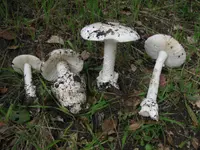
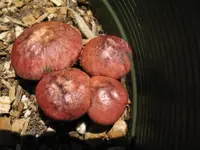
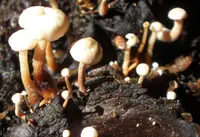
zoned Crinipellis Care (Collybia zonata)

Also known as: zoned-cap Collybia
zoned Crinipellis

About zoned Crinipellis

Zoned Crinipellis, also known as Collybia zonata, is a small saprophytic mushroom that lives on decaying wood, especially buried hardwood roots and stumps. It is not a houseplant in the usual sense but a woodland fungus. Caps are typically thin, with distinct darker concentric rings, and grow in clusters or small groups on forest floors. The stems are slender and often arise from a common base. This species is native to temperate woodlands in North America and parts of Europe. It favors cool, moist, shaded habitats with rich organic debris, so attempts to care for zoned Crinipellis at home are generally challenging and require very controlled conditions.

Main Plant Requirements

Care Difficulty

Moderate Care

Light Preference

Shade

Water Requirements

Keep Soil Moist

Temperature Preference

Cool Climate

Hardiness Zone

Unknown

Soil Texture

Loamy, Silty, Organic-rich

Soil pH

Acidic (5.5–6.5), Slightly acidic (6.5–7.0)

Soil Drainage

Moist but well-drained

Fertilization

Minimal (feed rarely)

Get Personalized Care Plan

Scan your plant to receive care tips personalized for your specific plant

Available on iOS and Android

How to Care for the zoned Crinipellis

Collybia zonata prefers shaded woodland conditions with gentle, indirect light rather than direct sun exposure.

  • Aim for dappled or filtered light under trees, similar to a forest floor, with no more than 1–2 hours of weak morning sun and no direct afternoon sun.
  • Site the fungus where it receives bright shade or open shade; strong, direct sun quickly dries substrate and suppresses fruiting bodies.
  • In summer, protect logs or stumps from hot exposure by leaf litter or canopy shade; in cooler months, moderate indirect light is sufficient for zoned Crinipellis development.

Collybia zonata develops best on consistently moist, but not waterlogged, woody substrates.

  • Maintain the host wood or leaf litter evenly moist; allow only the top 1–2 cm of surrounding soil or mulch to start drying before rewetting.
  • Use rain or gentle hose soaks to moisten the substrate thoroughly, then let excess water drain away to avoid standing water and anaerobic (low-oxygen) conditions.
  • Reduce supplemental moisture in cool, wet seasons; soft, foul-smelling wood and collapsed caps indicate overwatering, while brittle, cracking wood and shriveled caps signal underwatering.

This woodland fungus prefers cool to mild conditions and shows best development in temperate climates.

  • Optimal fruiting usually occurs around 50–68°F (10–20°C), with steady moisture and shade supporting sustained growth on decaying wood.
  • Mycelium can remain active from roughly 41–75°F (5–24°C), but fruiting bodies decline in very warm spells above about 77°F (25°C).
  • Short exposures down to about 32°F (0°C) may be tolerated in dormant stages, but repeated hard frosts or prolonged heat above 82°F (28°C) reduce longevity and fruiting success.

This saprophytic mushroom thrives in consistently moist, high-humidity environments around 70–90%.

  • Tolerates brief drops to 50–60% humidity if the substrate itself stays evenly damp, never fully drying out.
  • Low humidity causes cap cracking, curled edges, and slow or stalled fruiting despite adequate substrate moisture.
  • Increase humidity by using a covered, well-ventilated fruiting chamber, frequent fine misting of walls, and moist but not waterlogged substrate when caring for zoned Crinipellis.

Collybia zonata grows on decaying wood and very organic forest litter rather than standard garden soil.

  • Use a loose, fibrous mix based on well-rotted hardwood chips, leaf mold, and coarse bark to mimic decomposing forest litter.
  • Ensure rapid drainage so water passes through freely while the organic matrix stays evenly moist, never waterlogged or compacted.
  • Target a slightly acidic to neutral environment around pH 5.5–7.0 by combining hardwood-based material with a small amount of peat or coco coir.
  • Avoid dense mineral soils, heavy clay, and fine peat-only mixes that collapse, restrict air, and slow decomposition needed for nutrient release.

This species can be grown in containers if the substrate and moisture are controlled carefully.

  • Choose a wide, shallow, rigid container so the woody substrate layer stays stable and does not slump as it decomposes.
  • Drill extra side holes above the base to vent excess moisture from the wood-based substrate and reduce stagnant, anaerobic pockets.
  • Keep the container protected from direct sun and strong wind so the substrate surface does not dry out faster than the interior mycelium can tolerate.

Collybia zonata is a saprophytic fungus that usually gains enough nutrients from decaying wood and does not need added fertilizer in natural or cultured settings.

Collybia zonata does not require true pruning, but fruiting bodies can be tidied if needed for hygiene or monitoring.

  • Remove old, collapsed, or moldy caps with clean scissors or a small knife at the base.
  • Cut only the mushroom fruiting body, leaving the underlying wood and mycelium undisturbed.
  • Discard removed material away from the growing area if disease is suspected.
  • Minimal intervention helps maintain the natural structure and fruiting pattern.

This species is normally grown on or allowed to colonize decaying wood, so care focuses on renewing the substrate rather than classic repotting.

  • Plan to refresh or replace colonized wood every 2–3 years, or when fruiting declines noticeably.
  • Best timing is early to mid growing season, when temperatures are mild and moisture is stable.
  • Move colonized wood gently to a new site with similar shade and humidity to reduce mycelium stress.
  • Avoid shaking, scraping, or drying the substrate, as this can damage the fungal network and slow recovery.

Propagation of Collybia zonata is done by spreading mycelium onto new wood rather than by standard plant methods.

  • Use small pieces of colonized wood or mycelium as inoculum for fresh, uncolonized hardwood.
  • Start in spring or early summer when temperatures are moderate and natural moisture is higher.
  • Place inoculated wood in a shaded, consistently moist environment with good airflow, not sealed containers.
  • Limit disturbance while the mycelium spreads through new substrate, which may take several months before fruiting.

In most temperate climates, zoned Crinipellis requires little targeted winter care because the mycelium remains insulated within wood.

  • This fungus tolerates normal outdoor frosts typical of its native range when growing in solid wood.
  • Avoid moving or splitting frozen logs, which can crack and damage the internal mycelium.
  • Maintain natural leaf litter around the substrate to provide extra insulation and moisture retention.

Care Tips

Use hardwood chips

Establish a shallow layer of well-aged hardwood chips or mixed deciduous leaf litter over the growing area to mimic natural forest duff and provide a stable substrate for the mycelium.

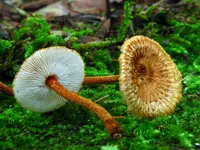
Maintain cool shade

Site the culture under stable, dappled shade from shrubs or deciduous trees to protect the mycelium from overheating and rapid substrate drying during warm months.

Avoid soil disturbance

Limit raking, digging, and pet traffic over colonized zones so the fine mycelial network is not broken, which helps fruiting bodies return in future seasons when caring for zoned Crinipellis.

Seasonal moisture buffering

Add a light top-up of fresh leaf litter or fine bark in late fall to buffer winter temperature swings and maintain moisture around the mycelium.

Fruiting hygiene

Harvest mushrooms by cutting at the base with a clean knife and promptly removing decayed fruiting bodies to reduce mold buildup and keep the colony healthier over time.

Common Pests and Diseases

Fungal parasitism

This disease occurs when other fungi colonize the fruiting bodies, leading to deformed caps, unusual surface growths, or premature collapse. Symptoms include patches of different-colored mycelium, slimy areas, or rapid decay starting at the cap or gill surface.

Solution

Remove and discard affected mushrooms as soon as they are noticed, and avoid handling healthy and infected material together. Improve air movement, reduce overcrowding of woody debris or leaf litter, and if cultivating, adjust humidity and watering so surfaces dry between misting to limit secondary fungal growth.

Mycelial competition

This problem arises when more aggressive saprophytic fungi overtake the substrate, suppressing or replacing zoned Crinipellis mycelium. Symptoms include poor or absent fruiting, patches of dense foreign mycelium, or different mushrooms emerging from the same habitat instead of the expected zoned collybia.

Solution

If growing zoned Crinipellis on prepared substrate, discard heavily colonized batches and start again with fresh, well-pasteurized woody material and clean tools. In garden or woodland settings, refresh the habitat gradually with new hardwood chips or sticks, avoid adding contaminated mulch from unknown sources, and keep the area slightly drier and well-aerated to favor the original colony.

Fungus gnat larvae

These insects lay eggs in moist organic matter, and the larvae tunnel in the caps and stems, causing pitting, soft spots, and rapid breakdown of the fruiting bodies. This pest often leaves small entry holes and can lead to mushrooms collapsing soon after emergence.

Solution

Reduce excessive surface moisture by allowing the top layer of litter or substrate to dry slightly between waterings and avoid standing water. For cultivation, use fine mesh barriers, sticky traps for adults around the growing area, and promptly remove infested mushrooms and decaying debris to break the life cycle.

Springtail feeding

These insects are small soil-dwelling arthropods that graze on fungal tissue, creating small pits or irregular edges on caps and stems. Symptoms include minor surface scarring and a speckled or roughened appearance where many individuals have fed.

Solution

Keep organic debris reasonably tidy by removing heavily decayed material that attracts large springtail populations while preserving enough habitat for the fungus. If damage is excessive in a controlled setting, reduce constant saturation of the substrate, encourage better drainage, and use mechanical barriers or smooth plastic collars around fruiting zones to limit access.

Slug and snail damage

This pest group feeds directly on mushroom tissue, leaving large ragged holes, missing sections of caps, and characteristic slime trails. This damage often occurs overnight and can remove entire young fruiting bodies before they mature.

Solution

Hand-pick slugs and snails during damp evenings and remove nearby hiding spots such as boards or thick piled debris. In cultivation beds or garden settings, use physical barriers like copper tape or gritty dry borders, and avoid overwatering or dense groundcover that encourages large mollusk populations.

Interesting Facts

Distinctive zoned cap

The cap surface typically shows clear concentric color zones, with darker reddish-brown bands on a paler background, which is one of the features used by mycologists to separate this species from similar small brown mushrooms.

Rotting-wood specialist

This fungus grows on well-decayed hardwood, often on buried wood fragments, contributing to the final stages of wood decomposition and nutrient recycling in forest ecosystems.

Confusing look-alikes

Collybia zonata has a combination of zoned cap, slender stipe, and growth on rotting wood that makes it easy to confuse with other gymnopus and collybia-like species, so correct identification usually requires close examination of both macroscopic and microscopic characters.

FAQs about zoned Crinipellis

This fungus is not considered edible and should be treated as inedible. Identification of small brown mushrooms is difficult, and confusion with toxic look-alikes is possible. Do not collect or eat it as food.

Grow Healthy Plants with Botan Care

Keep your plants happy and healthy with plant identification, disease detection, and easy care guidance.

Botan plant care app — identify plants on mobile

Explore More Plants