Blushing Bride Amanita Care (Amanita novinupta)

Also known as: New Bride Blusher
Blushing Bride Amanita

About Blushing Bride Amanita

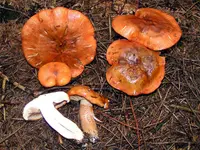
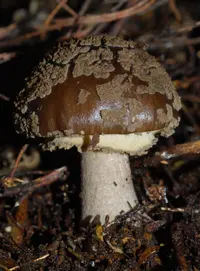
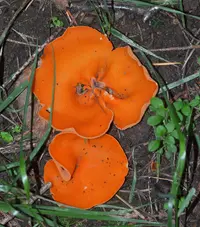
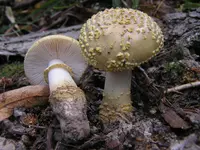
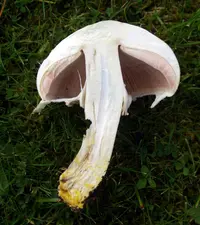
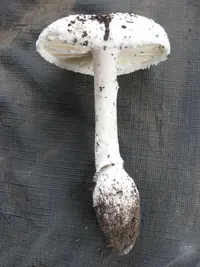
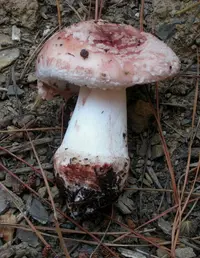
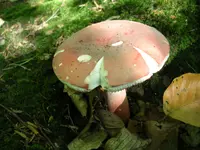
Blushing Bride Amanita (Amanita novinupta) is a fleshy, gilled mushroom, not a leafy houseplant. It produces pale caps that blush pinkish to reddish, with white gills and a stout stem. This species occurs in western North America, usually in forested areas where it grows on the ground among trees. It forms mycorrhizal partnerships, meaning its roots exchange nutrients with tree roots, which makes it impossible to grow reliably in standard containers. These specialized needs make it unsuitable for typical home cultivation, despite interest from people who hope to care for Blushing Bride Amanita. In nature, it favors undisturbed soil, consistent moisture, and dappled forest light.

Main Plant Requirements

Care Difficulty

Hard Care

Light Preference

Partial Shade

Water Requirements

Regular Water

Temperature Preference

Cool Climate

Hardiness Zone

Unknown

Soil Texture

Loamy, Silty, Organic-rich

Soil pH

Acidic (5.5–6.5)

Soil Drainage

Moist but well-drained

Fertilization

Minimal (feed rarely)

Get Personalized Care Plan

Scan your plant to receive care tips personalized for your specific plant

Available on iOS and Android

How to Care for the Blushing Bride Amanita

This ectomycorrhizal fungus prefers dappled woodland light rather than full, open sun.

  • Aim for bright, filtered light under trees, with 2–4 hours of weak morning sun and shade or broken light for the rest of the day.
  • Tolerates partial shade to deep shade; dense canopy cover may reduce fruiting, while direct midday or afternoon sun can dry the soil and damage developing caps of Blushing Bride Amanita.
  • In summer, protect from exposed, sun-baked spots; in cooler seasons, slightly more open light is acceptable if the soil stays cool and evenly moist.

This woodland fungus depends on consistently moist, well-drained soil rather than frequent surface watering.

  • Maintain evenly moist soil around host tree roots, allowing only the top 2–3 cm to dry slightly between natural rains or supplemental watering.
  • Increase watering during hot, dry periods if the soil dries out more than 5 cm deep or caps appear small and cracked, indicating drought stress for Amanita novinupta.
  • Reduce added water in cool, wet seasons; persistent sogginess, foul smell, or slimy mycelium indicate poor drainage and a risk of rot.

This species favors mild, stable woodland temperatures and is sensitive to hard frost and extreme heat.

  • Optimal fruiting usually occurs around 55–70°F (13–21°C), with underground mycelium remaining active across a slightly wider range.
  • Tolerates short dips to about 32°F (0°C), but repeated hard frosts below 28°F (-2°C) can damage fruiting bodies and delay new growth until conditions improve.
  • Sustained heat above 85°F (29°C), especially with dry soil, may halt fruiting; shade, mulch, and consistent moisture help buffer root-zone temperatures seasonally.

Humidity plays only a minor role for this ectomycorrhizal fungus, as long as the natural woodland environment is maintained.

This fungus relies on specific woodland soil conditions rather than a conventional potting mix.

  • Amanita novinupta associates with tree roots in loose, well-aerated forest soil that is rich in decaying leaf litter and fine organic matter.
  • Soil must drain freely yet retain slight, even moisture, avoiding both waterlogging and extended drying that disrupts the root-fungus partnership.
  • A slightly acidic to neutral pH around 5.5–7.0 typically supports its tree hosts and the surrounding fungal community.
  • To mimic natural habitat in situ, encourage leaf litter accumulation and avoid compaction, heavy clay disturbance, or added fertilizers.

This species is not suitable for container growing because it depends on complex, long-term partnerships with living tree roots in undisturbed soil.

Amanita novinupta is a wild ectomycorrhizal fungus that should not be fertilized directly, as added nutrients can disrupt its tree-root partnership.

Pruning is not applicable to Amanita novinupta because it is a mushroom-forming fungus, not a woody or leafy ornamental plant.

This ectomycorrhizal species is not suited to normal repotting or transplanting because it lives in symbiosis with tree roots in soil, not as a stand-alone potted plant.

  • Transplantation attempts usually fail because the fine root-fungus network is easily disturbed and does not re-establish well.
  • If research or conservation requires moving material, lift soil blocks intact around host roots rather than handling individual fruiting bodies.
  • Carry out any necessary moves during cool, moist weather to limit desiccation of roots and fungal threads.
  • Keep soil conditions as close as possible to the original site to reduce stress on both host tree and fungus.

Practical home propagation of Amanita novinupta is highly unreliable, so the species is normally left to reproduce naturally in suitable woodland habitat.

Blushing Bride Amanita is a temperate woodland fungus that overwinters in soil without special care and does not need active winter protection in its natural range.

Care Tips

Spore-Friendly Neighbors

Plant under compatible ectomycorrhizal trees such as oak, madrone, or pine, since this fungus depends on root partnerships and will not establish in isolated garden beds without suitable hosts.

Minimal Disturbance Zone

Mark and protect the mycelium area from digging, tilling, or frequent foot traffic, because disturbance of the upper 10–15 cm of soil can severely reduce future fruiting.

Leaf Litter Management

Allow a thin, natural layer of leaf litter to remain over the colonized area to conserve moisture and provide organic inputs, but avoid piling thick mulch directly on top, which can suffocate the mycelium.

Targeted Watering Pattern

Irrigate the surrounding tree root zone broadly rather than soaking only the mushroom flush site, as this encourages deeper root and mycelium interaction instead of shallow, surface-only growth.

Seasonal Monitoring Log

Keep a simple yearly log of flush timing, weather, and host tree condition, since tracking patterns helps refine how to take care of Blushing Bride Amanita in a specific site over several seasons.

Common Pests and Diseases

fungus gnat larvae

This pest is attracted to moist organic substrates and can feed on developing fungal tissue and mycelium. Symptoms include slow or distorted fruiting and visible small black flies hovering near the substrate surface.

Solution

Reduce moisture at the surface by allowing the top layer of substrate to dry slightly between waterings, and improve drainage so water does not stagnant. Use yellow sticky traps to catch adult gnats and, if needed, apply a biological control such as Bacillus thuringiensis israelensis (Bti) to the substrate to target larvae without harming the fungus.

mildew contamination

This disease appears as a fine, powdery or cottony growth on casing soil, mycelium, or nearby organic materials competing with the developing mushroom. Symptoms include patchy white or gray areas spreading faster than the normal mycelium network.

Solution

Increase fresh air exchange and reduce excessive humidity at the surface to discourage mildew growth, while still keeping overall conditions appropriate for fruiting. Carefully remove or scrape off contaminated casing material and discard it, then spot-treat affected areas with a light mist of clean water mixed with a dilute food-safe disinfectant, taking care not to saturate the substrate.

green mold (Trichoderma)

This disease starts as white mycelial patches that quickly turn bright to dark green and overtake the intended fungal mycelium. Symptoms include stalled or aborted fruiting bodies and a strong earthy or musty odor from the contaminated substrate.

Solution

Physically remove and dispose of any clearly contaminated blocks or trays, as Trichoderma spreads rapidly by spores. Improve hygiene by cleaning tools and growing containers with a disinfectant, increase fresh air movement without strong drafts, and adjust moisture so the substrate stays evenly damp but not waterlogged.

Interesting Facts

Western North America endemic

This species is native to western North America, especially in California and the Pacific Northwest, where it fruits in mixed conifer and hardwood forests rather than having a broad global range like some other Amanita species.

Distinctive veil remnants

Its cap often shows irregular pinkish to reddish patches or warts that are remnants of the universal veil, a key field feature that helps separate it from similar red-capped Amanita species of the region.

Mycorrhizal forest partner

It forms ectomycorrhizal associations with trees such as firs, pines, and oaks, exchanging mineral nutrients and water from the soil for sugars produced by the host tree through photosynthesis.

FAQs about Blushing Bride Amanita

This mushroom should be considered unsafe to eat. Identification within the Amanita group is difficult, and several closely related species are deadly. For safety, avoid consuming it and rely only on expert-confirmed edible fungi.

Grow Healthy Plants with Botan Care

Keep your plants happy and healthy with plant identification, disease detection, and easy care guidance.

Botan plant care app — identify plants on mobile

Explore More Plants