


Use Sterile Substrate
Prepare hardwood-based substrates using pressure-sterilized sawdust or properly pasteurized chips to reduce competing fungi and bacteria that can quickly overrun this small, slow-establishing species.

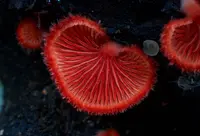
Cinnabar oysterling, Crepidotus cinnabarinus, is a small, saprophytic fungus that grows on decaying hardwood rather than in soil like typical garden plants. Its bright orange to red, shell-shaped caps form overlapping clusters on fallen branches and logs, giving a vivid splash of color in damp woodlands.
This species occurs mainly in temperate forests of Europe and North America, favoring shaded, humid sites with abundant rotting wood. It is not a beginner-friendly species to cultivate, since it requires consistently moist wood substrate and stable humidity, so most people observe rather than care for cinnabar oysterling at home.

Care Difficulty
Moderate Care

Light Preference
Shade

Water Requirements
Keep Soil Moist

Temperature Preference
Cool Climate

Hardiness Zone
Unknown

Soil Texture
Loamy, Silty, Organic-rich

Soil pH
Acidic (5.5–6.5), Slightly acidic (6.5–7.0)

Soil Drainage
Moist but well-drained

Fertilization
Minimal (feed rarely)
Scan your plant to receive care tips personalized for your specific plant
Available on iOS and Android
This fungus prefers low, forest-like light rather than direct, open sun.
This wood-inhabiting fungus depends on consistently moist, not waterlogged, substrate.
This species favors cool to mild conditions typical of shaded woodland habitats.
This wood-decaying fungus prefers consistently moist, humid conditions rather than dry household air.
This species grows on decaying wood, so it needs a woody, moisture-retentive, well-aerated substrate rather than ordinary garden soil.
This fungus can be grown in containers if the setup mimics a moist, stable log environment.
This wood-decaying fungus typically grows on nutrient-rich dead wood and does not benefit from additional fertilizer in cultivation.
Pruning is not applicable for Crepidotus cinnabarinus, as it is a small, short-lived mushroom forming directly on decaying wood rather than a branching plant.
This species is usually left on its natural dead-wood substrate, so moving or transplanting is rarely recommended.
Propagation of this fungus is done through spores and colonized wood, but is seldom attempted by casual growers and can be technically demanding.
Outdoor colonies on natural dead wood are generally hardy in temperate climates and need no special winter care.

Plant Health Check
Not sure what's wrong with your plant? Check your plant's health inside the app.
The fruiting bodies show a distinct orange-red to cinnabar coloration due to pigments that make it stand out among mostly pale crepidotus species, which helps mycologists identify it in the field.
This fungus typically forms dense, overlapping clusters on the bark and exposed wood of broadleaf trees such as beech and oak, playing a role in breaking down dead hardwood in temperate forests.
Its spores are ellipsoid with a finely roughened (verrucose) surface and produce a yellowish-brown spore print, a combination of traits used to separate it from other similar, small orange wood-inhabiting fungi.
This species is not considered an edible mushroom. It is small, thin-fleshed, and of no culinary value, and identification can be difficult. It is best treated as inedible and left for observation only.
Keep your plants happy and healthy with plant identification, disease detection, and easy care guidance.

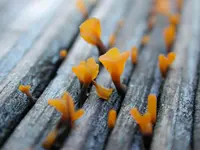
Fan-shaped Jelly Fungus
Dacryopinax spathularia
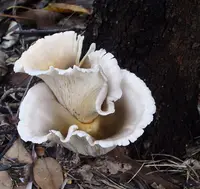
ghost fungus
Omphalotus nidiformis
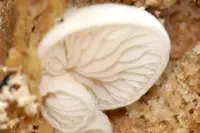
roundspored oysterling
Crepidotus cesatii
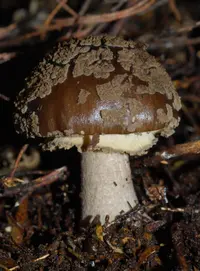
Southern Beech Amanita
Amanita nothofagi
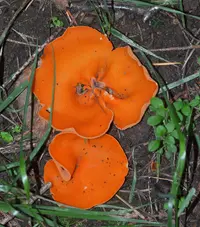
Orange peel fungus
Aleuria aurantia
Northern Tooth
Climacodon septentrionalis
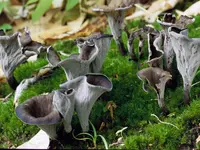
Eastern Black Trumpet
Craterellus fallax
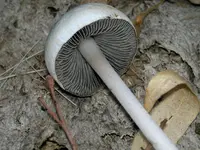
Panaeolus antillarum
Panaeolus antillarum