
Use clean substrate
When inoculating logs, wood chips, or outdoor beds, use pasteurized or freshly chipped hardwood material to reduce competition from other fungi and improve colonization success when growing Orange peel fungus.

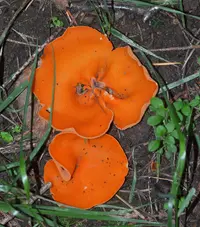
Orange peel fungus, Aleuria aurantia, is a cup-shaped ascomycete fungus, not a leafy plant. It forms bright orange, saucer-like disks that resemble pieces of orange peel scattered on the ground. The fruiting bodies sit directly on soil or decaying organic matter and often appear in groups. It is commonly found in temperate regions, especially in Europe and North America, along paths, disturbed soil, and grassy edges. This species is generally considered easy to observe but more challenging to cultivate intentionally, as it depends on specific soil microorganisms and conditions. Gardeners interested in how to care for Orange peel fungus should focus on providing undisturbed, moist, well-drained soil with moderate light and organic debris.

Care Difficulty
Moderate Care

Light Preference
Partial Shade

Water Requirements
Keep Soil Moist

Temperature Preference
Cool Climate

Hardiness Zone
4–9

Soil Texture
Loamy, Silty, Organic-rich

Soil pH
Acidic (5.5–6.5), Slightly acidic (6.5–7.0)

Soil Drainage
Moist but well-drained

Fertilization
Minimal (feed rarely)
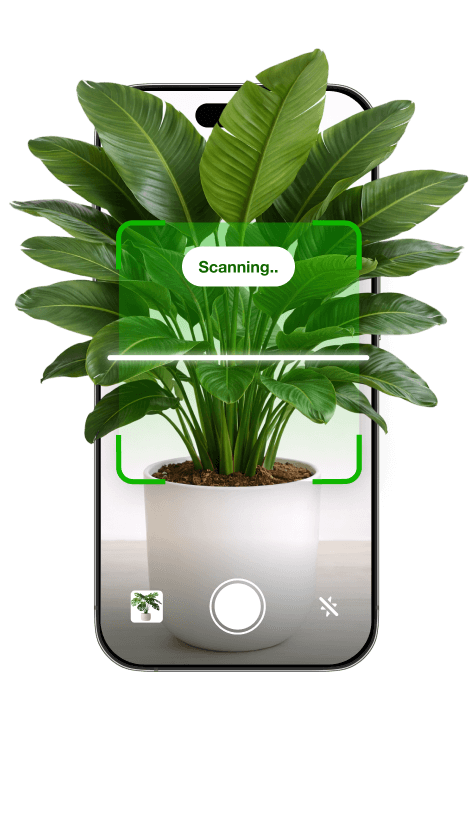
Scan your plant to receive care tips personalized for your specific plant
Available on iOS and Android
This fungus prefers bright, open woodland or grassland sites with moderate sun exposure.
This species thrives in moist, well‑drained soil that never stays waterlogged for long.
This fungus fruits best in cool to mild conditions typical of temperate climates.
This fungus handles a broad humidity range and rarely needs adjustment in outdoor conditions.
This cup fungus prefers moist, loose, organic-rich ground rather than compacted or heavily managed soil.
This species is not well suited to container growing because it relies on complex soil communities that are hard to maintain in pots.
Aleuria aurantia, a saprophytic fungus, usually gains enough nutrients from decaying organic matter and needs no direct fertilization.
Aleuria aurantia does not require conventional pruning, but limited sanitation helps keep the fruiting area healthy.
This fungus is rarely grown in pots, so focus on carefully relocating its substrate rather than traditional repotting.
Propagation of Aleuria aurantia is slow and indirect, relying on spores and careful habitat creation rather than household techniques.
This fungus is cold hardy in most temperate climates and generally needs no special winter care once established.

Plant Health Check
Not sure what's wrong with your plant? Check your plant's health inside the app.
The vivid orange color of this fungus comes from carotenoid pigments, which are thought to help protect its exposed spore surface from sunlight while it releases vast numbers of spores into the air from its cup-shaped interior.
This species often appears on compacted or disturbed soils, gravel paths, and roadside banks, taking advantage of open, low-competition habitats rather than dense forest floors.
Aleuria aurantia is widely distributed across temperate regions of North America, Europe, and parts of Asia, typically fruiting from late summer to autumn after periods of rain in those climates.
The cup of Aleuria aurantia is an apothecium, a specialized open fruiting body lined with thousands of tiny saclike structures called asci, each of which forcibly shoots its spores into the air when mature, creating a microscopic spore cloud above the fungus.
This species spreads locally through spores and colonizes suitable soil or decaying material, but it is not considered aggressive in gardens. Its fruiting bodies stay small and scattered, so it rarely overwhelms nearby plants or beds.
Keep your plants happy and healthy with plant identification, disease detection, and easy care guidance.
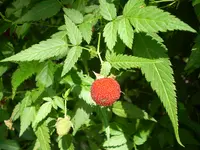
West Indian raspberry
Rubus rosifolius
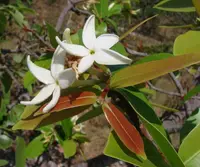
mangabeira
Hancornia speciosa
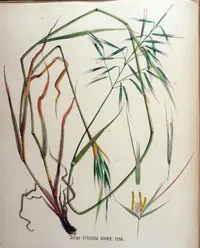
lopsided oat
Avena strigosa
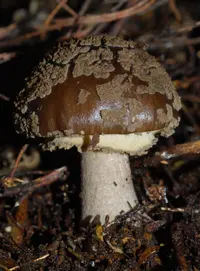
Southern Beech Amanita
Amanita nothofagi
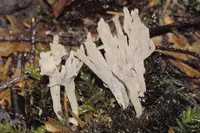
grey coral
Clavulina cinerea
Green Wood Cup
Chlorociboria aeruginascens
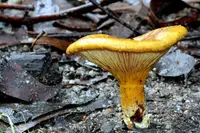
Austropaxillus infundibuliformis
Austropaxillus infundibuliformis
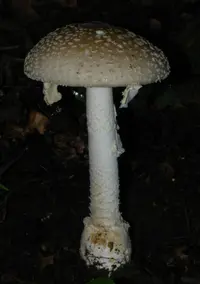
Small Funnel-Veil Amanita
Amanita multisquamosa