Small Funnel-Veil Amanita Care (Amanita multisquamosa)

Small Funnel-Veil Amanita

About Small Funnel-Veil Amanita

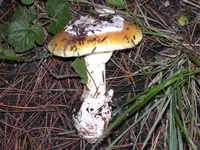
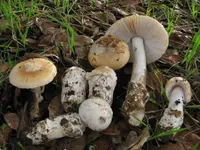
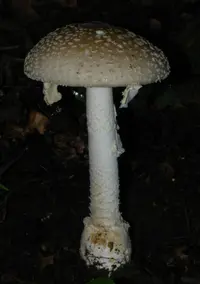
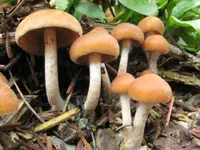
The small funnel-veil amanita, Amanita multisquamosa, is a woodland mushroom rather than a typical house or garden plant. It produces medium-sized caps with pale surfaces covered in distinct, darker scales, and a slender stem with ring and volva structures characteristic of many amanitas.

This species is native to North America and is usually found on the ground in mixed or deciduous forests, forming mycorrhizal partnerships with trees. It does not adapt well to pots or controlled indoor settings, so attempts to care for Small Funnel-Veil Amanita at home are generally unsuccessful.

In nature it prefers undisturbed, moist forest soils with plenty of organic matter and dappled light reaching the forest floor.

Main Plant Requirements

Care Difficulty

Hard Care

Light Preference

Partial Shade

Water Requirements

Keep Soil Moist

Temperature Preference

Cool Climate

Hardiness Zone

Unknown

Soil Texture

Loamy, Silty, Organic-rich

Soil pH

Acidic (5.5–6.5)

Soil Drainage

Moist but well-drained

Fertilization

Minimal (feed rarely)

Get Personalized Care Plan

Scan your plant to receive care tips personalized for your specific plant

Available on iOS and Android

How to Care for the Small Funnel-Veil Amanita

This woodland mushroom prefers gentle, filtered light similar to a deciduous forest floor.

  • Provide bright dappled shade under trees, with brief morning sun only; 1–3 hours of direct early light is generally safe, but avoid harsh midday and afternoon sun.
  • Small Funnel-Veil Amanita fruits best where leaf litter and understory foliage break up sunlight, creating shifting shade patterns through the day.
  • Excessive sun exposure dries the substrate and mycelium, reducing fruiting, while deep, constant shade under dense conifers can limit mushroom production.

This ectomycorrhizal mushroom relies on consistently moist, not saturated, forest soil.

  • Aim for evenly moist mineral soil with a loose organic layer; the top 2–5 cm should feel slightly damp but not waterlogged when pressed between fingers.
  • In natural settings, rainfall usually provides enough moisture, but extended droughts that dry soil deeper than 5–8 cm can reduce Amanita multisquamosa fruiting.
  • Poor drainage and standing water promote rot in roots of host trees and stress the fungus, while prolonged dust-dry conditions shrink caps and shorten fruiting periods.

This species favors temperate conditions typical of mixed hardwood forests.

  • Optimal fruiting occurs around 55–70°F (13–21°C), often in cool to mild late spring or autumn weather when soil stays moist but not cold.
  • Growth slows when daytime temperatures exceed 80°F (27°C), especially if paired with low humidity and dry soil, which can halt fruiting entirely.
  • Fruiting bodies tolerate short drops near 32°F (0°C), but repeated frosts damage caps, and prolonged cold below 40°F (4°C) pushes the fungus into a dormant state.

This mushroom species does not adapt well to low-humidity indoor or container conditions and is best left in its natural woodland habitat.

This ectomycorrhizal fungus depends on natural forest soil rather than prepared potting blends.

  • Amanita multisquamosa forms symbiotic roots with trees in undisturbed, well-drained, moderately acidic woodland soil, typically pH 4.5–6.0.
  • Soil should be loose, leaf-litter rich, and high in decomposing organic matter to maintain moisture without waterlogging.
  • Avoid compacted, heavily amended garden beds, sterilized potting mixes, and any situation where tree roots are absent.
  • Do not attempt to modify forest soil with sand, perlite, or bark, as altering its structure can disrupt the fungal–tree association.

This woodland amanita is not suitable for container growing, even with specialized substrates or outdoor pots.

Amanita multisquamosa is a wild mycorrhizal fungus that does not need direct fertilization when left in natural soil conditions.

Amanita multisquamosa does not need horticultural pruning, but limited handling can keep study or observation areas tidy and safe.

  • Remove only collapsed, moldy, or insect-ridden fruiting bodies to reduce unwanted spores or pests in high-traffic areas.
  • Use clean gloves and a small knife if needed, cutting at the base without disturbing the surrounding soil and tree roots.
  • Avoid cutting healthy mushrooms purely for appearance, since they are temporary structures and part of the forest nutrient cycle.

This fungus is not suitable for standard repotting; it forms essential root partnerships with trees and is highly sensitive to disturbance.

  • Avoid transplanting established colonies, since moving the soil breaks the fine mycorrhizal connection with host tree roots.
  • If grown in experimental containers, only shift to a larger pot when roots and fungal threads fill the mix and growth declines.
  • Transplant in cool, moist weather, keeping the original soil tightly around the roots to limit shock.
  • Water gently after any move and shade the area to maintain steady moisture and temperature around the disturbed zone.

Intentional propagation of Amanita multisquamosa is technically demanding and rarely successful in home settings.

This species is naturally cold hardy in its native range and usually needs no specific winter care in outdoor woodland conditions.

  • Leave leaf litter undisturbed so the underground mycelium remains insulated through freeze–thaw cycles.
  • Avoid deep soil cultivation or root disturbance around host trees during winter dormancy.
  • Container experiments, if any, should be overwintered in a cold, sheltered spot that stays above about 25°F to limit freeze damage to roots and mycelium.

Care Tips

Spore Print Monitoring

Take occasional spore prints on white and dark paper from mature caps to confirm species identity and track local fruiting patterns before expanding any patch or consuming wild material.

Mycelium Protection Zone

Mark and avoid compacting a 50–100 cm radius around known fruiting spots, since foot traffic and repeated raking can crush the shallow mycelial network and reduce future mushroom production.

Host Tree Management

Maintain the health of associated hardwood hosts (such as oaks and beeches) with proper mulching and minimal root disturbance, because the fungus relies on a stable mycorrhizal partnership for consistent fruiting.

Low-Disturbance Foraging

If harvesting, cut the mushrooms at the base with a clean knife instead of pulling, and leave a portion of mature but intact fruit bodies in place to support spore release and long-term colony vigor.

Seasonal Fruiting Records

Keep simple notes on date, weather pattern, and host tree when fruiting bodies appear to build a site-specific calendar that improves timing and success when growing Small Funnel-Veil Amanita in a managed woodland setting.

Common Pests and Diseases

Mycophagous springtails

These insects feed on fungal tissue and can graze gills and caps, especially on young fruiting bodies in damp litter. This pest rarely kills the fungus but can distort or prematurely age the caps.

Solution

Limit dense, constantly wet leaf litter where fruiting bodies develop and maintain moderate rather than saturated soil moisture. Gently remove heavily infested mushrooms and surrounding debris, and encourage natural predators like ground beetles by avoiding broad-spectrum insecticides in the habitat.

Fungus gnat larvae

This pest lives in moist organic matter and can tunnel through developing stems and caps, leading to soft, collapsing fruiting bodies. Symptoms include small entry holes, internal tunneling, and rapid decay of mushrooms in very wet conditions.

Solution

Reduce excess surface moisture and thick, waterlogged organic layers where larvae thrive. Remove and dispose of badly damaged fruiting bodies and, in high-value managed landscapes, use targeted biological controls such as Bacillus thuringiensis israelensis (Bti) applied to the surrounding soil, following label directions strictly for mushroom-bearing areas.

Parasitic fungi

This disease is caused by other fungi that colonize the cap and stem, leading to deformed, misshapen, or discolored fruiting bodies that may fail to open normally. Symptoms include patchy, abnormal growth, pale or water-soaked areas, and rapid collapse of affected mushrooms.

Solution

Promptly remove and discard any parasitized mushrooms and nearby decaying material to reduce spore load. Maintain good airflow around host trees and avoid unnecessary ground disturbance near the mycelium, which helps the underlying fungal network stay vigorous and competitive.

Slugs and snails

These pests feed heavily on the soft cap and gill tissue, often leaving large irregular holes, slime trails, and partially eaten mushrooms after wet nights. Damage can appear suddenly following humid or rainy weather.

Solution

Hand-pick slugs and snails in the evening or early morning and reduce nearby refuges such as dense groundcover or boards resting on soil. In sensitive woodland or garden settings, use barriers like copper tape or rough mineral mulches around key areas rather than baits that could harm non-target wildlife.

Interesting Facts

Distinctive scaly cap

This species has a pale yellowish to tan cap densely covered with thick, whitish to brownish scales that give it a rough, patchy appearance, helping distinguish it from smoother-capped amanitas in eastern North American forests.

Strong association with oaks

It forms ectomycorrhizal partnerships with hardwood trees, especially oaks, exchanging mineral nutrients from the soil for sugars from the host tree and contributing to forest nutrient cycling.

Characteristic ring and volva

The mushroom typically develops a persistent, skirt-like ring on the upper stalk and a distinct, sack-like volva at the base, features important for confirming this species and separating it from edible look-alikes.

FAQs about Small Funnel-Veil Amanita

This species is considered poisonous and should never be eaten. Ingestion may cause severe gastrointestinal and potentially neurological symptoms. Keep children and pets away, and avoid handling damaged fruiting bodies with bare hands.

Grow Healthy Plants with Botan Care

Keep your plants happy and healthy with plant identification, disease detection, and easy care guidance.

Botan plant care app — identify plants on mobile

Explore More Plants