


Substrate sanitation
Before introducing this fungus, sterilize small wood pieces or bark chips by baking them at 200°F for 30–45 minutes to reduce competing fungi and give the colony a cleaner start.

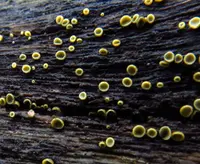
Chlorosplenium chlora is not a true plant but a small saprophytic fungus that grows on decaying wood. It is best known for its bright green, disc-like fruiting bodies that create vivid spots on rotting branches and logs. In nature, it is usually found in damp, shaded forests in temperate regions, where fallen wood stays moist. It plays a role in breaking down dead wood, contributing to nutrient cycling in the forest floor. For anyone interested in how to care for Chlorosplenium chlora in a controlled setting, it generally needs consistently damp, shaded conditions and access to well-decayed wood rather than typical potting soil.

Care Difficulty
Moderate Care

Light Preference
Partial Shade

Water Requirements
Keep Soil Moist

Temperature Preference
Warm Climate

Hardiness Zone
Unknown

Soil Texture
Loamy, Organic-rich

Soil pH
Acidic (5.5–6.5)

Soil Drainage
Moist but well-drained

Fertilization
Minimal (feed rarely)
Scan your plant to receive care tips personalized for your specific plant
Available on iOS and Android
This fungus prefers low, indirect light similar to a shaded woodland floor.
Moisture levels in the substrate are more important than any strict watering schedule.
This species responds strongly to cool, stable temperatures typical of shaded forest habitats.
This fungus favors consistently moist, high-humidity forest conditions and is sensitive to drying out.
This saprobic fungus grows on decaying wood, not soil, so substrate preparation focuses on woody material rather than typical potting mixes.
This species can be maintained in containers when grown on suitable wood substrates rather than conventional potting soil.
This small wood-inhabiting fungus is not a typical fertilized plant and usually gains nutrients from decaying wood rather than added products.
Pruning is not a standard practice for Chlorosplenium chlora, since it develops naturally on rotting wood without forming typical stems or branches.
Cultivation focuses on providing suitable decaying wood rather than classic repotting, since this species behaves as a saprophytic fungus.
Propagation of this species in home or hobby settings is rarely attempted and remains technically challenging.
This fungus is generally cold hardy in its natural range and needs no special winter care beyond stable habitat conditions.

Plant Health Check
Not sure what's wrong with your plant? Check your plant's health inside the app.
This fungus produces a vivid bluish‑green pigment that stains decaying wood and fallen branches, giving them a distinctive green coloration that can persist after the fruiting bodies disappear.
Its fruiting bodies are minute, often only 1–3 mm wide, forming shallow disc or cup shapes that are easily overlooked unless conditions are moist and light hits them at the right angle.
It most often colonizes well-rotted, damp hardwood in shady forests, where it helps break down lignin and cellulose, contributing to nutrient cycling in the forest floor.
This fungus is not considered edible. It is small, gelatinous, and offers no culinary value. There is limited information on its toxicity, so it is safest to treat it as inedible and avoid consumption.
Keep your plants happy and healthy with plant identification, disease detection, and easy care guidance.

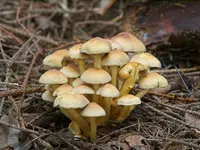
Sulphur Tuft
Hypholoma fasciculare
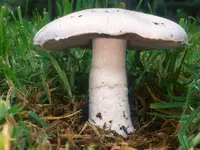
Meadow Mushroom
Agaricus campestris
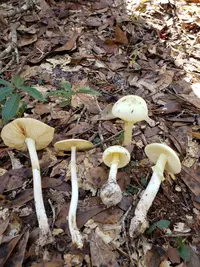
Coker's Lavender Staining Amanita
Amanita lavendula
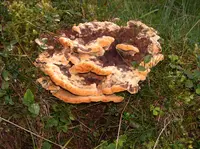
Dyer's Polypore
Phaeolus schweinitzii
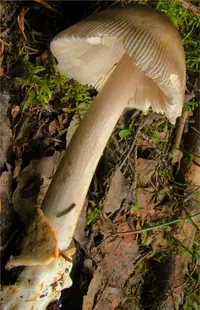
Gray-Zoned Ringless Amanita
Amanita battarrae
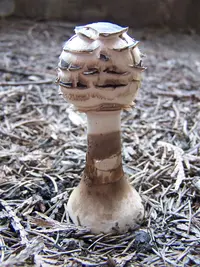
Shaggy Parasol
Chlorophyllum brunneum
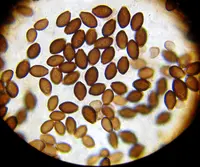
Panaeolus olivaceus
Panaeolus olivaceus
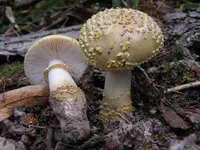
Franchet's Amanita
Amanita franchetii