


Site Hygiene Rotation
Rotate outdoor growing spots every 2–3 years and remove old mushroom debris after each flush to reduce buildup of fungal competitors and soilborne pathogens around Chlorophyllum brunneum.

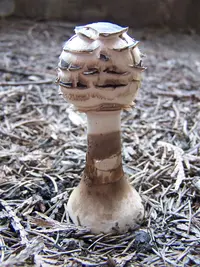
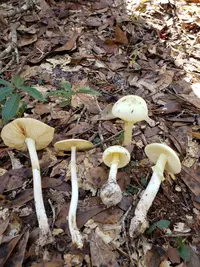
Shaggy parasol, Chlorophyllum brunneum, is a large, fleshy mushroom rather than a leafy plant. It forms thick, white caps covered with coarse brown scales and sturdy, pale stems. Young caps are rounded, then open into broad umbrellas as they mature.
This species is typically found in gardens, compost-rich beds, and disturbed soils in temperate regions, especially in parts of North America and Europe. It often appears in small groups or rings after rain.
Some related shaggy parasol species are considered edible for experienced foragers, but identification confusion and possible reactions make it unsuitable for casual harvest. Because of these risks, the best approach is to enjoy it in the landscape and avoid attempts to care for Shaggy Parasol as a food source.

Care Difficulty
Moderate Care

Light Preference
Partial Shade

Water Requirements
Regular Water

Temperature Preference
Warm Climate

Hardiness Zone
Unknown

Soil Texture
Loamy, Organic-rich

Soil pH
Slightly acidic (6.5–7.0)

Soil Drainage
Moist but well-drained

Fertilization
Minimal (feed rarely)
Scan your plant to receive care tips personalized for your specific plant
Available on iOS and Android
This soil-dwelling fungus prefers bright, gentle light rather than intense direct sun.
Moist, free-draining soil is essential for reliable fruiting of this fungus.
This species fruits best in mild, cool to warm conditions with no hard frost.
Humidity plays a minor role for this outdoor saprobic fungus, which mainly responds to overall soil and weather moisture rather than indoor air levels.
This fungus fruits best in loose, moist but free-draining soil that mimics organically enriched garden beds or lawn edges.
This species is poorly suited to containers because its mycelium naturally spreads through broad areas of soil and organic debris.
Chlorophyllum brunneum, often called shaggy parasol, usually grows in reasonably rich soil and needs only light feeding.
Pruning Chlorophyllum brunneum focuses on hygiene and safety rather than shaping, since it is a short-lived fruiting fungus.
Chlorophyllum brunneum is rarely potted; management usually means relocating outdoor substrate or patch areas rather than true repotting.
Chlorophyllum brunneum is most predictably propagated by encouraging mycelium in suitable substrate rather than by casual spore sowing.
Chlorophyllum brunneum is generally cold tolerant in temperate climates and needs minimal winter care once established outdoors.

Plant Health Check
Not sure what's wrong with your plant? Check your plant's health inside the app.
This species has a long history of confusion with Chlorophyllum molybdites, a highly toxic lawn mushroom; reliable identification depends on subtle features such as spore color, cap surface texture, and microscopic characters.
Chlorophyllum brunneum is mainly documented from western North America and a few other localized regions, unlike its close relatives that have a nearly worldwide distribution.
It typically appears on disturbed or nutrient-enriched soils such as garden beds, compost-enriched areas, and landscaped sites rather than in undisturbed forest habitats.

Chlorophyllum brunneum was long treated as a form of Chlorophyllum rhacodes until detailed microscopic study and DNA sequencing showed consistent differences, leading to its recognition as a distinct species in the late 20th century.
Identification is difficult, and this species can cause severe gastrointestinal upset in some people, even when correctly identified and well-cooked. For safety, it is best treated as inedible and not collected for food.
Keep your plants happy and healthy with plant identification, disease detection, and easy care guidance.

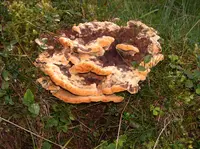
Dyer's Polypore
Phaeolus schweinitzii
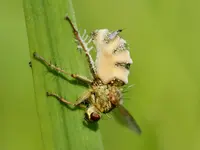
Fly Death Fungi
Entomophthora muscae
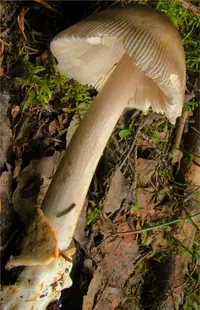
Gray-Zoned Ringless Amanita
Amanita battarrae
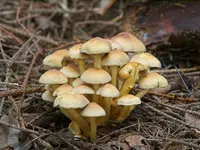
Sulphur Tuft
Hypholoma fasciculare
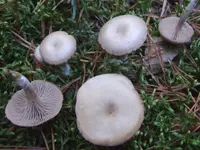
twotone funnel
Clitocybe metachroa
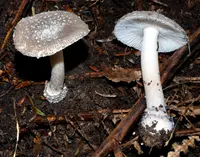
Maori dust amanita
Amanita nehuta
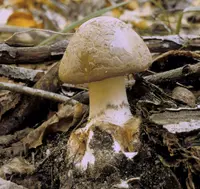
Brown American Star-footed Amanita
Amanita brunnescens
Coker's Lavender Staining Amanita
Amanita lavendula