Coker's Lavender Staining Amanita Care (Amanita lavendula)

Coker's Lavender Staining Amanita

About Coker's Lavender Staining Amanita

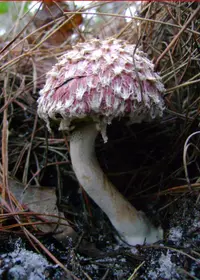
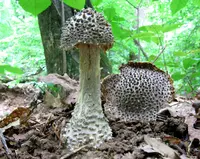
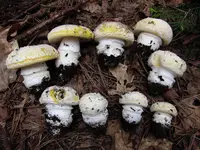
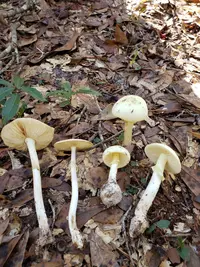
Coker's lavender staining amanita (Amanita lavendula) is a gilled mushroom, not a typical houseplant, known for its pale cap that can show soft lavender tones. The cap and stem often bruise or stain with lilac to violet shades when handled.

This species is associated with trees in forested habitats, forming mycorrhizal partnerships where the fungus and roots exchange nutrients. It is not domesticated, so attempts to care for Coker's Lavender Staining Amanita at home are generally experimental and challenging.

Successful growth depends on suitable tree partners, undisturbed soil, and natural forest-like moisture and shade, rather than controlled indoor or garden conditions.

Main Plant Requirements

Care Difficulty

Hard Care

Light Preference

Partial Shade

Water Requirements

Keep Soil Moist

Temperature Preference

Warm Climate

Hardiness Zone

Unknown

Soil Texture

Loamy, Organic-rich

Soil pH

Acidic (5.5–6.5)

Soil Drainage

Moist but well-drained

Fertilization

Minimal (feed rarely)

Get Personalized Care Plan

Scan your plant to receive care tips personalized for your specific plant

Available on iOS and Android

How to Care for the Coker's Lavender Staining Amanita

This ectomycorrhizal fungus prefers dappled woodland light rather than open, direct sun.

  • Site Coker's Lavender Staining Amanita under deciduous trees or shrubs where it receives bright shade or filtered light for most of the day, with at most 1–2 hours of gentle morning sun.
  • Avoid harsh midday and afternoon sun, which dries the soil surface quickly and can disrupt the moist conditions its mycelium needs to fruit well.
  • In summer, favor areas with denser canopy cover; in spring and autumn, slightly more open canopy or east-facing edges provide sufficient light without overheating the soil.

This species depends on consistently moist, well-drained soil rather than frequent surface watering.

  • Aim for soil that feels evenly moist 5–8 cm deep, never soggy; allow only the top 1–2 cm to dry between natural rains or any supplemental watering.
  • Prioritize drainage by growing Amanita lavendula in loose, leaf-litter-rich, sandy or loamy soil where water drains within a few minutes after heavy rain.
  • Watch for signs of excess moisture such as standing water, sour odor, or persistent slime on the surface, and for underwatering indicated by very dry, cracked soil and sparse or absent fruiting bodies in season.

This amanita favors temperate woodland conditions with cool to mild temperatures.

  • Optimal fruiting typically occurs around 55–70°F (13–21°C), with mycelium remaining active in the soil slightly outside this range if moisture is stable.
  • It tolerates cool weather down to about 32°F (0°C) in the soil, but hard, prolonged frost below this can damage fruiting bodies and slow underground growth.
  • Sustained heat above 80–85°F (27–29°C), especially with dry soil, reduces fruiting; partial shade, leaf litter, and consistent moisture help buffer against summer temperature spikes.

This fungus prefers consistently moist air but survives a moderate humidity range if the substrate stays damp.

  • Aim for 60–80% humidity to support even cap development and reduce drying of the fruiting bodies.
  • Tolerates brief dips to 40–50%, but repeated exposure causes cracked caps, curled margins, and faster aging.
  • Increase humidity with a fine-mist spray, a plastic humidity tent with ample air holes, or a humidifier near Coker's Lavender Staining Amanita, avoiding direct water spray on gills.

Amanita lavendula requires a specific soil environment that mimics its natural forest habitat to form fruiting bodies.

  • Use a loose, humus-rich, slightly sandy substrate layered over or around suitable host tree roots, never a dense potting mix alone.
  • Ensure rapid drainage with no standing water; excessive moisture around the base encourages bacterial decay and misshapen caps.
  • Maintain slightly acidic conditions around pH 5.0–6.0, incorporating leaf litter, fine bark, and a small amount of washed sand for structure.
  • Improve aeration by avoiding compaction, gently layering organic material, and keeping coarse particles distributed rather than settling at the bottom.

This species is generally unsuitable for long-term container growing because it forms mycorrhizal partnerships with tree roots in the ground.

This mycorrhizal fungus does not need routine fertilization and usually grows best in naturally balanced, undisturbed soil when caring for Coker's Lavender Staining Amanita.

Pruning is not applicable for Amanita lavendula, as it is a wild mushroom rather than a woody or leafy garden plant.

Transplanting Amanita lavendula is rarely practical because it depends on a specific mycorrhizal partnership with host tree roots.

  • Only consider moving soil containing the existing mycelium rather than individual fruiting bodies.
  • If relocation is attempted, transfer a generous volume of native soil around host tree roots in late fall or early spring.
  • Keep the soil profile orientation the same and avoid breaking up the root–fungus zone excessively.
  • Maintain similar moisture, shade, and leaf-litter conditions at the new site to reduce stress.

Propagation of Amanita lavendula in home settings is unreliable because it relies on complex spore-driven colonization of suitable tree roots.

Specific winter care is not needed, as the mycelium typically persists in soil while fruiting bodies die back seasonally.

Care Tips

Spore collection setup

Place a sheet of white and black paper or a glass slide under mature caps overnight to collect spore prints without disturbing the mycelium, allowing you to start new cultures or monitor spore quality.

Hygienic handling routine

Disinfect tools, trays, and work surfaces with 70% isopropyl alcohol before any contact with the substrate or mycelium to reduce contamination by molds and bacteria, which are common issues when growing Coker's Lavender Staining Amanita.

Substrate compaction control

Gently level and lightly firm the substrate when establishing mycelium but avoid heavy compression, which restricts air pockets and slows colonization while increasing the risk of anaerobic (low-oxygen) zones.

Targeted airflow management

Use a small, indirect fan on a low setting to maintain gentle air exchange around the fruiting area without blowing directly on the caps, which helps reduce excess carbon dioxide and keeps stems from becoming weak or elongated.

Environmental monitoring log

Keep a simple log of humidity, temperature, and any visual changes in the caps or gills each day so that shifts in color, texture, or growth rate can be linked to specific environmental changes and corrected early.

Common Pests and Diseases

Fungal gill spotting

This disease causes pale to lavender-brown spots and blotches on the gills and cap surface, often appearing as the fruiting body ages in warm, humid conditions. Symptoms include a water-soaked look and rapid breakdown of the gill tissue.

Solution

Remove and discard affected fruiting bodies promptly to limit spore spread, and avoid overhead watering or misting directly onto caps. Improve airflow around the substrate, keep humidity just high enough for development without condensation on surfaces, and rotate out heavily contaminated substrate batches.

Larval cap borers

These insects are small fly or beetle larvae that tunnel through the cap and stipe, leaving winding galleries and soft, collapsing tissue. Symptoms include small entry holes, frass (fine debris), and rapid structural failure of the mushroom.

Solution

Inspect developing fruiting bodies frequently and harvest promptly at maturity to reduce the window for egg laying. Remove and discard infested mushrooms and cover cultivation areas with fine mesh or insect netting to exclude adult insects from the substrate surface.

Slime mold overgrowth

This disease appears as slimy, often brightly colored patches creeping over the substrate and lower stem areas, outcompeting the mycelium. Symptoms include stalled pin formation and patches of substrate covered by a gelatinous film.

Solution

Physically remove visible slime mold with a clean tool and discard that portion of the substrate, then reduce surface moisture and improve air circulation. Avoid overwatering, keep surfaces free of decaying organic debris, and, if the outbreak is extensive, start a new culture from clean spawn.

Bacterial soft rot

This disease causes wet, mushy, foul-smelling collapse of caps and stipes, usually starting from small water-soaked lesions. Symptoms include a slippery surface and rapid liquefaction of the affected tissue in very humid, stagnant air.

Solution

Discard any fruiting bodies showing soft, foul-smelling areas and reduce relative humidity slightly to prevent condensation on caps. Increase air exchange, avoid water splashing on fruiting bodies, and keep tools and surfaces clean to limit bacterial spread.

Interesting Facts

Lavender staining reaction

This species is reported to show a distinctive pale lavender staining or bruising on damaged tissues, a feature that helps separate it from many white or cream amanitas that do not change color when handled.

Distinctive cap coloration

The cap is described in the scientific literature as having subtle lilac to lavender tones rather than the bright reds or oranges typical of better-known amanitas, giving it an unusual pastel appearance among its genus.

Mycorrhizal forest partner

Amanita lavendula forms ectomycorrhizal associations with trees, meaning its fungal threads wrap around tree roots and exchange mineral nutrients for sugars, contributing to forest soil health and tree vigor.

FAQs about Coker's Lavender Staining Amanita

Yes. This species is considered poisonous and should never be eaten. It can cause serious gastrointestinal and neurological symptoms. Avoid handling with bare hands, keep children and pets away, and never experiment with tasting wild fungi.

Grow Healthy Plants with Botan Care

Keep your plants happy and healthy with plant identification, disease detection, and easy care guidance.

Botan plant care app — identify plants on mobile

Explore More Plants