Habitat mimicry
Place substrate in a shallow, shaded tray with a loose layer of mixed hardwood leaf litter and fine wood chips to mimic the cool, humus-rich forest floor this fungus naturally colonizes.

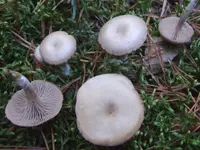
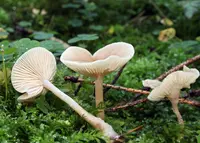
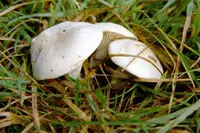
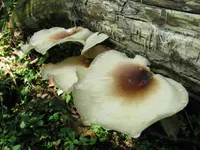
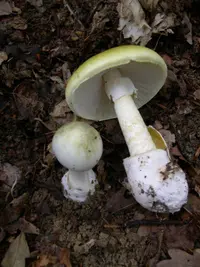
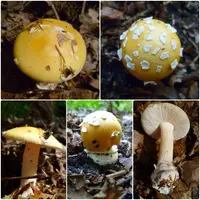
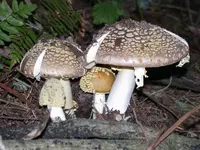
Twotone funnel, Clitocybe metachroa, is a small, funnel-shaped fungus rather than a true plant, typically found in woodland habitats. It usually forms groups or loose clusters on soil rich in decaying leaf litter. The cap often shows two-toned coloring, with a paler center and darker outer zone, which gives it a distinctive appearance. It fruits mainly in cool, moist seasons in temperate regions. This species is not suited to casual home cultivation and is generally left to natural forest conditions. Anyone wanting to understand how to care for twotone funnel should focus on maintaining or mimicking stable woodland moisture and undisturbed organic soil outdoors, rather than indoor culture.

Care Difficulty
Moderate Care

Light Preference
Partial Shade

Water Requirements
Regular Water

Temperature Preference
Cool Climate

Hardiness Zone
Unknown

Soil Texture
Loamy, Silty, Organic-rich

Soil pH
Acidic (5.5–6.5)

Soil Drainage
Moist but well-drained

Fertilization
Minimal (feed rarely)
Scan your plant to receive care tips personalized for your specific plant
Available on iOS and Android
Clitocybe metachroa prefers cool, shaded forest conditions rather than direct open sun.
Moisture for Clitocybe metachroa should mimic a consistently damp forest floor without remaining waterlogged.
Stable, cool temperatures support reliable development of this forest-dwelling fungus.
Humidity is not a controllable or relevant factor for practical home cultivation of Clitocybe metachroa or twotone funnel.
For any deliberate cultivation, Clitocybe metachroa requires a moist, airy, organic-rich substrate that mimics forest leaf litter rather than standard potting soil.
This woodland fungus is not suitable for conventional container growing, as it depends on complex soil and litter interactions that containers rarely provide.
Clitocybe metachroa is a wild, mycorrhizal fungus that does not require fertilization; added nutrients can disturb its natural soil community.
Clitocybe metachroa is not a plant and is not managed through pruning; its fruiting bodies are temporary fungal structures.
As a woodland fungus, twotone funnel is not suited to conventional repotting; it depends on stable soil and host roots rather than container culture.
Clitocybe metachroa reproduces naturally by spores in soil ecosystems, and deliberate propagation is rarely attempted in home settings.
This woodland fungus is naturally cold hardy and does not need intentional winter care in gardens or landscapes.

Plant Health Check
Not sure what's wrong with your plant? Check your plant's health inside the app.
This species typically fruits in needle litter under coniferous trees, especially spruce and fir, forming scattered groups or small troops rather than tight clusters.
The cap surface is hygrophanous, meaning it changes color as it dries, often appearing darker and more gray-brown when moist and then fading to paler, sometimes almost beige tones as it loses water.
Although not among the most notorious toxic fungi, it is considered inedible and potentially poisonous, and is therefore avoided by mycologists and field guides that focus on safe foraging rather than growing twotone funnel.
This species is considered inedible and potentially poisonous. Identification within the Clitocybe group is difficult, and several lookalikes are dangerously toxic. It should not be collected for food or tasted under any circumstances.
Keep your plants happy and healthy with plant identification, disease detection, and easy care guidance.