Sterilize Substrate
Before inoculation, pressure-cook or steam-pasteurize hardwood sawdust or chips to reduce competing fungi and bacteria and give the mycelium a strong head start.

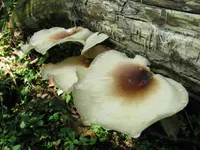
Bay polypore, Picipes badius, is a bracket fungus rather than a traditional leafy plant. It typically forms glossy, chestnut-brown, shelf-like caps on dead or living hardwood trunks and stumps. The caps have pale pores underneath instead of gills.
This species is native to temperate regions and is most often found in woodlands and urban parks on oak, beech, and other broadleaf trees. It plays an important role in wood decay and nutrient recycling.
Gardeners interested in how to care for Bay Polypore should know it prefers cool, shaded, consistently moist conditions and well-decayed wood rather than soil. It is not considered easy to cultivate indoors or in typical garden beds.

Care Difficulty
Moderate Care

Light Preference
Partial Shade

Water Requirements
Keep Soil Moist

Temperature Preference
Cool Climate

Hardiness Zone
Unknown

Soil Texture
Loamy, Silty, Organic-rich

Soil pH
Acidic (5.5–6.5), Slightly acidic (6.5–7.0)

Soil Drainage
Moist but well-drained

Fertilization
Minimal (feed rarely)
Scan your plant to receive care tips personalized for your specific plant
Available on iOS and Android
This wood-rotting fungus prefers shaded forest conditions rather than direct, open sun.
This species depends on consistently moist, but not waterlogged, woody material rather than direct surface watering.
This fungus is adapted to cool to mild forest climates with moderate seasonal variation.
This bracket fungus prefers fairly moist air but usually tolerates outdoor ambient humidity levels.
This wood-decay fungus naturally colonizes dead wood rather than mineral soil, so substrate choice focuses on organic structure and moisture behavior.
This species can be grown in containers when inoculated onto wood or woody substrates placed inside a pot or tub.
This wood-decay fungus typically grows on nutrient-rich woody substrates and does not require supplemental fertilization in cultivation or the wild.
Pruning is not a standard cultural practice for Picipes badius, as fruiting bodies are temporary structures and the organism mainly lives hidden in wood.
This species is usually grown on logs or woody substrate rather than conventional pots, so focus on renewing or relocating its substrate instead of true repotting.
Propagation of Picipes badius is specialized and usually handled by experienced growers using fungal culture methods rather than casual home techniques.
This wood-rotting fungus is generally cold hardy in its natural temperate range and needs no dedicated winter care when established on outdoor logs or stumps.

Plant Health Check
Not sure what's wrong with your plant? Check your plant's health inside the app.
The fruiting body typically shows a smooth, shiny, chestnut- to bay-brown cap that can become sticky when wet due to a gelatinous cuticle layer, a feature that helps reduce water loss and protects the tissue from desiccation.
This species most often fruits on dead or decaying conifer wood, especially pine, where it acts as a saprotroph, breaking down lignin and cellulose and contributing to nutrient recycling in forest ecosystems.
Instead of gills, it has a white to cream pore surface with fine, round pores on the underside of the cap, through which basidiospores are released and dispersed by air currents.
This fungus spreads slowly by spores and colonizing nearby dead or weakened wood. It does not usually overrun healthy gardens but can gradually extend along fallen logs, stumps, or stressed trees given stable moisture and shade.
Keep your plants happy and healthy with plant identification, disease detection, and easy care guidance.