Spore print checks
Periodically take a spore print from older caps on foil or paper to confirm the characteristic pale spore color and help avoid misidentification with other yellow Amanita species in mixed woodland collections.

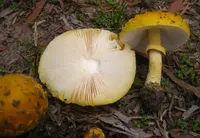
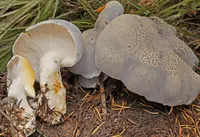
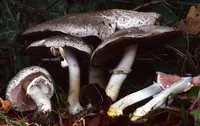
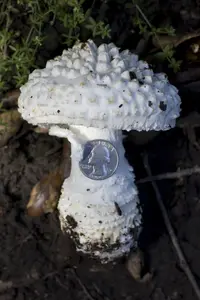
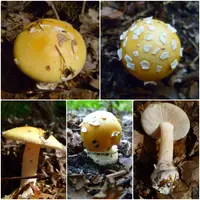
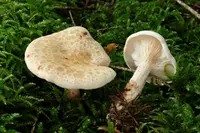
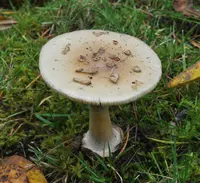
Australian Yellow Dust Amanita, Amanita flavella, is a small to medium woodland mushroom, not a typical houseplant. It forms bright yellow caps, often with fine powdery or dusty surface remnants, and a pale stem with a ring and basal cup. This species appears in association with native trees, forming mycorrhizal partnerships where fungus and roots exchange nutrients. It is most often recorded in eastern Australia in forested or coastal heath habitats. Amanita flavella can be difficult to cultivate because it relies on these living tree partners rather than standard potting mixes. Most people do not actively care for Australian Yellow Dust Amanita but instead observe it in suitable natural or semi-natural landscapes.

Care Difficulty
Hard Care

Light Preference
Partial Shade

Water Requirements
Keep Soil Moist

Temperature Preference
Warm Climate

Hardiness Zone
Unknown

Soil Texture
Loamy, Organic-rich

Soil pH
Acidic (5.5–6.5)

Soil Drainage
Moist but well-drained

Fertilization
Minimal (feed rarely)
Scan your plant to receive care tips personalized for your specific plant
Available on iOS and Android
This ectomycorrhizal fungus relies on dappled forest light rather than direct, open sun.
This forest-dwelling fungus needs consistently moist, not waterlogged, soil around its host tree roots.
This species fruits best in mild, temperate conditions without frost or extreme heat.
Humidity plays little role in the natural ecology and cultivation attempts of Amanita flavella, so active humidity management is generally unnecessary for Australian Yellow Dust Amanita.
Amanita flavella is a mycorrhizal fungus that relies on specific tree partners, so conventional potting mixes or garden soils are not suitable for cultivation.
This species is not realistically suitable for container growing because it depends on complex mycorrhizal relationships with host trees in undisturbed soil ecosystems.
This ectomycorrhizal fungus is not a houseplant and generally should not be fertilized directly.
Amanita flavella does not require or benefit from pruning because it is a wild mushroom, not a garden shrub or tree.
This fungus naturally partners with tree roots in soil and is not suited to typical container repotting.
Propagation of this wild ectomycorrhizal fungus is specialized and not recommended for casual cultivation.
This species is adapted to natural seasonal cycles and generally needs no deliberate winter care in situ.

Plant Health Check
Not sure what's wrong with your plant? Check your plant's health inside the app.
This species typically shows fine yellowish powdery remnants of the universal veil on the cap surface and upper stem, which help separate it from similar yellow amanitas that have thicker patches or warts instead of dust-like granules.
It forms ectomycorrhizal associations with eucalyptus species in eastern Australian forests, exchanging mineral nutrients from the soil for sugars from the tree roots and contributing to nutrient cycling in these ecosystems.
Fruiting bodies are most often recorded in cooler, wetter months in parts of eastern Australia, reflecting a preference for moist soil conditions and moderate temperatures when producing mushrooms.
This mushroom is considered very poisonous to both humans and pets. Ingestion can cause serious liver and kidney damage, neurological symptoms, or death. It must never be tasted, handled carelessly, or used as food or medicine.
Keep your plants happy and healthy with plant identification, disease detection, and easy care guidance.