


Mycorrhizal partners
In outdoor beds, keep existing tree roots and leaf litter intact, since this fungus typically fruits in association with host tree roots and disturbance can greatly reduce its ability to reappear in following seasons.

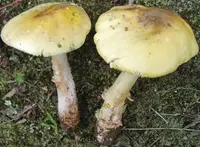
Yellow American Blusher, Amanita flavorubens, is a mycorrhizal fungus that forms symbiotic relationships with trees rather than a typical houseplant. It usually has a yellow to orange cap with scattered veil remnants and a stout, pale stem, giving it a classic toadstool look. This mushroom is found in woodlands, often under oaks and other hardwoods in parts of North America.
It is not suited to container culture or standard garden growing, since it depends on living tree roots. Because of this specialized lifestyle, it is considered difficult to cultivate intentionally, and most information on how to care for Yellow American Blusher focuses on preserving its woodland habitat rather than direct cultivation.

Care Difficulty
Moderate Care

Light Preference
Partial Shade

Water Requirements
Moderate Water

Temperature Preference
Cool Climate

Hardiness Zone
Unknown

Soil Texture
Loamy, Sandy, Organic-rich

Soil pH
Acidic (5.5–6.5)

Soil Drainage
Moist but well-drained

Fertilization
Minimal (feed rarely)
Scan your plant to receive care tips personalized for your specific plant
Available on iOS and Android
This ectomycorrhizal fungus prefers dappled woodland light rather than full exposure.
This woodland fungus depends on consistently moist, not saturated, soil and litter around its host trees.
This species is adapted to temperate woodland climates with cool to mild growing seasons.
This species is a wild ectomycorrhizal mushroom and humidity control is not a meaningful care factor in cultivation or landscape settings.
This fungus does not grow in conventional potting mixes and depends on specific outdoor soil conditions and tree partners.
This species is not suitable for container growing, because it relies on complex root partnerships in undisturbed ground soil.
In natural settings, the Yellow American Blusher (Amanita flavorubens) relies on its mycorrhizal partnership with tree roots and does not benefit from conventional fertilizing.
Amanita flavorubens is a wild mycorrhizal fungus and does not require horticultural pruning in the usual plant-care sense.
This species is not suited to normal pot culture because it depends on complex root associations with host trees, so transplanting attempts are rarely successful.
Propagation of Amanita flavorubens in home or hobby conditions is highly unreliable because it requires formation of a precise mycorrhizal relationship with compatible trees.
In its native range this fungus is naturally cold hardy and needs no targeted winter care in the landscape.

Plant Health Check
Not sure what's wrong with your plant? Check your plant's health inside the app.
The cap of this species typically starts pale yellow and develops reddish to wine-colored blotches or spots where handled or damaged, a trait that inspired its common name Yellow American blusher.
Its stem often shows ragged, yellowish veil remnants and fine fibrils, with a fragile ring that may discolor reddish, helping distinguish it from similar yellow amanitas in the field.
This mushroom is primarily associated with oak and other hardwoods in eastern North America, forming ectomycorrhizal partnerships in which its fine root-like fungal threads exchange mineral nutrients for carbohydrates from the host tree.
This mushroom is considered poisonous and should not be eaten by people or animals. It contains psychoactive and potentially neurotoxic compounds. Ingestion can cause gastrointestinal upset, confusion, and other serious symptoms. Always keep children and pets away.
Keep your plants happy and healthy with plant identification, disease detection, and easy care guidance.

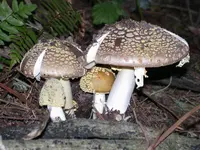
Western Yellow-veiled Amanita
Amanita augusta
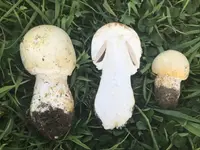
Agaricus crocodilinus
Agaricus crocodilinus
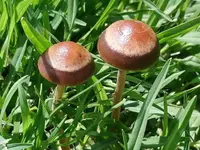
belted panaeolus
Panaeolus cinctulus
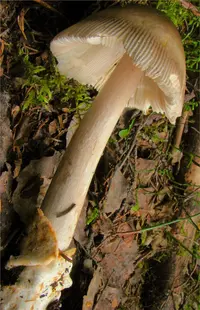
Gray-Zoned Ringless Amanita
Amanita battarrae
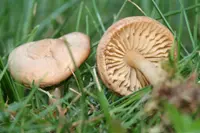
fairy ring marasmius
Marasmius oreades
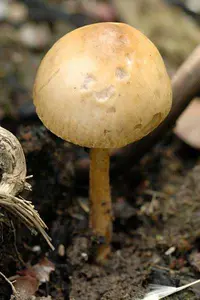
Common Fieldcap
Agrocybe pediades
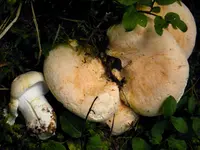
fused polypore
Albatrellopsis confluens
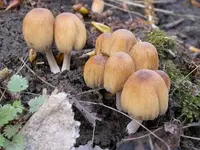
mica cap
Coprinellus micaceus