Precise substrate compression
Lightly tamp the colonized substrate so it is firm but not compacted, which supports even pin formation while still allowing proper gas exchange.

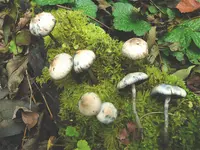
Psilocybe serbica is a small, wood-inhabiting mushroom species, not a traditional houseplant. It forms slender stems with brown caps that often show a darker center. In nature, it occurs mainly in Central and Eastern Europe, growing on decaying wood and rich forest debris.
This species is a saprotroph, meaning it feeds on dead organic material, which makes it dependent on very specific substrates and hygiene conditions. These requirements, along with its sensitivity to temperature and humidity shifts, make it challenging to cultivate reliably. Anyone looking into how to care for Psilocybe serbica should understand that it is best handled by experienced mushroom growers, not casual indoor plant keepers.

Care Difficulty
Hard Care

Light Preference
Partial Shade

Water Requirements
Keep Soil Moist

Temperature Preference
Cool Climate

Hardiness Zone
Unknown

Soil Texture
Loamy, Organic-rich

Soil pH
Acidic (5.5–6.5)

Soil Drainage
Moist but well-drained

Fertilization
Minimal (feed rarely)
Scan your plant to receive care tips personalized for your specific plant
Available on iOS and Android
This woodland fungus prefers low to moderate light that mimics dappled forest conditions.
Moist but not waterlogged substrate is critical for reliable fruiting and mycelium health.
Stable cool to mild temperatures support strong mycelial growth and healthy fruiting.
This fungus requires consistently high humidity to form and maintain healthy fruiting bodies.
The mycelium needs a loose, organic-rich substrate rather than typical garden soil.
This species can be grown in containers when moisture, gas exchange, and structural stability are carefully managed.
This saprophytic fungus gains most nutrients from its substrate, so Psilocybe serbica rarely benefits from extra fertilizer.
This fungus does not require pruning in the horticultural sense, but fruiting hygiene matters.
Management focuses on renewing or moving the colonized substrate rather than classic repotting.
Reproduction relies on spores and controlled mycelium expansion rather than conventional plant-style propagation.
Outdoor patches are generally cold tolerant in native-range conditions and need minimal winter intervention.

Plant Health Check
Not sure what's wrong with your plant? Check your plant's health inside the app.
This species was long confused with Psilocybe bohemica and related taxa until detailed microscopic and molecular studies in the 2000s clarified its identity and circumscribed it as Psilocybe serbica sensu stricto within a species complex.
In its native Central and Southeast European range, this mushroom typically fruits in the cool, humid part of the year, often from late summer through autumn and sometimes into early winter, aligning its life cycle with high moisture and moderate temperatures.
The species grows on well-decayed hardwood debris, wood chips, and rich forest litter, functioning as a saprotroph that helps break down lignocellulosic material and recycle nutrients in mixed and deciduous forests.

Molecular phylogenetic studies have placed this species within the Psilocybe semilanceata clade, showing that, despite clear differences in macroscopic appearance and habitat, it shares a relatively close evolutionary relationship with the well-known liberty cap mushroom.
Yes. This species contains psychoactive compounds that affect the central nervous system and is considered toxic, especially for children and pets. Ingestion can cause strong neurological and psychological effects. It should never be eaten casually or used without expert guidance.
Keep your plants happy and healthy with plant identification, disease detection, and easy care guidance.