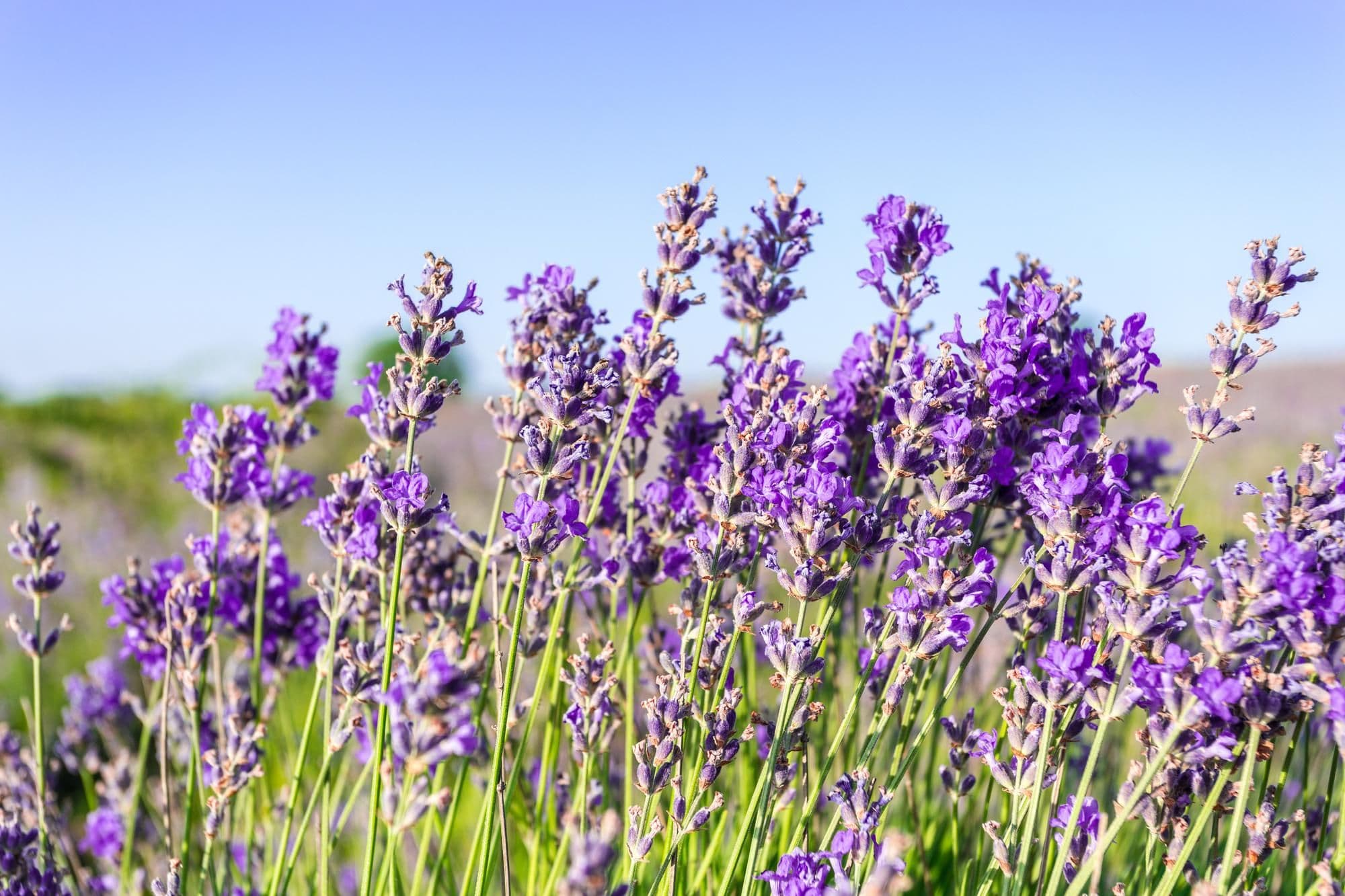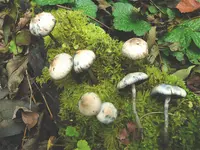

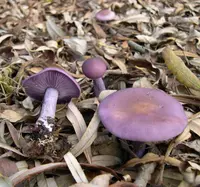
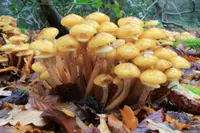
Psilocybe serbica Identification

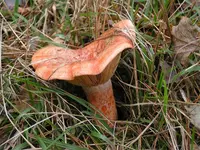
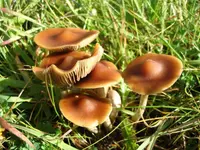
Recognize Psilocybe serbica by its small caramel- to chestnut-brown cap, usually 1-3 inches (2.5-7.5 cm) across, a slender pale stem, and crowded dark gills attached beneath the cap.

It typically appears in tight clusters, with caps often broadly convex to nearly flat and stems noticeably longer than the cap is wide.

Psilocybe serbica Identification

Check Your Plant ID

Take a photo and use Botan to confirm your plant identification.

Clear images work best. Avoid photos taken too close or too far away

Use a few visible mushroom features to check Psilocybe serbica.

  • Cap is small and bell-shaped to broadly conical, often with a slight central bump.
  • Cap surface is smooth and moist-looking, with a chestnut to brown center and paler margin when wet.
  • Gills are crowded, narrow, and attached to the stem, becoming dark purplish brown as spores mature.
  • Stem is slender and pale, usually 2-6 inches (5-15 cm) tall, with no ring.
  • Flesh and stem often show blue-green bruising where handled or damaged.

Check several features together, since no single visible trait is enough on its own.

Psilocybe serbica shows useful visual shifts mainly as its fruit bodies expand and age.

  • Young plant: Very young fruit bodies appear as small pins, with a rounded cap and stout stem; the cap margin stays strongly inrolled over the developing gills.
  • Mature plant: Expanded mushrooms show a broader cap, often conical to bell-shaped then flatter, about 1-4 inches (3-10 cm) across, with a more elongated stem.
  • Fruiting stage: At full development, gills darken as spores mature, while handling or age brings distinct blue bruising on the cap and stem in Psilocybe serbica.

Psilocybe serbica is most identifiable in the fruiting season, usually in fall. Fresh mushrooms appear in clusters on woody debris or rich forest litter, making the species visible when fruit bodies were absent earlier. In wet fall weather, caps look moist and darker; as they dry, they become much paler. This contrast can be a useful field clue.

Psilocybe serbica is documented from parts of central and southeastern Europe, including the Balkans and nearby regions. It is most often found in humid deciduous woods, especially on dead hardwood, woody debris, and mulched ground. That habitat is a useful identification clue because it helps separate this species from similar Psilocybe more often associated with dung or open grassland.

  • Misidentification risk: This mushroom is safety-relevant because a wrong ID can lead to poisoning in humans or pets after ingestion. Small brown woodland mushrooms are easy to confuse with dangerous species.
  • Critical look-alike: Galerina marginata is a serious toxic look-alike. It usually has a persistent ring on the stem and rusty-brown spores, while Psilocybe serbica lacks a ring and has dark purplish-brown spores.

Confirm It from a Photo

Botan can review an image to help identify it or confirm your match before you rely on a visual comparison.

FAQ

A key separator is habitat and stature. This species grows on decaying hardwood debris and often has a more elongated stem, while many close look-alikes differ in substrate, cap shape, or the strength of blue bruising.

More Plant Identification Guides

Identify First. Learn What Comes Next.

Use Botan to identify it from a photo, then see plant details, safety notes, and common problems for that species.

Botan app identifying a plant from a photo
Dill Companion Plants – What to Grow Next to Dill

9 min read · 17 Jul 2026

Dill Companion Plants – What to Grow Next to Dill

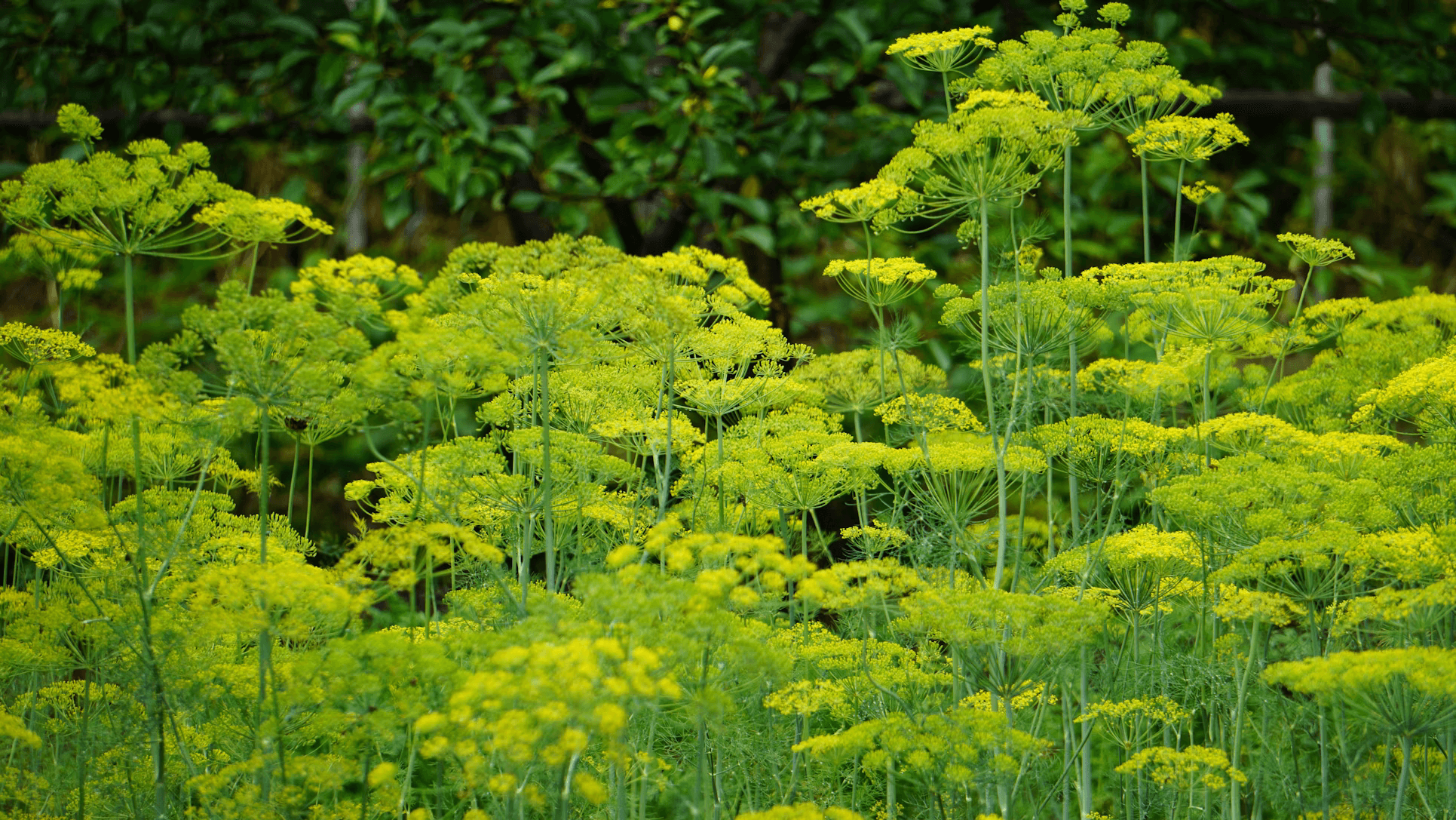
Dill is an easy-to-grow plant that gets along well with many vegetables. This guide describes 15 plants that can be planted alongside it, a few to avoid, and mistakes that can quietly sabotage the entire process.

Plant Recommendations
Dill Companion Plants – What to Grow Next to Dill
How to Bottom Water Plants: Complete Guide

6 min read · 13 Jul 2026

How to Bottom Water Plants: Complete Guide

Bottom watering helps soil absorb moisture evenly and keeps foliage dry, reducing the risk of missed dry spots or root problems. Place the pot in a tray of water for a short time, then let it drain well.

Plant Care
How to Bottom Water Plants: Complete Guide
12 Best Plants That Repel Spiders For Your Home and Garden

8 min read · 24 Jul 2026

12 Best Plants That Repel Spiders For Your Home and Garden

Spiders constantly appear in places you don't want them. A few common plants can help repel them using scent alone. Here are 12 options suitable for both indoors and outdoors, plus care tips for each.

Plant Recommendations
12 Best Plants That Repel Spiders For Your Home and Garden