


penis envy mushroom Identification (Psilocybe cubensis)

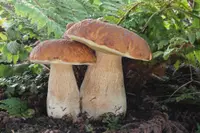
To recognize Psilocybe cubensis, check for a broad convex to flat cap, a pale stem with a persistent ring, and dark purple-brown gills.

Fruiting bodies are medium to large, often with caps about 2-6 inches (5-15 cm) wide and stems several inches tall.

Psilocybe cubensis Identification

Is This penis envy mushroom?

Take or upload a photo to confirm your plant ID with Botan.

Clear images work best. Avoid photos taken too close or too far away

Use these visible traits to check for Psilocybe cubensis.

  • Cap is broadly convex to flat, often with a low central bump, usually 2-8 inches (5-20 cm) across.
  • Gills are crowded and free from the stem, sitting just short of where the stem meets the cap.
  • Stem is pale, fairly thick, and mostly even-sided, commonly 2-6 inches (5-15 cm) tall.
  • A skirt-like ring usually hangs on the upper stem from the partial veil.
  • The mushroom often appears in small groups rather than as a single isolated fruiting body.

Check several features together, especially cap shape, free gills, and the stem ring.

Psilocybe cubensis shows clear visual changes from pin formation to mature fruiting bodies.

  • Young plant: Pins begin as tiny, rounded knots with short pale stems and closed caps, lacking the distinct bell shape and expanded cap surface seen later.
  • Mature plant: The stem elongates and the cap broadens to about 1-4 inches (2.5-10 cm) wide, shifting from convex to flatter with a central bump.
  • Fruiting stage: A partial veil tears as the cap opens, exposing dark gills beneath; older specimens often show bruising blue on the stem or cap margin.

Several named Psilocybe cubensis forms are identified in part by consistent cap, stem, or overall fruiting-body shape.

  • Penis Envy: Thick, swollen stem and a small cap that often stays partly closed, unlike the broader umbrella-like cap of the typical form.
  • Albino Penis Envy: Shares the thick-stemmed, underdeveloped-cap shape of Penis Envy but is pale white to cream overall, with little to no brown cap pigment.
  • Golden Teacher: Usually shows a more distinctly golden to caramel cap center with a paler margin, rather than a more evenly brown cap.
  • Albino A+: Fruiting bodies are very pale white to cream, often with a faint bluish cast where bruised, instead of the usual tan to brown cap coloring.

A few dung-loving brown mushrooms are commonly mistaken for Psilocybe cubensis.

blue meanie(Panaeolus cyanescens)

Confusion happens because both can grow on manure and may bruise blue. Panaeolus cyanescens is usually smaller and slimmer, with a pale gray to whitish cap, while P. cubensis is more robust with a broader caramel to golden-brown cap.

mottlegill(Panaeolus antillarum)

This species often appears in the same habitat and can have a similar pale cap shape when young. It lacks the strong blue bruising and usually has a brighter white to cream cap with darker mottled gills as it matures.

Psilocybe cubensis is widely reported from tropical and subtropical parts of the Americas and is now found in many other warm regions. Its exact native range is not settled, so geography alone is not a reliable ID clue. Habitat is more useful. It is typically found in grazed pastures, especially on cattle dung, rather than in woodland or on rotting logs. That setting helps narrow identification.

  • Human ingestion: The fruiting body contains psilocybin and psilocin, psychoactive compounds. Ingestion is harmful to humans, especially children. It is not a skin-contact hazard in normal handling.
  • Pet ingestion: Dogs and cats can be harmed if they eat the fruiting body. The concern is ingestion, not touch.
  • Dangerous mix-ups: Wrong identification is a serious risk. Deadly Galerina marginata can be confused with it, but Galerina has a rusty-brown spore print instead of the dark purple-brown spore print of Psilocybe cubensis.

Scan. Check. Confirm.

Use Botan to identify or confirm it from a photo, so you can compare findings quickly and avoid second-guessing.

FAQ

This species typically fruits on cattle dung or rich manured grasslands in warm, humid regions. It is not a typical forest-floor mushroom. Habitat helps narrow Psilocybe cubensis identification, especially when paired with cap and stem traits.

More Plant Identification Guides

From Plant ID to Plant Info

Identify it from a photo with Botan, then review plant details, care information, and safety notes matched to the result.

Botan app identifying a plant from a photo
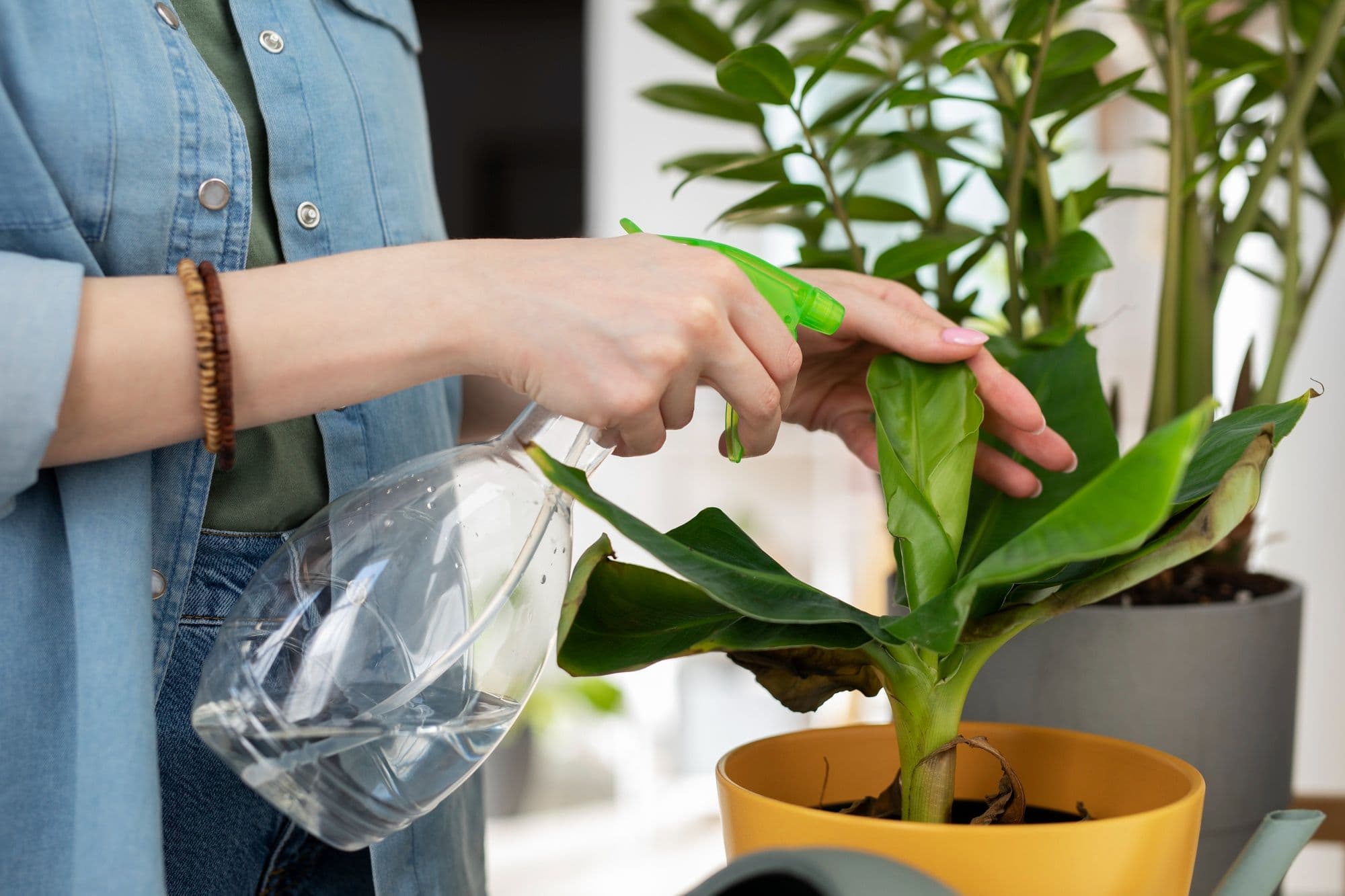
How to Mist Plants – Proper Technique and Common Mistakes

7 min read · 30 Jul 2026

How to Mist Plants – Proper Technique and Common Mistakes

Find out when misting works well and when to avoid it. Here, you’ll find detailed information about compatible and incompatible species, tips on how often to mist plants and do it correctly, and some great alternatives for raising humidity.

Beginner Guides
How to Mist Plants – Proper Technique and Common Mistakes
Plants That Repel Bugs – 20 Effective Options

12 min read · 16 Jul 2026

Plants That Repel Bugs – 20 Effective Options

Mosquitoes on the patio? Gnats in the kitchen? Some plants keep them away with the scent of their own leaves. Here are 20 that deal with mosquitoes, flies, aphids, and more, plus where to put them so they help.

Plant Recommendations
Plants That Repel Bugs – 20 Effective Options
How to Tell if a Plant Is Dead

6 min read · 19 Aug 2026

How to Tell if a Plant Is Dead

A plant can lose its leaves, stop growing, or collapse and still remain alive. A closer look at the stems, roots, bulbs, and tubers can show whether the plant still has a chance to recover.

Beginner Guides
How to Tell if a Plant Is Dead