Jackson's slender Caesar Identification (Amanita jacksonii)

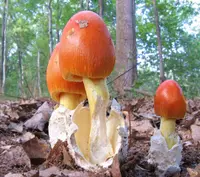
Recognize Jackson's slender Caesar by its orange to red cap with a distinctly striate margin, free yellow gills, and a yellow stem that rises from a white, sack-like volva at the base.

At first glance, the cap is often 3 to 5 inches (8 to 13 cm) wide, with no ring on the stem.

Amanita jacksonii Identification

Check Your Plant ID

Take or upload a photo to confirm your plant ID with Botan.

Clear images work best. Avoid photos taken too close or too far away

Check the cap, stem, gills, and base for a few clear mushroom features.

  • Cap is egg-shaped at first, then convex to nearly flat, usually 2-5 inches (5-13 cm) wide, with a smooth orange to orange-red top and a lined margin.
  • Gills are free from the stem and bright yellow to orange-yellow, crowded under the cap.
  • Stem is slender, yellow, and topped by a hanging yellow ring.
  • Base sits in a white, sacklike volva that cups the stem like a sheath.

View the whole mushroom, especially the ring and cup at the base, before deciding.

Amanita jacksonii shows distinct visual changes as the mushroom expands from button to maturity.

  • Young plant: At first it appears as an egg-like button enclosed in a white universal veil, with the cap and stem still mostly hidden.
  • Mature plant: As it expands, the cap becomes convex to broadly flat, often 3-5 inches (8-13 cm) wide, while the white volva remains saccate at the base.
  • Flowering stage: The stem elongates and shows a skirt-like ring, and the cap surface turns bright orange to red with a yellow margin.

Amanita jacksonii is most recognizable from summer into fall, when the fruiting body appears above the ground. Look for the bright orange to red cap, yellow stem, and white saclike volva at the base. Outside its fruiting period, these mushrooms are usually absent, so there are no persistent stems, leaves, or woody parts to check.

A few eastern North American Amanitas can be mistaken for Jackson's slender Caesar.

American Caesar's mushroom(Amanita arkansana)

Both have orange to red caps and a yellow stem. Amanita arkansana is usually stouter, with a thicker stem and cap margin that often stays less strongly lined or striate, while A. jacksonii is more slender and typically shows a deeply lined cap edge.

false Caesar(Amanita banningiana)

This species shares a bright orange cap and yellow stem. It is usually more robust overall, and the cap often lacks the long, pronounced striations that are a quick field mark on A. jacksonii.

Amanita jacksonii is native to eastern North America, documented from the eastern United States into Mexico and Central America. In the US, it is most often reported in the Southeast and eastern woodlands, which helps narrow identification when a similar mushroom appears far outside that range. It grows on the ground in hardwood or mixed forests, especially with oaks, in summer and fall. Habitat matters here because this species is a woodland Amanita, not a lawn, pasture, or wood-chip species.

  • High misidentification risk: This mushroom belongs to Amanita, a genus that includes deadly species. The main concern is ingestion by humans or pets after a wrong ID, not skin contact.
  • Dangerous look-alikes: It can be confused with poisonous Amanita species such as Amanita phalloides and destroying angels. A key separating feature is the stem: Amanita jacksonii typically has orange to yellow coloring, while those deadly look-alikes usually have a plain white stem.

Confirm the Species with Botan

Upload a photo to compare key details and get help identifying or confirming what you found.

FAQ

Young specimens start as egg-like buttons enclosed in a white universal veil. As they expand, the orange to red cap emerges, the yellow stem elongates, and a white saclike volva remains at the base.

More Plant Identification Guides

From Plant ID to Plant Info

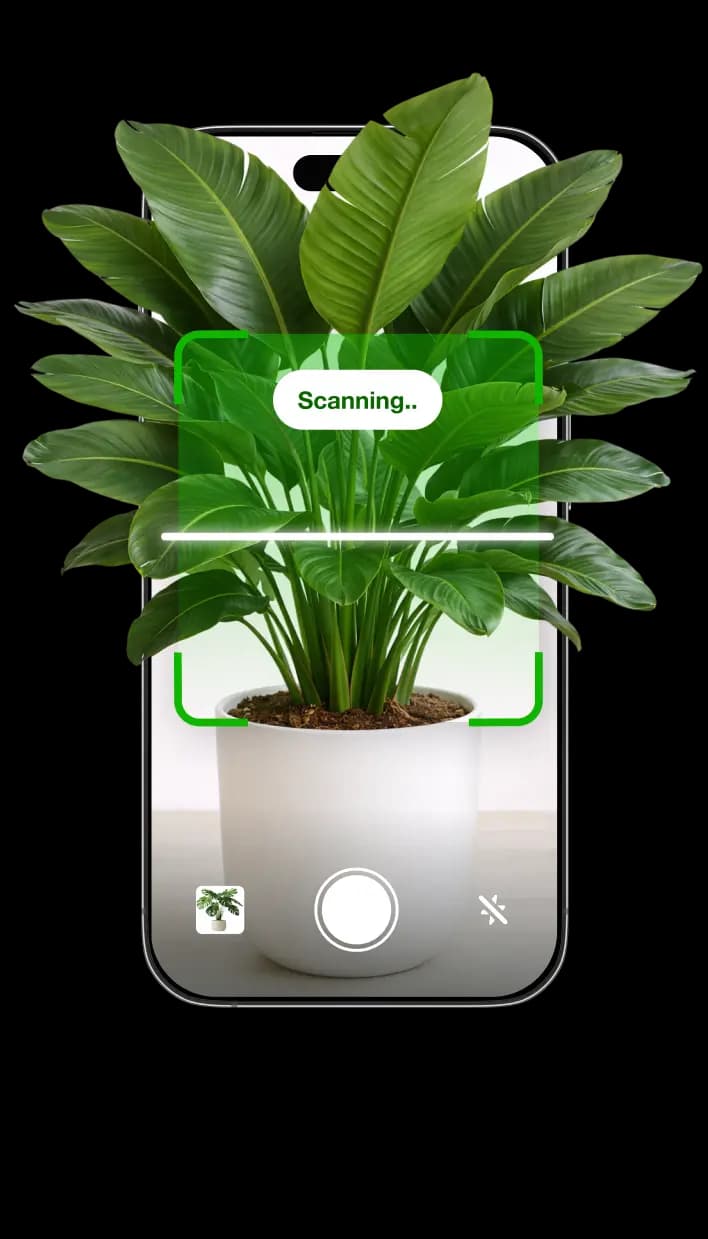
Use a photo to identify the plant, then get species-specific details, care information, and safety notes in Botan.

Botan app identifying a plant from a photo
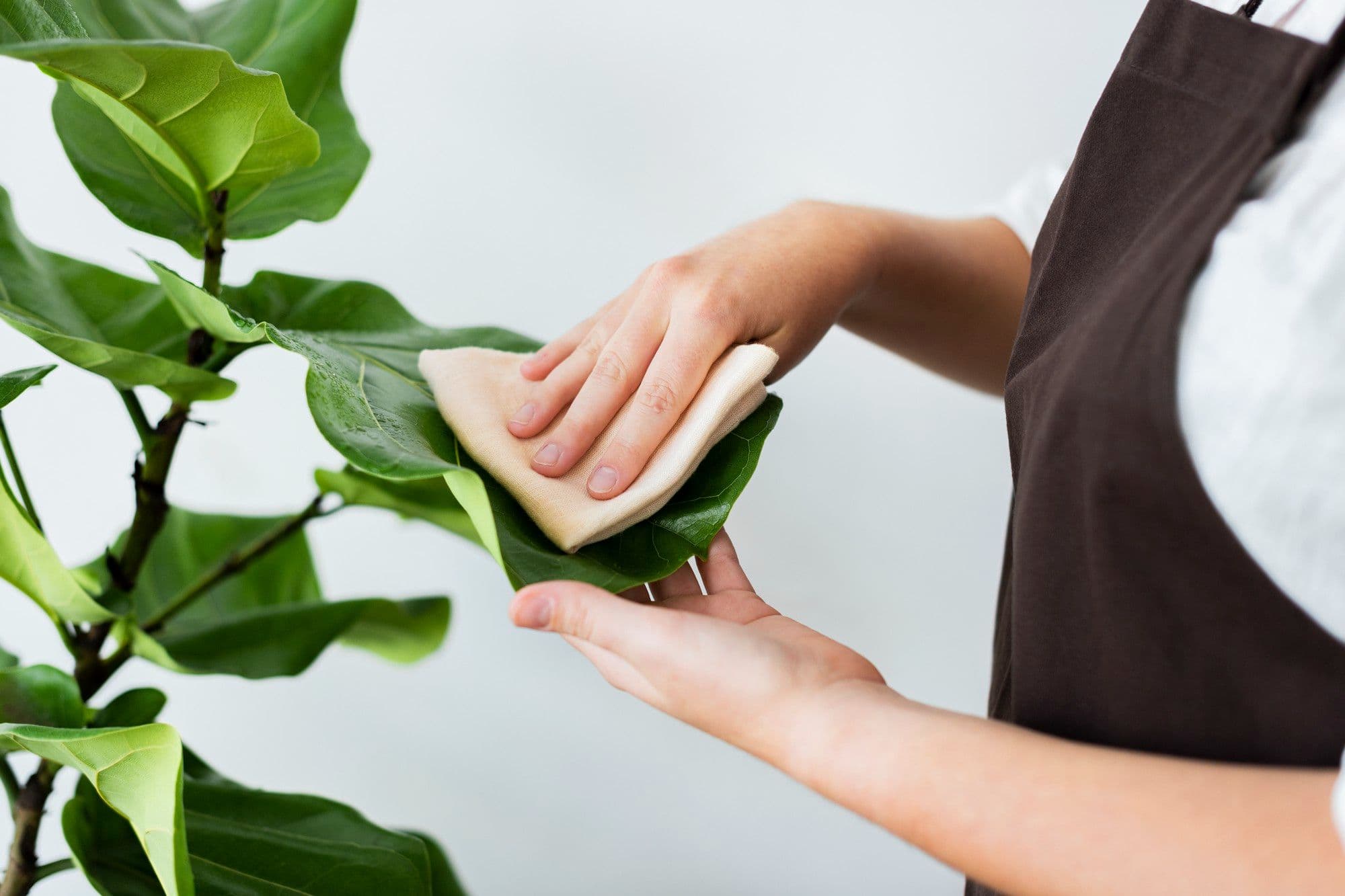
How to Clean Plant Leaves: A Simple Care Guide

6 min read · 4 Aug 2026

How to Clean Plant Leaves: A Simple Care Guide

Dusty leaves look dull and don't absorb light well. Below, you'll find simple ways to clean them, which tools are truly effective, how often you should do it, and what causes damage.

Beginner Guides

How to Clean Plant Leaves: A Simple Care Guide
12 Best Landscaping Trees for Your Garden

8 min read · 6 Oct 2026

12 Best Landscaping Trees for Your Garden

Choosing the landscape tree depends on what your garden needs most. These 12 options include compact flowering specimens, colorful deciduous trees, shade varieties, and evergreens suitable for screening and year-round structure.

Plant Recommendations
12 Best Landscaping Trees for Your Garden
What Do Plants Need to Grow – 5 Things Every Greenery Can't Live Without

8 min read · 31 Jul 2026

What Do Plants Need to Grow – 5 Things Every Greenery Can't Live Without

To keep plants healthy and thriving, provide the right balance of light, humidity, nutrients, airflow, and quality soil. This guide covers the essentials of year-round plant care.

Beginner Guides
What Do Plants Need to Grow – 5 Things Every Greenery Can't Live Without