



boxelder tree Identification (Acer negundo)

To recognize boxelder tree, check for opposite leaves that are compound, usually with 3 to 7 leaflets, a rare pattern in maples. Twigs are green to purplish and often have a whitish coating.

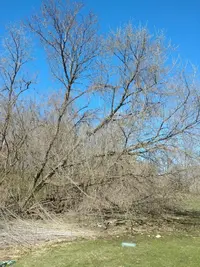
Mature trees often form an irregular, broad crown and commonly reach about 30 to 50 feet (9 to 15 m) tall.

Acer negundo Identification

Identify Your Plant with Botan

Take a photo and use Botan to confirm your plant identification.

Clear images work best. Avoid photos taken too close or too far away

Use these quick checks to assess Acer negundo by sight.

  • Leaves are opposite on the twig and compound, not simple.
  • Each leaf usually has 3-7 leaflets, often unevenly lobed or with coarse teeth.
  • Leaflets are typically 2-4 inches (5-10 cm) long, with the end leaflet larger than the side ones.
  • Twigs are green to purplish, fairly smooth, and often show a whitish coating.
  • Fruits hang in paired winged samaras, with the two wings forming a narrow to wide V.

Paired samaras and opposite compound leaves are the fastest visual clues.

Acer negundo shows clear visual shifts from compound-leaved seedlings to broad, fruiting trees.

  • Seedling: Seedlings show opposite first leaves on slender green stems, then quickly produce small compound leaves, unlike many maples with simple juvenile foliage.
  • Young plant: Young plants form fast, upright shoots with long internodes and large compound leaves, often 6-12 inches (15-30 cm) long, giving a loose outline.
  • Mature plant: Mature trees develop a broad, irregular crown, stout trunk, and spreading limbs; bark turns gray-brown and furrowed instead of staying smooth and greenish.
  • Fruiting stage: Fruiting branches carry hanging pairs of winged samaras in dense clusters, adding a conspicuous, tassel-like look absent before seed set.

Several named forms of Acer negundo can be recognized by leaf color and growth habit.

  • Acer negundo 'Flamingo': New leaves are pink-flushed and mature with white to cream margins, giving a consistently variegated canopy unlike the plain green typical form.
  • Acer negundo 'Variegatum': Leaves are irregularly edged and splashed with white, often across much of each leaflet, rather than solid green.
  • Acer negundo 'Auratum': Foliage emerges bright yellow to golden and stays noticeably lighter than the species through the growing season.
  • Acer negundo 'Violaceum': Young shoots show a distinct purple to violet tint, especially noticeable on new stem growth compared with ordinary greenish twigs.

In spring, Acer negundo leafs out with compound leaves, often as dangling clusters of small yellow-green flowers are visible before or with the new foliage. Female trees then develop hanging winged seed pairs that remain noticeable into late summer or fall. After leaf drop in fall, the tree is easier to recognize by its greenish to purplish young twigs and opposite branching, which stand out through winter.

A few trees are regularly mistaken for boxelder because they share compound leaves.

ash(Fraxinus spp.)

Ash can resemble it at a glance because both have opposite branching and compound leaves. Ash leaflets are usually more numerous, often 5-9, and the paired winged seeds are single paddles, not the joined V-shaped pairs seen on maples.

poison-ivy(Toxicodendron radicans)

Seedlings and vine-free juvenile shoots can confuse beginners because both may show 3 leaflets. Poison-ivy is usually a vine or low shrub, not a tree, and its leaves are alternate rather than opposite on the stem.

Acer negundo is native across much of North America, from southern Canada through most of the United States and into northern Mexico. It is most often found in floodplains, streambanks, lake edges, and other moist bottomlands. Seeing it in disturbed river corridors or low, seasonally wet ground can help separate it from many upland maples.

Confirm It from a Photo

Use Botan to identify or verify the plant from a photo, helping avoid mix-ups with similar species.

FAQ

Leaves are opposite, with one leaf attached directly across from another on the twig. That maple trait helps in boxelder tree identification, even though this species has compound leaves unlike most maples.

More Plant Identification Guides

From Plant ID to Plant Info

Identify a plant from a photo, then get species-specific care information, safety notes, and common problems.

Botan app identifying a plant from a photo
How to Clean Plant Leaves: A Simple Care Guide

6 min read · 4 Aug 2026

How to Clean Plant Leaves: A Simple Care Guide

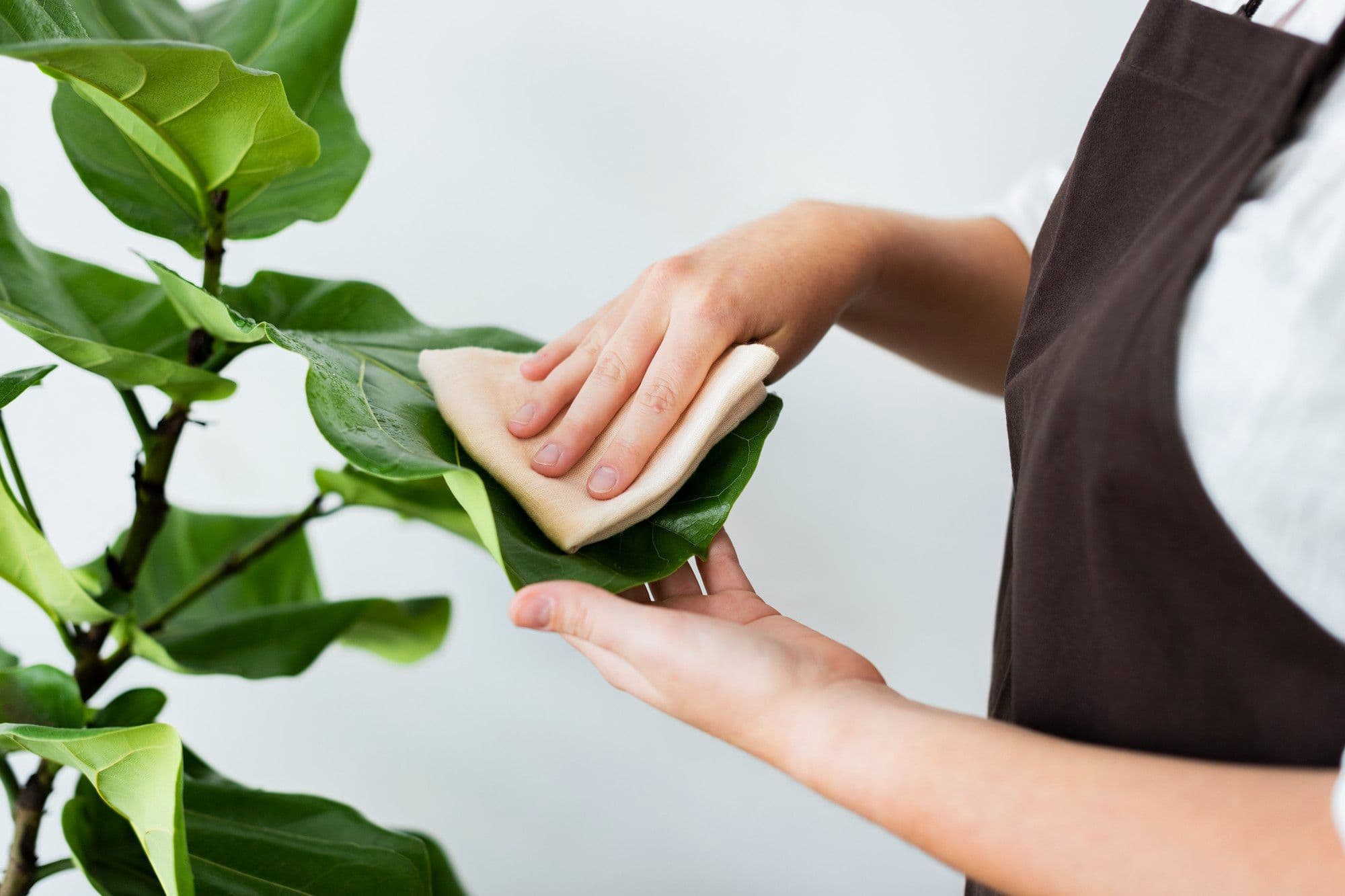
Dusty leaves look dull and don't absorb light well. Below, you'll find simple ways to clean them, which tools are truly effective, how often you should do it, and what causes damage.

Beginner Guides
How to Clean Plant Leaves: A Simple Care Guide
Top 15 Fast-Growing Trees For Your Garden

13 min read · 28 Jul 2026

Top 15 Fast-Growing Trees For Your Garden

Learn which of the 15 fastest-growing trees will suit your area. We’ll share detailed information on each: growth rate, mature spread, key tree demands, and main vulnerabilities. Read on and make the best choice possible.

Plant Recommendations
Top 15 Fast-Growing Trees For Your Garden
12 Best Plants for Bathroom That Thrive in Humid Conditions

9 min read · 29 Sept 2026

12 Best Plants for Bathroom That Thrive in Humid Conditions

Discover the 12 best plants for bathroom spaces. Each pick comes with its own advantages, plus light, humidity, watering, and placement tips. Take a look and match the plant to your specific bathroom.

Plant Recommendations
12 Best Plants for Bathroom That Thrive in Humid Conditions