

Blewit Identification (Lepista nuda)

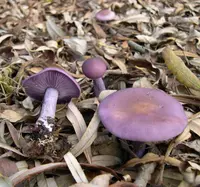
To recognize Blewit, look for a stout mushroom with a lilac to violet cap 2-6 inches (5-15 cm) across and crowded, pale lilac gills attached to the stem.

The stem is thick, fibrous, and similarly lilac, usually 1-3 inches (3-8 cm) tall, giving the fruiting body a compact, broad-capped shape.

Lepista nuda Identification

Identify a Plant by Photo

Check your plant ID by uploading a clear photo to Botan.

Clear images work best. Avoid photos taken too close or too far away

Check the mushroom’s color, cap, gills, and stem at a glance.

  • Cap is smooth and fleshy, often lilac to violet, becoming flatter with a shallow center as it expands.
  • Cap width is commonly about 2-6 inches (5-15 cm), with the margin inrolled when young and later more even.
  • Gills are crowded and attached to the stem with a slight notch, usually pale lilac to pinkish buff.
  • Stem is stout, central, and club-shaped to nearly equal, often with lilac tones and no ring.

A full view of cap, gills, and stem together is the most useful quick check.

Lepista nuda shows clear visual shifts as the mushroom body expands and matures.

  • Young plant: Buttons are compact, rounded, and strongly inrolled at the cap margin, with thick flesh and a short stem that keeps the gills mostly hidden.
  • Mature plant: The cap expands to about 2-6 inches (5-15 cm), becoming flatter or shallowly depressed; the margin relaxes, and the stem appears more proportionate beneath exposed lilac gills.
  • Fruiting stage: In fully developed fruiting bodies, crowded gills are clearly visible under the cap, and the lilac to buff-lilac tones often look less intense than in younger specimens.

Lepista nuda is most useful seasonally in fall to early winter, when the fruiting bodies appear. Look for fresh lilac to violet caps, gills, and stems, often fading to buff or tan with age. Outside the fruiting season, those mushrooms are absent, so there are few reliable visual clues from seasonal change alone.

Several purple mushrooms can be mistaken for Blewit.

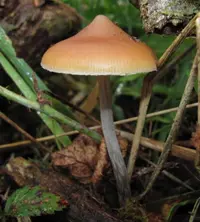
wood blewit(Lepista saeva)

Similar lilac tones and crowded gills can confuse it with Lepista nuda. The cap is usually tan to buff rather than purple, while the stout stem is more distinctly lilac.

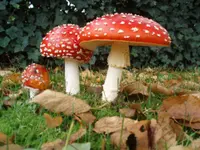
amethyst deceiver(Laccaria amethystina)

Both can be purple. This species is much smaller, with a cap often under 2 inches (5 cm) wide, and it has thick, widely spaced gills rather than crowded ones.

violet webcap(Cortinarius violaceus)

It shares a dark violet color and stocky shape. Unlike Lepista nuda, it has a dry, velvety cap and stem, not a smoother surface.

Lepista nuda is widely recorded across temperate Europe and North America, and it is also reported from other temperate regions. For identification, habitat is useful because this mushroom is most often found in cool, moist sites rather than open dry ground. It typically grows on leaf litter, woody debris, or rich organic matter in deciduous and mixed woodland, and it also appears in gardens, compost-rich borders, and park edges. Finding it in clusters on decomposing litter helps narrow the ID.

  • Hazardous look-alikes: Lepista nuda is a mushroom, so misidentification is a real ingestion risk for humans. Purple Cortinarius species are the most important dangerous look-alikes; they often show a cobwebby cortina on young caps and rusty-brown spores, unlike the pinkish spore print of Lepista nuda.
  • Not for pets to eat: Mushrooms are a common poisoning risk for pets through ingestion. Do not let dogs or cats eat wild fruiting bodies identified as Lepista nuda, since field confusion with toxic species is possible.

Not Sure About the ID?

Use Botan to identify or confirm it from a photo, which helps reduce mix-ups before you label or record it.

FAQ

The most reliable feature is the overall lilac to violet color, especially on the cap, gills, and stem when fresh, combined with crowded gills and a smooth cap. This is central to Lepista nuda identification.

More Plant Identification Guides

Identify It. Learn More About It.

Identify it from a photo with Botan, then review plant details, care information, and common problems for that species.

Botan app identifying a plant from a photo
Rice Water for Plants – Which Plants Love It and How to Make It

8 min read · 14 Jul 2026

Rice Water for Plants – Which Plants Love It and How to Make It

Rice water can be an ideal DIY solution for orchids, roses, or fruiting plants. It supports growth, leaf count, and height. We’ll share how to make and apply it correctly for your plant.

Plant Care
Rice Water for Plants – Which Plants Love It and How to Make It
How to Repot a Plant: A Step-by-Step Guide

7 min read · 28 May 2026

How to Repot a Plant: A Step-by-Step Guide

In spring, many plants need repotting—an essential part of care. To avoid stress, consider the plant’s type and size. This article offers a step-by-step guide for repotting indoors or outdoors and shows how to check plant health and get care tips using the Botan app.

Plant Care
How to Repot a Plant: A Step-by-Step Guide
12 Best Plants That Repel Spiders For Your Home and Garden

8 min read · 24 Jul 2026

12 Best Plants That Repel Spiders For Your Home and Garden

Spiders constantly appear in places you don't want them. A few common plants can help repel them using scent alone. Here are 12 options suitable for both indoors and outdoors, plus care tips for each.

Plant Recommendations
12 Best Plants That Repel Spiders For Your Home and Garden