
porcini Identification (Boletus edulis)

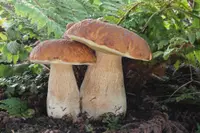
To recognize Boletus edulis, look for a broad brown cap over a sponge-like pore surface instead of gills, plus a thick, club-shaped stem with a pale netted pattern near the top.

Most specimens are sturdy and proportioned with a cap about as wide as the stem is tall, giving a compact, substantial outline.

Boletus edulis Identification

Check Your Plant ID

Upload a clear image to check whether your plant ID is correct.

Clear images work best. Avoid photos taken too close or too far away

Check the cap, pore surface, and stem shape first.

  • Cap is broad and bun-like to convex, often 4-12 inches (10-30 cm) across, with a smooth brown surface.
  • Underside has a sponge-like layer of tiny pores, not gills; pores look white to yellowish or olive.
  • Stem is thick and club-shaped, usually wider near the base than at the top.
  • Upper stem often shows a pale netlike pattern called reticulation, visible as fine raised lines.
  • Flesh appears thick and solid in both cap and stem, giving the mushroom a sturdy, heavy build.

Use several of these features together before naming Boletus edulis.

Porcini shows clear age-related changes in cap shape, pore surface, and stem proportions.

  • Young plant: Very young mushrooms are buttonlike, with a rounded cap margin tucked inward and a stout, swollen stem; the pore surface is pale and not yet expanded.
  • Mature plant: As it expands, the cap becomes broadly convex to nearly flat, often 4-12 inches (10-30 cm) across, while the stem looks less bulbous and more evenly club-shaped.
  • Fruiting stage: In developed fruiting bodies, the underside shows pores rather than gills; these start whitish, then turn yellowish to olive, and the flesh stays thick and firm.

The clearest seasonal clue is fruiting. Porcini usually appear from late summer into fall, when the stout, pale to brown stem and broad brown cap become visible above the forest floor. Outside the fruiting period, this species is usually not visible at all. That seasonal absence can help distinguish a true find from a year-round woodland plant.

Several boletes can be mistaken for porcini at a glance.

bitter bolete(Tylopilus felleus)

Similar cap color and stout shape. Check the stem netting and pore surface: this species usually has darker netting and pores that turn pinkish with age, not white to yellowish.

bay bolete(Imleria badia)

Can resemble younger specimens by cap color and pore layer. It is usually slimmer, lacks the thick pale reticulation on the stem, and the pores often bruise blue when handled.

bronze bolete(Boletus aereus)

A close edible look-alike with the same thick build and reticulate stem. The cap is typically much darker, often deep brown to almost black, rather than chestnut brown.

Boletus edulis is native across much of the Northern Hemisphere, including Europe, Asia, and North America. Geography matters because true B. edulis is a woodland mushroom tied to temperate to boreal forests, not open grassland or wetlands. It typically fruits on the ground in coniferous and mixed woods, especially with spruce, pine, fir, and also beech or oak in some regions. Finding it in established forest, often in mossy or needle-littered spots, helps narrow identification.

  • Serious misidentification risk: Boletus edulis is a wild mushroom, and harmful poisoning can result from confusing it with toxic look-alikes. The safety concern is ingestion by humans and pets.
  • Key dangerous contrast: One serious risk is confusion with the devil's bolete, Rubroboletus satanas. A useful visible difference is that B. edulis lacks the red pores and strongly red stem seen on that toxic species.

Not Sure About the ID?

Use Botan to check a photo and get a second opinion, which can help you compare details before making a decision.

FAQ

The quickest porcini identification check is the sponge-like pore surface under the cap, not gills, plus a thick pale stem with a fine white net pattern near the top and a smooth brown cap.

More Plant Identification Guides

Know Your Plant Better

Identify it from a photo with Botan, then review plant details, care information, and common problems for that species.

Botan app identifying a plant from a photo
How to Use a Moisture Meter for Plants

5 min read · 4 Sept 2026

How to Use a Moisture Meter for Plants

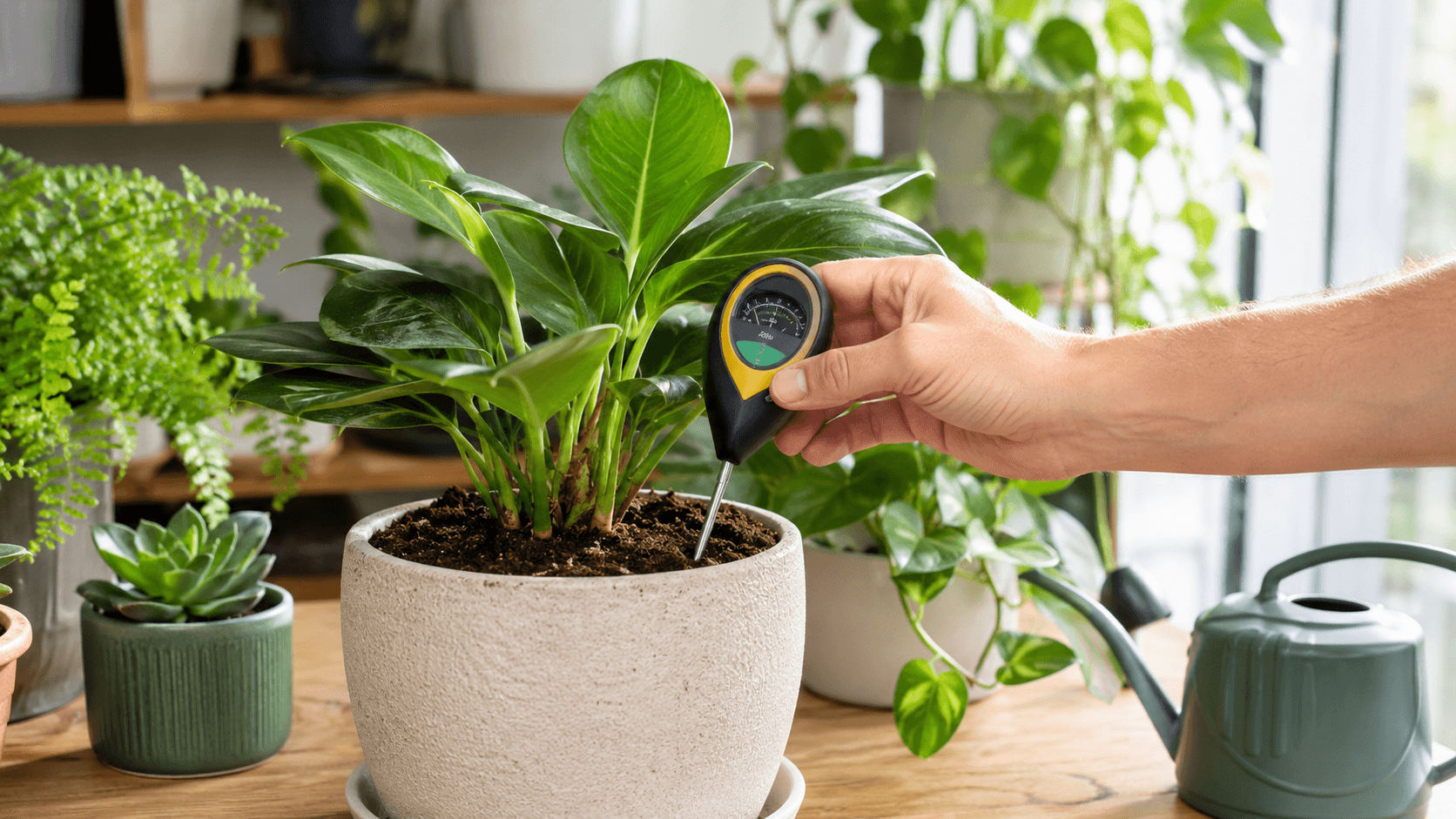
Watering by feel kills plenty of houseplants. A moisture meter checks the soil for you, and takes the guesswork out of it. This guide will show you how to use it correctly, from the first touch to the final reading.

Beginner Guides

How to Use a Moisture Meter for Plants
Banana Peel Water for Plants: 5 Things to Know Before Trying It

5 min read · 9 Jul 2026

Banana Peel Water for Plants: 5 Things to Know Before Trying It

Banana water can provide potassium and some nutrients that may support plant growth, but it is not a universal fix. Use it carefully and only when the plant actually shows signs of nutrient deficiency rather than as a routine treatment.

Plant Care
Banana Peel Water for Plants: 5 Things to Know Before Trying It
How to Bottom Water Plants: Complete Guide

6 min read · 13 Jul 2026

How to Bottom Water Plants: Complete Guide

Bottom watering helps soil absorb moisture evenly and keeps foliage dry, reducing the risk of missed dry spots or root problems. Place the pot in a tray of water for a short time, then let it drain well.

Plant Care
How to Bottom Water Plants: Complete Guide