

Matsutake Identification (Tricholoma matsutake)

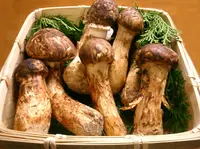
Recognize Tricholoma matsutake by its stout white stem, a persistent ring from the partial veil, and a dry cap with brown to chestnut scales over a paler background.

The cap is usually 2 to 8 inches (5 to 20 cm) wide, and the thick white gills stay attached near the stem.

Tricholoma matsutake Identification

Check Your Plant ID

Upload a plant photo and check the identification in seconds.

Clear images work best. Avoid photos taken too close or too far away

Check the mushroom’s cap, gills, ring, and thick stem for Tricholoma matsutake.

  • Cap is broad and convex to nearly flat, usually 2-8 inches (5-20 cm) wide.
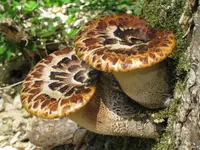
  • Cap surface is dry, with brown to chestnut scales or patches over a paler background.
  • Gills are white, crowded, and attached to the stem with a slight notch.
  • Stem is stout, white, often thicker toward the base, with a clear ring near the upper part.

A strong, stocky profile is often as useful visually as any single feature.

Tricholoma matsutake shows useful visual changes as the fruiting body expands and opens.

  • Young plant: Very young buttons stay mostly enclosed by a thick partial veil, with the cap still hidden and the stout stem appearing short and compact.
  • Fruiting stage: As it expands, the cap reaches about 2-8 inches (5-20 cm) wide, becoming convex to flatter; the veil tears, exposing pale gills and a ring.
  • Mature plant: Older specimens show a broader, more open cap with cracked brown scales over a paler background, while the stem looks more elongated and less tightly proportioned.

Matsutake is most recognizable in fall, when its mushrooms emerge from the forest floor. Fresh fruiting bodies are often partly buried, with a white to pale cap and a stout stem that may still be wrapped by veil tissue. As the season advances, the cap expands and the surface often breaks into brownish scales. Outside the fruiting period, there is usually no visible above-ground structure to identify.

A few pine-associated mushrooms can be mistaken for Matsutake.

American matsutake(Tricholoma magnivelare)

Very similar in size, color, and ringed stem. A fast check is the cap: T. magnivelare is usually drier and more evenly brown-scaled, while Tricholoma matsutake often shows stronger cracking or patchy scales over a paler background.

scaly knight(Tricholoma vaccinum)

It can suggest the same brown, scaly cap. The difference is size and stem: T. vaccinum is usually smaller, often under 4 inches (10 cm) wide, and has a shaggier stem and cap margin.

Tricholoma matsutake is native to parts of eastern Asia, including Japan, Korea, China, and the Russian Far East. Geography matters here because the name is often misapplied to related matsutake-like mushrooms from other regions. It grows on the ground in conifer forests, especially pine woods, forming a mycorrhizal association, a root partnership, with trees. Finding it in undisturbed pine woodland helps narrow identification more than cap color alone.

  • Serious misidentification risk: This mushroom has a real poisoning risk from mix-ups with toxic Amanita species. The danger relates to human ingestion of the fruiting body.
  • Key separating feature: Amanita mushrooms have free gills that do not attach to the stem, often plus a cup-like volva at the stem base. Tricholoma matsutake has attached gills and lacks a volva.

Confirm It from a Photo

Botan can help identify or verify what you found from a photo, which is useful when you want a quicker second check.

FAQ

It is commonly confused with other Tricholoma mushrooms, especially Tricholoma magnivelare in North America. Both are robust, white to tan, and ringed, but range, host trees, cap texture, and odor details help with Matsutake identification.

More Plant Identification Guides

Find Out What Plant It Is

Use Botan to identify it from a photo, then get plant details, care information, and safety notes matched to the result.

Botan app identifying a plant from a photo
Best Water for Plants – How to Choose the Right Type

7 min read · 13 Aug 2026

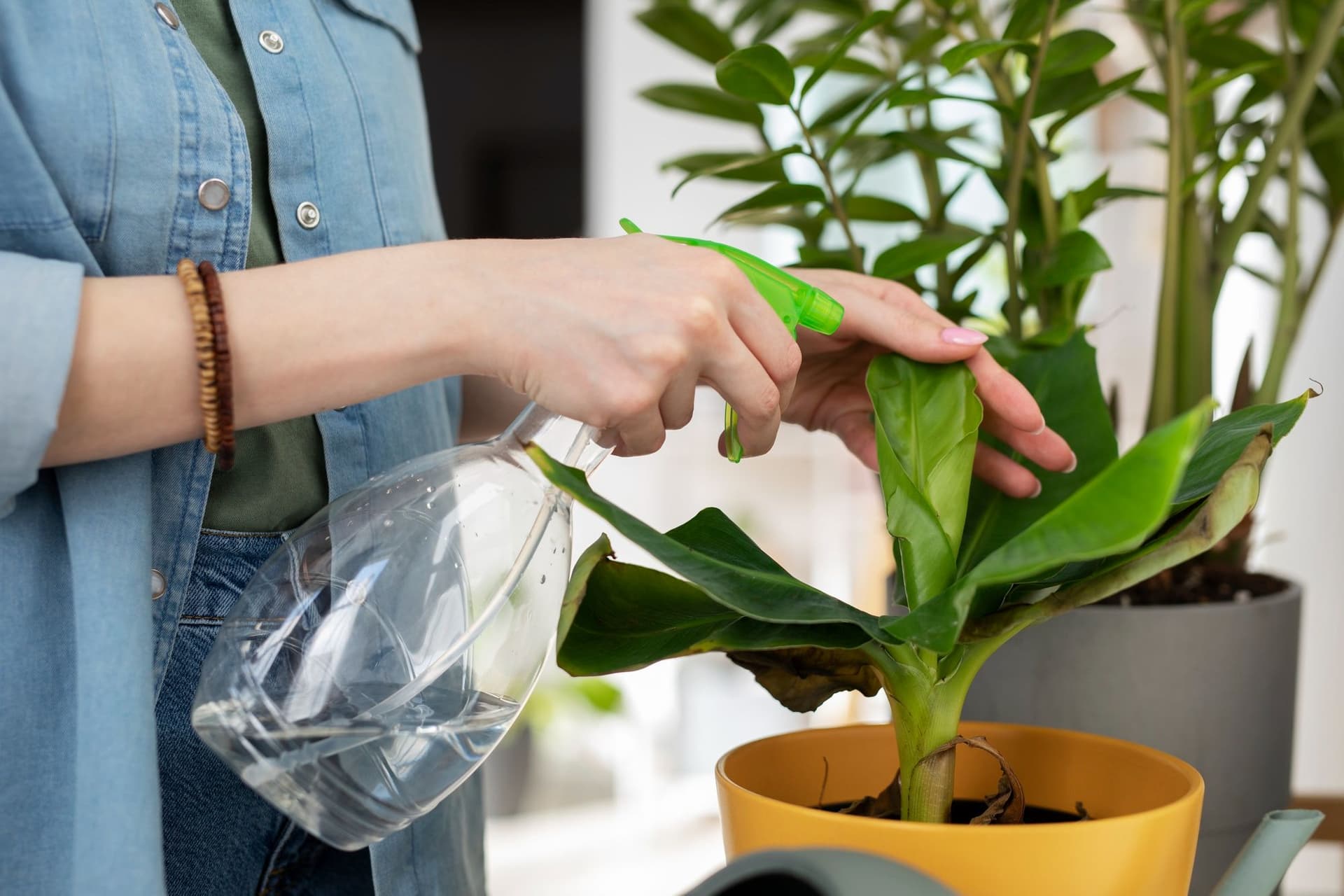
Best Water for Plants – How to Choose the Right Type

Rainwater, filtered, distilled, and tap water affect plants differently. Learn which types support healthy growth and which cause slow damage. Match each to your plants and discover how to easily improve tap water quality.

Plant Care
Best Water for Plants – How to Choose the Right Type
How to Mist Plants – Proper Technique and Common Mistakes

7 min read · 30 Jul 2026

How to Mist Plants – Proper Technique and Common Mistakes

Find out when misting works well and when to avoid it. Here, you’ll find detailed information about compatible and incompatible species, tips on how often to mist plants and do it correctly, and some great alternatives for raising humidity.

Beginner Guides
How to Mist Plants – Proper Technique and Common Mistakes
How To Revive a Dying Plant: 6 Steps To Bring A Plant Back To Life

6 min read · 1 Sept 2026

How To Revive a Dying Plant: 6 Steps To Bring A Plant Back To Life

Drooping leaves and brown tips don't always mean the end, and a weakened plant can often recover with a little help. These six simple steps will help you revive a dying plant and restore its health.

Plant Care
How To Revive a Dying Plant: 6 Steps To Bring A Plant Back To Life