Single-leader training
In the first 3–5 years, select one strong central stem and remove competing uprights during late winter to create a single-leader structure that greatly reduces future storm breakage and weak branch angles.

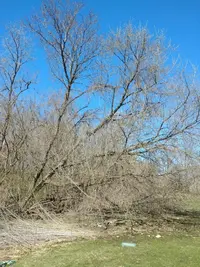
The boxelder tree, Acer negundo, is a fast-growing deciduous maple commonly found along rivers, roadsides, and disturbed sites. It forms a medium to large tree with a broad, irregular crown. Leaves are compound, usually with 3–7 leaflets, giving it a somewhat ash-like appearance rather than a typical maple look. Its winged seeds are produced in large numbers and often hang in clusters through winter.
Boxelder tolerates a wide range of soils, urban pollution, and temporary flooding, which makes it easy to establish but sometimes weedy. It prefers full sun and consistent moisture for best growth. Understanding these traits helps when planning how to care for boxelder tree in gardens or larger landscapes.

Care Difficulty
Easy Care

Light Preference
Full Sun

Water Requirements
Moderate Water

Temperature Preference
Cold Hardy

Hardiness Zone
2–9

Soil Texture
Sandy, Loamy, Clay

Soil pH
Slightly acidic (6.5–7.0), Slightly alkaline (7.0–7.5)

Soil Drainage
Moist but well-drained

Fertilization
Minimal (feed rarely)
Scan your plant to receive care tips personalized for your specific plant
Available on iOS and Android
This species prefers full sun but tolerates partial shade in many landscapes.
Acer negundo establishes best in soil that is moist but not saturated.
This hardy tree tolerates a wide temperature range once established outdoors.
Humidity is rarely a limiting factor for Acer negundo in outdoor conditions.
Acer negundo adapts to many soils but performs best in moderately fertile, moist, well-drained ground.
This species can be grown in containers only as a temporary or juvenile tree, not as a long-term patio specimen.
Acer negundo usually grows well in average soil, but light feeding can support young or stressed trees.
Pruning Acer negundo is useful for structural safety and to manage its often vigorous growth.
Boxelder is usually grown in-ground, so focus on careful transplanting rather than frequent repotting.
Propagation of Acer negundo is most commonly done by seed rather than vegetative methods.
Mature Acer negundo trees are generally cold hardy across much of North America and need little winter attention.

Plant Health Check
Not sure what's wrong with your plant? Check your plant's health inside the app.
Boxelder is one of the fastest-growing North American maples and often colonizes disturbed riverbanks, floodplains, and urban waste areas, stabilizing soil and creating early shade for slower trees.
Unlike most maples with simple, lobed leaves, boxelder typically has compound leaves with 3–7 leaflets, which can cause it to be mistaken for ash or elder species.
Boxelder is usually dioecious, meaning individual trees are either male or female, so only female trees produce the characteristic paired winged fruits (samaras) in large hanging clusters.

In western North America, the native boxelder bugs (Boisea trivittata) rely heavily on Acer negundo seeds and often aggregate in large numbers on the trunks and nearby buildings, making this maple an important host species in their life cycle.
This species grows rapidly, often 30–60 cm or more per year when young, especially in moist, fertile soil. Growth slows with age. Fast growth can mean weaker wood and a greater tendency to shed branches in storms.
Keep your plants happy and healthy with plant identification, disease detection, and easy care guidance.