Broomstick Tree Care (Pittocaulon praecox)

Broomstick Tree

About Broomstick Tree

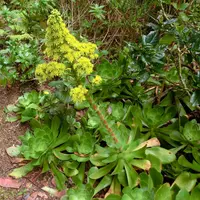
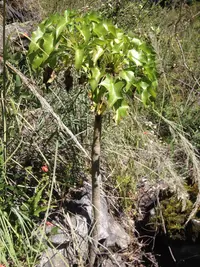
Pittocaulon praecox, often called broomstick tree, is a shrubby succulent tree from arid regions of central Mexico. It has smooth green, photosynthetic stems and sparse, small leaves that may drop in dry periods. The plant forms a sculptural, branching silhouette that fits modern, minimalist spaces. Its drought tolerance and slow to moderate growth rate make it suitable for patient growers who like low-maintenance plants. It prefers bright light, good air circulation, and very free-draining soil. Those who care for Broomstick Tree should focus on avoiding overwatering and providing strong light to keep stems firm and healthy.

Main Plant Requirements

Care Difficulty

Moderate Care

Light Preference

Full Sun

Water Requirements

Low Water

Temperature Preference

Warm Climate

Hardiness Zone

9–11

Soil Texture

Sandy, Loamy, Rocky

Soil pH

Slightly acidic (6.5–7.0), Neutral (7.0)

Soil Drainage

Well-drained

Fertilization

Minimal (feed rarely)

Get Personalized Care Plan

Scan your plant to receive care tips personalized for your specific plant

Available on iOS and Android

How to Care for the Broomstick Tree

This drought-adapted shrub thrives in strong light and benefits from direct sun in most climates.

  • Provide 6–8 hours of direct sun daily; full sun is ideal in mild, dry regions, while in very hot areas some light afternoon shade reduces leaf scorch.
  • Tolerates bright, open shade for part of the day, but growth becomes looser and flowering may decrease if sun drops below about 4 hours.
  • Site the Broomstick Tree where winter shade from buildings or trees does not block its access to low-angle sun, especially in cooler climates.

This species prefers dry conditions and is highly sensitive to excess moisture around the roots.

  • Allow the top 5–8 cm of soil to dry completely before watering; in arid climates this may mean long gaps between thorough soakings.
  • Use sharply draining, gritty soil on a slope or raised area so water does not pool; standing water or heavy clay greatly increases rot risk for Pittocaulon praecox.
  • Watch foliage and stems: shriveling and soft blackened bases suggest overwatering, while slight leaf wilt and very light soil color indicate it is time to water.

This plant is a warm-climate shrub that handles heat well but is vulnerable to frost.

  • Optimal growth occurs around 70–90°F (21–32°C), with strong sun and low humidity supporting its semi-succulent tissues.
  • It tolerates brief dips to about 28–30°F (-2– -1°C), but repeated freezing or hard frosts can damage young stems and branch tips.
  • In regions above 100°F (38°C), provide good air movement and, if possible, light afternoon shade to reduce heat stress and sunscald on exposed branches.

This species handles typical indoor humidity well and rarely needs special humidity management.

  • Ideal humidity is 30–50%; avoid sustained levels below 25% to prevent leaf-edge browning.
  • Dry air tolerance is high, but extreme dryness can cause shriveling of younger stems and slower growth.
  • If air is very dry, increase humidity locally with a nearby pebble tray or grouping plants, rather than misting.

This shrub-like succulent prefers very fast-draining, mineral-rich soil that dries out quickly between waterings.

  • Use a gritty mix such as 50–70% inorganic material (pumice, perlite, coarse sand) blended with 30–50% lean potting mix or cactus mix.
  • Ensure the structure is open and airy; particles should be coarse enough that water drains through in seconds, not minutes.
  • Keep pH roughly neutral to slightly alkaline (pH 6.5–7.5), which suits Pittocaulon praecox and limits nutrient issues.
  • Avoid dense, peat-heavy or clay soils that stay wet, as these promote root rot and weak, elongated growth.

This species is well suited to container growing due to its shrubby, drought-tolerant habit.

  • Choose a heavy, wide-based pot to counter the plant’s top-heavy, woody branching and reduce tipping risk outdoors.
  • Select a relatively shallow but broad container that allows lateral root spread without trapping excess water at depth.
  • Use a pot material like unglazed terracotta to increase moisture loss through the walls and help the gritty mix dry rapidly.

This drought-adapted tree needs only light feeding in containers or very poor soil.

  • Use a balanced liquid fertilizer (around 10-10-10) at 1/4–1/2 strength for Pittocaulon praecox in pots.
  • Feed once every 4–6 weeks during the warm growing season only.
  • Do not apply fertilizer in winter or when growth is clearly dormant.
  • In-ground plants in reasonably fertile soil usually manage without extra fertilizer.

Pruning Pittocaulon praecox is mainly done to maintain structure and remove weak growth.

  • Carry out pruning in late winter or very early spring before new growth starts.
  • Remove dead, diseased, crossing, or storm-damaged branches with clean, sharp bypass pruners or a small saw.
  • Thin congested interior shoots to improve airflow and preserve the natural open form.
  • Limit heading cuts to avoid coarse regrowth and maintain the tree’s characteristic outline.

This species is usually grown in the ground; focus on careful transplanting rather than frequent repotting.

  • Transplant in late winter or early spring when the plant is still relatively dormant.
  • Look for slow growth, poor vigor, or roots circling a container as signs a potted plant needs a larger pot.
  • Move up only 1 pot size, using a very well-drained, gritty mix, and keep the root ball as intact as possible.
  • Water lightly after transplanting, shade for a week, and avoid heavy pruning at the same time to reduce stress.

Pittocaulon praecox is most often propagated from semi-hardwood cuttings or seed by experienced growers.

  • Take semi-hardwood cuttings in late spring to midsummer from healthy, non-flowering shoots.
  • Use a free-draining medium such as 50% perlite and 50% coarse sand or fine bark, and provide bright, indirect light.
  • Apply rooting hormone to the cut base and keep humidity moderate, avoiding waterlogged conditions.
  • Sow fresh seed in warm (70–75°F), well-drained soil and allow slow, irregular germination.

This species prefers mild, frost-free climates and benefits from simple winter protection in colder regions.

  • In-ground plants tolerate only light, brief frosts; sustained temperatures below about 28°F may damage tissues.
  • Apply a 5–8 cm layer of dry mulch around the root zone, keeping it away from the trunk base.
  • Wrap young stems with breathable frost cloth during hard freezes.
  • Move container plants indoors or into a bright, cool, frost-free shelter for winter.

Care Tips

Encourage Branch Structure

Pinch or lightly tip-prune very young shoots in late spring to encourage a fuller, more branched canopy instead of a single tall, bare stem.

Manage Top-Heavy Stems

Stake newly planted or container-grown plants with a single sturdy cane set slightly off-center, and use soft ties in a loose figure-eight so the brittle trunk is supported without being constricted as it thickens.

Container Root Control

When growing Broomstick Tree in a pot, root-prune every 2–3 years by trimming back the outer 2–3 cm of the root ball and repotting into fresh, sharply draining mix to prevent circling roots and maintain a compact plant.

Storm And Wind Prep

In very windy sites, orient the plant so the densest branching faces the prevailing wind and use a low, discreet windbreak such as a perforated panel or shrub layer to reduce wind stress on the brittle branches.

Cold-Rain Protection

Before extended cool, wet periods, move container plants under an overhang or into a cold, bright shelter to keep the root zone drier, which reduces the risk of rot in this drought-adapted species.

Common Pests and Diseases

Soft scale

This pest often settles on older, woody stems and leaf bases, feeding on sap and excreting sticky honeydew that can attract sooty mold. Symptoms include small, rounded or oval bumps that do not move when touched.

Solution

Physically remove scales by gently scraping or wiping stems with a cotton pad dipped in 70% isopropyl alcohol, then rinse the plant with a firm stream of water. For heavier infestations, apply a light horticultural oil or insecticidal soap to all stem surfaces every 7–10 days for several cycles, and keep the plant in bright, airy conditions to reduce stress and improve Pittocaulon praecox care.

Mealybugs

These insects hide in leaf axils and along the knobby stems, appearing as white cottony clusters and causing gradual yellowing or stunting. This pest thrives on dry, sheltered plants that are not regularly inspected.

Solution

Isolate the plant, then dab visible mealybugs with 70% isopropyl alcohol on a cotton swab and wash the plant under lukewarm running water. Repeat inspections weekly, treating any survivors, and use insecticidal soap or a systemic insecticide labeled for ornamental succulents if populations keep returning.

Spider mites

These insects prefer the fine, leaf-bearing tips in hot, dry indoor conditions, causing tiny stippled spots, dull foliage, and sometimes fine webbing between shoots. Symptoms include slow decline and a dusty appearance on stems and leaves.

Solution

Increase humidity around the plant and rinse the foliage and branch tips thoroughly with a strong but safe spray of water, focusing on the undersides. Follow up with insecticidal soap or neem oil applied every 5–7 days for several treatments, and avoid placing the plant in very hot, stagnant air to reduce reinfestation.

Sooty mold

This disease develops as a black, powdery coating on stems and leaves where honeydew from sap-sucking insects has accumulated. Symptoms include darkened, dirty-looking surfaces and reduced photosynthesis, but the fungus usually does not invade plant tissues directly.

Solution

Address the underlying insect issue first, then gently wipe affected areas with a damp cloth or sponge and rinse under running water to remove the mold layer. Improve airflow and light exposure so surfaces dry more quickly after watering, which helps prevent repeated buildup of honeydew and mold growth.

Stem canker

This disease affects the succulent, woody trunks and branches, leading to sunken, discolored patches, cracking bark, and dieback of affected sections. Symptoms include localized softening or corky lesions that may spread along the stem if not addressed early.

Solution

Prune out all visibly affected tissue with sterile, sharp tools, cutting back into healthy, firm wood and discarding infected material in the trash. After pruning, keep the plant dry on the stems (water at the base only), provide strong light and good airflow, and avoid wounds or overfertilization that can make the plant more susceptible to infection.

Interesting Facts

Semi-succulent tree form

This species develops a thick, water-storing trunk and branches, combining traits of woody trees and succulents, which helps it survive in the seasonally dry environments of central Mexico.

Night-blooming umbels

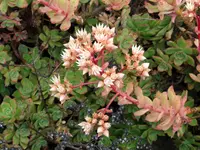
It produces clusters (umbels) of small, pale flower heads that typically open in the evening and at night, attracting nocturnal pollinators such as moths with their timing and scent.

Cloud forest relict

Although drought-adapted, it naturally occurs in remnants of Mexican cloud forest and oak forest, where it grows on rocky slopes and cliffs in conditions that are cooler and more humid than typical desert succulent habitats.

Botan icon

Did you know?

This species was long placed in the large daisy family genus Senecio, but detailed morphological and molecular studies showed it is distinct enough to belong in the much smaller genus Pittocaulon, reflecting a significant taxonomic re-evaluation within the sunflower family (Asteraceae).

FAQs about Broomstick Tree

This species adapts well to large, sturdy containers with excellent drainage. Use a gritty, mineral-rich mix and avoid frequent repotting. Container culture also helps control size and makes Pittocaulon praecox care easier in cool or wet climates.

Grow Healthy Plants with Botan Care

Keep your plants happy and healthy with plant identification, disease detection, and easy care guidance.

Botan plant care app — identify plants on mobile

Explore More Plants