Windfirm staking
On very exposed sites, use 2–3 low, flexible stakes with soft ties for the first 2–3 years to reduce root rock while still allowing the young tree to move slightly and develop a strong, wind-firm root system.


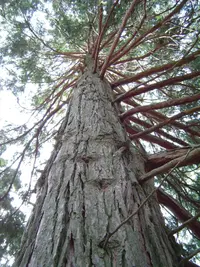
Norway spruce, Picea abies, is a long-lived evergreen conifer commonly used as a landscape tree and traditional Christmas tree. It forms a tall, pyramidal shape with dense, downward-sweeping branches and short, sharp needles.
In nature it is native to cool, mountainous and northern regions of Europe, where it grows in large forests and tolerates cold winters very well. In gardens it prefers full sun, evenly moist but well-drained soil, and space for its extensive root system.
Once established, it is relatively hardy but can suffer in hot, dry, or compacted urban sites, so location choice is important if you want to care for Norway spruce successfully.

Care Difficulty
Moderate Care

Light Preference
Full Sun

Water Requirements
Moderate Water

Temperature Preference
Cold Hardy

Hardiness Zone
3–7

Soil Texture
Sandy, Loamy, Clay

Soil pH
Acidic (5.5–6.5), Slightly acidic (6.5–7.0)

Soil Drainage
Moist but well-drained

Fertilization
Minimal (feed rarely)
Scan your plant to receive care tips personalized for your specific plant
Available on iOS and Android
Picea abies thrives in bright, open sites with consistent direct sun for dense, healthy growth.
Picea abies prefers evenly moist, well-drained soil and is more sensitive to chronic wetness than to brief dryness.
This species is a cold-hardy conifer that tolerates wide outdoor temperature swings when established.
This species prefers cool, moderately moist air but tolerates typical outdoor humidity levels.
Picea abies performs best in cool, moist, well‑aerated mineral soil with consistent structure.
This species can be grown in containers for several years, but only with careful attention to root space and stability.
Picea abies in the ground needs little fertilizer once established, but young or container-grown plants benefit from modest feeding.
Pruning Picea abies is usually light and focused on maintaining health and a natural form.
Norway spruce is usually field-grown, so care focuses on correct outdoor transplanting rather than frequent repotting.
Propagation of Picea abies is possible from both seed and cuttings but is relatively slow and requires controlled conditions.
Picea abies is very cold hardy and usually needs minimal winter care once established in the landscape.

Plant Health Check
Not sure what's wrong with your plant? Check your plant's health inside the app.
The modern Christmas tree tradition in parts of Central and Northern Europe historically used this species, and it is still the dominant farm-grown Christmas tree in much of Europe due to its straight trunk and symmetrical crown.
Despite its large size, this tree typically forms a shallow root system that spreads widely rather than going deep, which makes it sensitive to windthrow on wet or waterlogged soils.
Its slow-grown, straight-grained wood with even density is prized for soundboards in classical guitars, violins, and other string instruments, where it is known among luthiers as one of the traditional European spruces for tonewood.

Some individual Norway spruces in Scandinavia and the Alps are known to be several hundred years old, but clonal stands where new stems continually sprout from ancient root systems have been dated to roughly 9,500 years, making them among the oldest known living clonal organisms on Earth.
This species is generally fast-growing, often adding 30–60 cm of height each year in suitable conditions. Growth slows with age. Cool climates, adequate moisture, and deep, fertile soil support the best long-term performance when trying to grow Picea abies.
Keep your plants happy and healthy with plant identification, disease detection, and easy care guidance.