Selective leader training
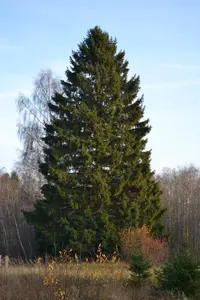
While the tree is young, choose a single strong central leader and remove competing upright shoots over 2–3 years to develop a stable, wind-resistant structure.

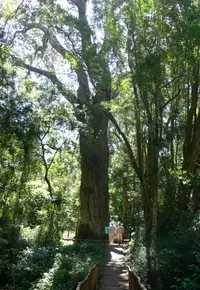
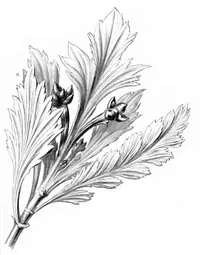
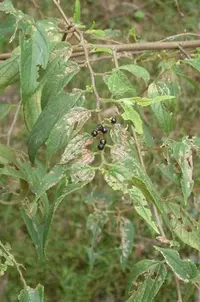
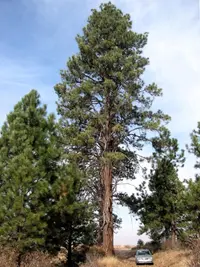
Yellowwood, Afrocarpus falcatus, is an evergreen conifer tree valued for its dense, fine-textured foliage and straight, upright growth habit. It usually forms a tall, narrow crown with soft, needle-like leaves.
This species is native to highland forests of eastern and southern Africa, where it grows in mild, relatively moist climates. It is long-lived and slow to moderate in growth, which makes it predictable but not fast to establish.
Afrocarpus falcatus prefers well-drained soil, consistent moisture, and bright light, and it resents waterlogging. These traits mean that learning how to care for yellowwood mainly involves providing stable conditions and avoiding extremes, rather than complex maintenance tasks.

Care Difficulty
Moderate Care

Light Preference
Full Sun

Water Requirements
Moderate Water

Temperature Preference
Warm Climate

Hardiness Zone
9–11

Soil Texture
Sandy, Loamy, Organic-rich

Soil pH
Acidic (5.5–6.5), Slightly acidic (6.5–7.0)

Soil Drainage
Well-drained

Fertilization
Minimal (feed rarely)
Scan your plant to receive care tips personalized for your specific plant
Available on iOS and Android
Afrocarpus falcatus prefers bright conditions that mimic its native montane forest edges.
This species prefers steadily moist but not saturated soil, especially during its establishment phase.
This conifer grows best in mild, frost-free to light-frost climates with moderate seasonal variation.
Humidity is not a major concern, as this species adapts well to typical indoor and outdoor levels.
Afrocarpus falcatus prefers a slightly acidic, well-drained, mineral-based substrate that still holds moderate moisture.
This species can be grown in containers for many years if managed as a slow, pruned specimen.
Afrocarpus falcatus grows steadily with modest feeding, especially when cultivated as a landscape or large container yellowwood.
Afrocarpus falcatus benefits from light structural pruning to maintain a stable, conical form and remove problem wood.
This species is most often planted in the ground; transplanting young Afrocarpus falcatus needs planning to minimize root disturbance.
Afrocarpus falcatus is usually propagated from seed, which can be slow but is the most practical method for home growers.
Afrocarpus falcatus is only moderately frost tolerant, so some winter precautions are useful in cooler regions.

Plant Health Check
Not sure what's wrong with your plant? Check your plant's health inside the app.
This conifer can reach over 45 m in its native Southern African forests, where it often forms part of the tall evergreen canopy on moist mountain slopes.
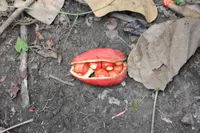
Instead of dry, woody cones, it produces small fleshy structures that look like berries; birds eat the outer tissue and disperse the single hard seed, an example of bird-mediated seed dispersal.
The fine-grained, pale wood has long been used in southern Africa for furniture, joinery, and shipbuilding because it is relatively easy to work and resists warping when properly seasoned.
Pollen records from Southern African sediments show that this species has been a consistent component of Afromontane forest communities since at least the late Quaternary, indicating strong ecological persistence through past climate fluctuations.
This species is a true evergreen conifer. It retains foliage year-round, with older inner leaves shedding gradually rather than all at once. In suitable climates, it provides constant cover and maintains a stable canopy through all seasons.
Keep your plants happy and healthy with plant identification, disease detection, and easy care guidance.