
Eastern North American Destroying Angel Identification (Amanita bisporigera)

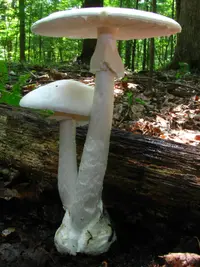
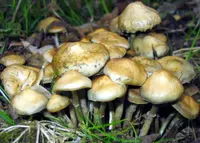
To recognize Eastern North American Destroying Angel, look for a fully white mushroom with a smooth cap, free white gills that do not touch the stalk, and a white stalk rising from a distinct cup-like volva at the base.

The stalk also carries a skirt-like ring, creating a clear ring-and-cup combination.

Amanita bisporigera Identification

Identify a Plant by Photo

Check your plant ID by uploading a clear photo to Botan.

Clear images work best. Avoid photos taken too close or too far away

Check Amanita bisporigera for a stark white mushroom with a cap, free gills, ring, and cup at the base.

  • Cap is smooth, white, and broadly convex to nearly flat, often about 2-4 inches (5-10 cm) across.
  • Gills are crowded, white, and free from the stem, ending before they touch it.
  • Stem is white, slender, and typically 3-6 inches (8-15 cm) tall with a skirt-like ring.
  • Base sits in a white, sac-like volva, a cup that surrounds the swollen stem base.

Check the entire base, since the cup is one of the most useful visible clues.

Amanita bisporigera shows clear visual changes from enclosed button to fully expanded mushroom.

  • Young plant: Early growth appears as a white, egg-like button, partly buried, with the cap and stalk still enclosed by a universal veil.
  • Mature plant: As it expands, the cap opens from convex to broadly flat, often 2-4 inches (5-10 cm) across, while a distinct ring remains on the stalk.
  • Fruiting stage: At full fruiting, the tall white mushroom shows a free-gilled cap, hanging skirtlike ring, and a saclike volva cupping the swollen stalk base.

Amanita bisporigera is most useful seasonally when its fruiting bodies appear from summer into fall. At that time, look for fresh white caps, white gills, a skirt-like ring on the stalk, and a sac-like volva at the base. Outside the fruiting period, those visible features are usually absent above ground. That makes seasonal presence itself an identification clue in wooded habitats.

Amanita bisporigera is native to eastern North America. It is documented mainly from the eastern United States and southeastern Canada, especially in deciduous and mixed woods. Habitat is a useful clue because this species fruits on the ground in forested settings, often under oaks and other hardwoods, rather than in lawns or open grassland. Finding a white Amanita in eastern woodland helps narrow the identification, though it does not confirm it on habitat alone.

  • Deadly if eaten: All parts of Amanita bisporigera are dangerously poisonous to humans and pets if ingested. The fruiting body contains amatoxins, which can cause severe liver failure.
  • High misidentification risk: This white mushroom can be mistaken for edible white mushrooms or puffballs. A key visible check is that Amanita bisporigera has gills under the cap and often a cup-like volva at the base, while true puffballs are solid inside when young.

Check Your Plant ID

Botan can identify or confirm a plant from a photo, helping you compare results quickly when the details are unclear.

FAQ

The clearest field mark is the combination of a pure white cap and gills, a skirtlike ring on the stalk, and a saclike volva at the swollen base, important for Amanita bisporigera identification.

More Plant Identification Guides

Identify Your Plant with Botan

Upload a photo to identify it, then review species-specific plant details, care information, and safety notes.

Botan app identifying a plant from a photo
10 Easy Garden Flowers to Grow

8 min read · 10 Sept 2026

10 Easy Garden Flowers to Grow

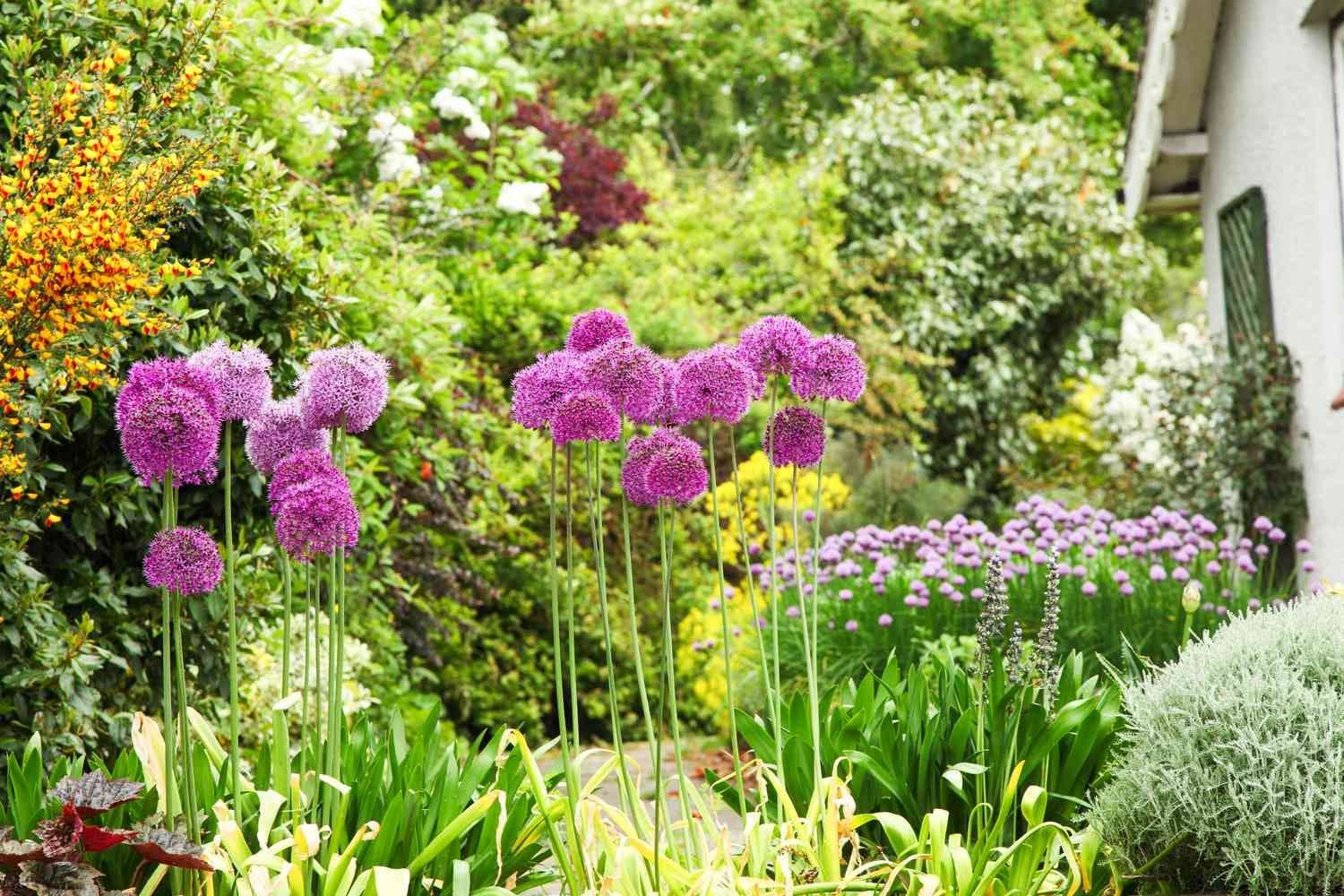
Discover 10 garden flowers that require minimal care. Learn which characteristics make plants easy to grow and follow tips on how to create a beautiful corner from beginner-friendly blooms on your property.

Beginner Guides
10 Easy Garden Flowers to Grow
Plants That Repel Mosquitoes – 10 Effective Choices

8 min read · 6 Jul 2026

Plants That Repel Mosquitoes – 10 Effective Choices

Plants that repel mosquitoes can help mask human scent naturally and make outdoor spaces more comfortable. Explore the most effective options, their benefits and drawbacks, and choose the right plant for your space.

Plant Recommendations
Plants That Repel Mosquitoes – 10 Effective Choices
How to Clean Plant Leaves: A Simple Care Guide

6 min read · 4 Aug 2026

How to Clean Plant Leaves: A Simple Care Guide

Dusty leaves look dull and don't absorb light well. Below, you'll find simple ways to clean them, which tools are truly effective, how often you should do it, and what causes damage.

Beginner Guides
How to Clean Plant Leaves: A Simple Care Guide