

Panaeolus olivaceus Identification

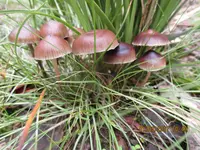
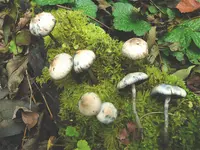
Recognize Panaeolus olivaceus by its small bell- to convex cap, usually under 1 inch (2.5 cm) wide, a slender stem, and dark mottled gills with pale edges.

The cap is smooth and brown to olive-brown, and the mushroom often appears delicate and thin-stemmed in proportion to the cap.

Panaeolus olivaceus Identification

Check Your Plant ID

Take a photo and use Botan to confirm your plant identification.

Clear images work best. Avoid photos taken too close or too far away

Check these visible features before relying on finer details.

  • Cap is small, usually 1-3 cm wide, broadly bell-shaped to convex with a smooth surface.
  • Cap color is gray-brown to olive-brown, often darker at the center and paler toward the edge.
  • Gills are crowded and dark, with a mottled or patchy look rather than an even solid color.
  • Stem is thin, straight, and pale, typically without a ring, and looks more fragile than fleshy.
  • Often appears in small scattered groups rather than as one dense clustered tuft.

The mottled dark gills and small olive-brown cap are especially useful quick checks.

Panaeolus olivaceus shows useful visual shifts as the fruit body expands and matures.

  • Young plant: Very young fruit bodies begin as small, rounded buttons with a smooth, dark cap and a short pale stem; gills are still hidden by the cap margin.
  • Mature plant: As Panaeolus olivaceus expands, the cap becomes broadly bell-shaped to nearly flat, about 1-2 inches (2.5-5 cm) wide, and the stem looks longer and more slender.
  • Fruiting stage: At full spore maturity, the gills turn dark mottled gray to black, and the cap often appears paler or slightly olive-brown as the margin straightens.

Several small brown dung mushrooms can be mistaken for Panaeolus olivaceus.

mottlegill(Panaeolus cinctulus)

Often confused because both are small, brownish mottlegills on dung or rich soil. Panaeolus cinctulus usually has a distinct dark band around the cap margin when moist and tends to be more robust; Panaeolus olivaceus is typically slimmer and lacks such a consistently marked band.

petticoat mottlegill(Panaeolus papilionaceus)

This species shares a similar gray-brown cap and dark mottled gills. The quickest check is the cap edge: Panaeolus papilionaceus commonly shows hanging veil fragments along the margin, while Panaeolus olivaceus does not. Its cap is also often more bell-shaped.

Panaeolus olivaceus is reported from temperate regions of Europe and North America. It is most often found in open, disturbed grassland, especially lawns, pastures, and other grassy sites with rich organic matter. That setting helps narrow identification because this species is associated with short grass rather than woodland or deep leaf litter. Finding it in a maintained lawn or grazed field is more consistent with Panaeolus than with many small brown mushrooms from forest habitats.

This mushroom should not be eaten. Panaeolus olivaceus is a small dung-associated mushroom, and misidentification is a serious ingestion risk because several similar small brown mushrooms are harmful.

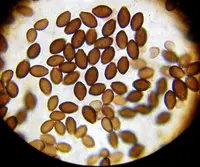
  • High misidentification risk: Confusion with Galerina species is safety-critical for humans and pets if eaten. A useful check is the spore print: Panaeolus olivaceus has a black spore print, while Galerina has a rusty brown one.

Confirm It from a Photo

Use Botan to identify or verify it from an image, helping avoid mix-ups when the details are hard to judge by eye.

FAQ

No. This species is a mushroom, not a flowering plant, so flowers are absent. For how to identify Panaeolus olivaceus, check the cap, gills, stem, and dark spore print instead.

More Plant Identification Guides

Identify First. Learn What Comes Next.

Identify it from a photo with Botan, then see species-specific plant details, care information, and common problems.

Botan app identifying a plant from a photo
How to Clean Plant Leaves: A Simple Care Guide

6 min read · 4 Aug 2026

How to Clean Plant Leaves: A Simple Care Guide

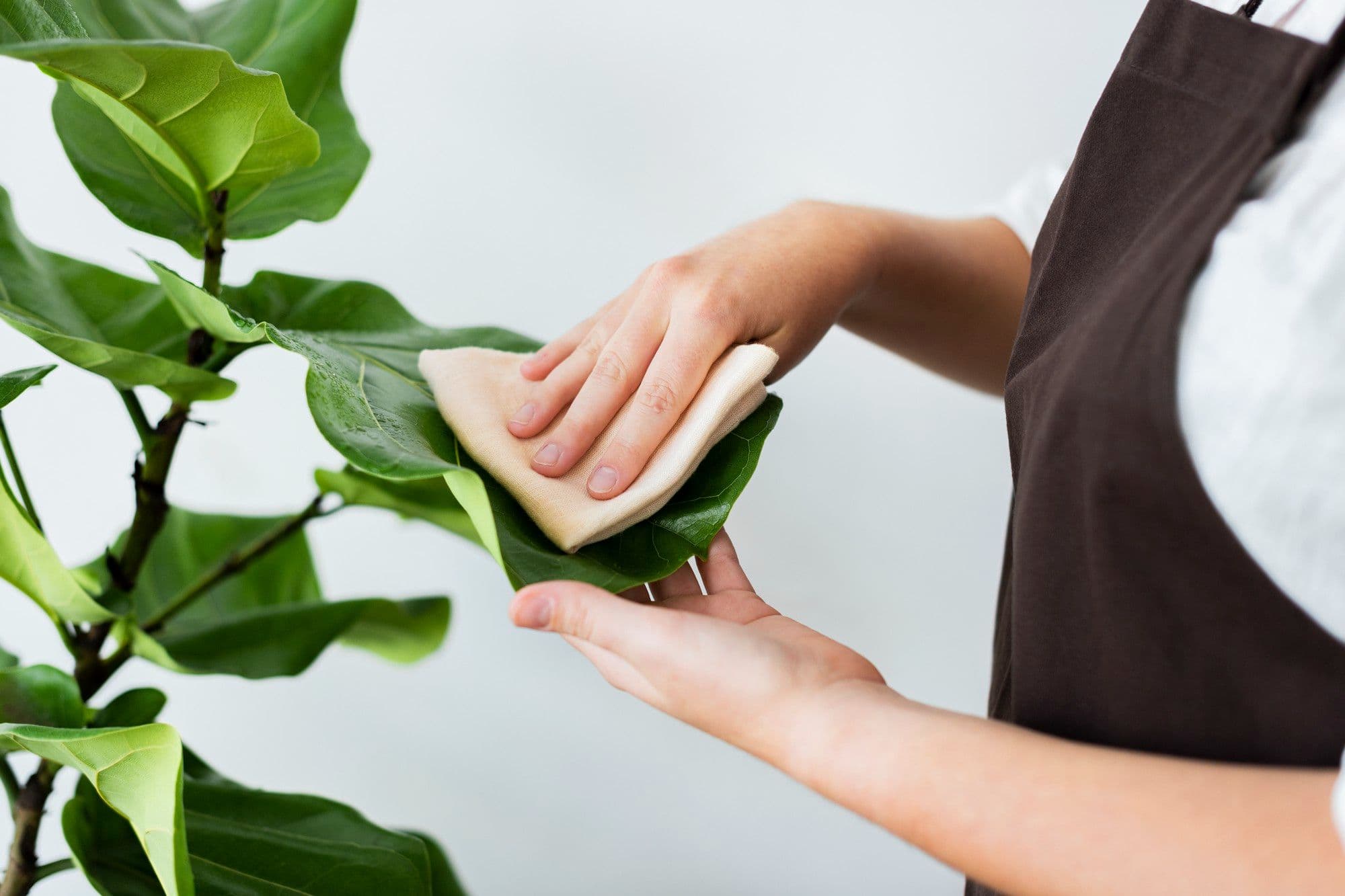
Dusty leaves look dull and don't absorb light well. Below, you'll find simple ways to clean them, which tools are truly effective, how often you should do it, and what causes damage.

Beginner Guides
How to Clean Plant Leaves: A Simple Care Guide
12 Most Wanted Rare Houseplants to Grow at Home

6 min read · 21 Sept 2026

12 Most Wanted Rare Houseplants to Grow at Home

Rare houseplants can turn an ordinary corner in your apartment into a living botanical collection. This guide covers 12 most admired picks, what makes them special, and how to grow them successfully at home.

Plant Recommendations
12 Most Wanted Rare Houseplants to Grow at Home
10 Easy Garden Flowers to Grow

8 min read · 10 Sept 2026

10 Easy Garden Flowers to Grow

Discover 10 garden flowers that require minimal care. Learn which characteristics make plants easy to grow and follow tips on how to create a beautiful corner from beginner-friendly blooms on your property.

Beginner Guides
10 Easy Garden Flowers to Grow