Dill Companion Plants – What to Grow Next to Dill
Dill is an easy-to-grow plant that gets along well with many vegetables. This guide describes 15 plants that can be planted alongside it, a few to avoid, and mistakes that can quietly sabotage the entire process.

On this page
- Dill Companion Planting – Reference Table
- 15 Best Companion Plants for Dill
- 1. Brassicas (Brassica spp.)
- 2. Cucumber (Cucumis sativus)
- 3. Asparagus (Asparagus officinalis)
- 4. Lettuce (Lactuca sativa)
- 5. Onions (Allium cepa)
- 6. Corn (Zea mays)
- 7. Basil (Ocimum basilicum)
- 8. Nasturtium (Tropaeolum majus)
- 9. Garlic (Allium sativum)
- 10. Spinach (Spinacia oleracea)
- 11. Leeks (Allium porrum)
- 12. Marigolds (Tagetes spp.)
- 13. Chives (Allium schoenoprasum)
- 14. Swiss chard (Beta vulgaris subsp. cicla)
- 15. Beans (Phaseolus vulgaris)
- What Not to Plant with Dill
- 5 Common Mistakes in Dill Companion Planting
The best dill companion plants serve dual duty. They grow beautifully alongside your dill and either attract beneficial insects or repel pests. Most brassicas, cucumbers, corn, and lettuce are suitable for this purpose. If you're unsure what's already growing in your garden, an app like Botan can help. Here's a complete list.
Dill Companion Planting – Reference Table
Dill pairs well with a wide range of vegetables and herbs, each with its own unique benefits. If you can't name what grows nearby currently, try to identify herbs first — one might already be a companion. The table below lists companion plants for dill, sorted by type and benefit.
Plant | Plant type | Companion benefit |
Brassicas | Leafy vegetable | Attracts wasps that prey on cabbage worms |
Cucumber | Vine vegetable | Attracts bees and beetle predators |
Perennial vegetable | It grows together with other plants and attracts insects that eat aphids | |
Lettuce | Leafy vegetable | Creates light shade that slows flowering |
Onions | Allium vegetable | Scent repels pests and eliminates root conflict |
Grain crop | Provides shade | |
Herb | Repels flies and serves as food for pollinators | |
Nasturtium | Flower | Deters aphids from crops |
Garlic | Allium herb | Repels aphids and mites |
Spinach | Leafy vegetable | Fills the soil layer and eliminates competition |
Leeks | Allium vegetable | Uses vertical space and imparts an onion-like aroma |
Flower | Suppresses nematodes and attracts hoverflies | |
Chives | Allium herb | Repels aphids and provides food for bees |
Swiss chard | Leafy vegetable | Grows easily with other plants in a single bed |
Beans | Legume | Fixes nitrogen and nourishes the bed |
Three types of plants do most of the work here. Alliums provide a scent that pests avoid. Flowers attract pollinators. Leafy plants simply stand quietly and fill the space. If mixing several types, the bed will mostly take care of itself.

Identify Your Plant’s Problem
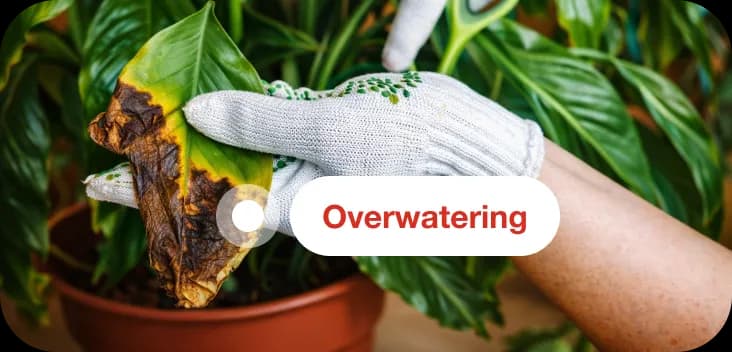
Scan with Botan for an instant diagnosis — 98%+ accuracy
15 Best Companion Plants for Dill
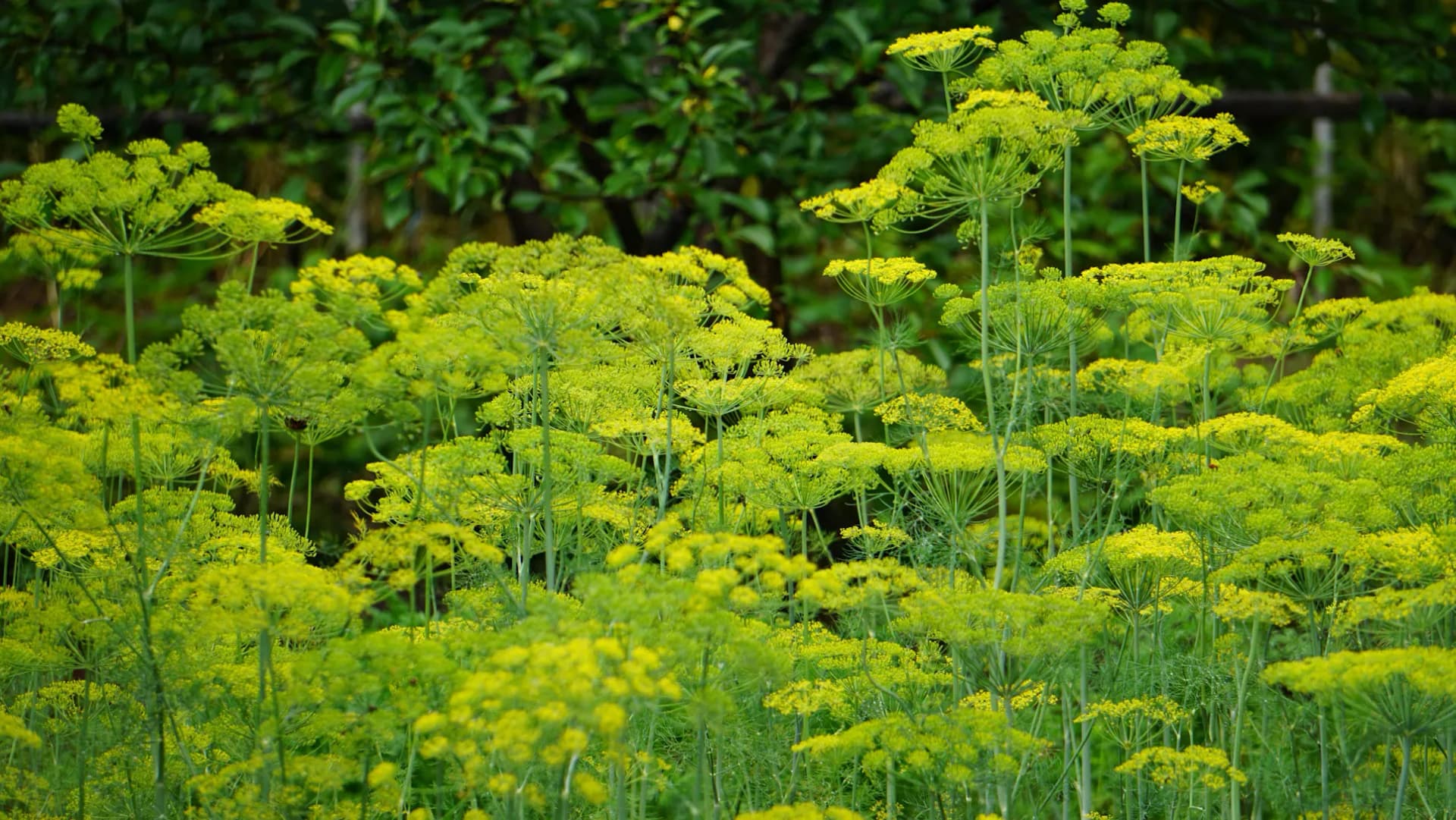
So, what to plant with dill? The answer is quite a lot. Dill, or Anethum graveolens is an annual plant in the parsley family, and its flat flower heads serve as a landing pad for beneficial insects: wasps, ladybugs, and hoverflies.
These insects feed on aphids and caterpillars that would otherwise gnaw on your crops. Dill also masks the scent of neighboring plants, which repels harmful pests. Here is each of the companion plants in detail.
1. Brassicas (Brassica spp.)

Cabbage, broccoli, kale, cauliflower: Cruciferous plants are magnets for aphids and cabbage moths. Dill helps in two ways — the flowers provide food for tiny wasps and hoverflies, which then hunt these pests through the leaves.
And the strong scent of Anethum graveolens seems to confuse moths that are looking for a place to lay their eggs. Plant it a foot or two away from cabbage heads, rather than directly on them, and you'll lose fewer heads to holes.
2. Cucumber (Cucumis sativus)

Cucumbers and dill have a long history of coexistence. Companion planting dill along a cucumber row attracts bees for better pollination and fruit set. It also attracts predators that prey on cucumber beetles, which is important because these beetles spread bacterial wilt.
3. Asparagus (Asparagus officinalis)

Asparagus is a perennial, so it occupies the same spot for years, and its feathery summer growth blends beautifully with the fern-like leaves of dill. Plant it into the spaces between the crowns – it attracts ladybugs and lacewings, which clean aphids from the young shoots.
Just cut back the dill before it starts to drop seeds everywhere; otherwise, you'll have to pull volunteers out of the asparagus for seasons.
4. Lettuce (Lactuca sativa)

If you're wondering what grows well with dill, consider lettuce. This is a fast-growing crop with a shallow root system. These characteristics are key to the successful coexistence of both plants: nothing digs into the same soil layer, so there's no competition for water or nutrients. The other half of the benefit is the shade.
Dill creates a light, diffuse cover that cools the lettuce and slows its bolting when the weather changes. Sow lettuce directly under and around the stems. You get lettuce and free pest protection in the same square foot.
5. Onions (Allium cepa)

Onions send their bulbs downward, while dill grows upward, so the roots never become connected. Furthermore, the aroma of onions repels aphids and some flying pests, so these two plants serve different functions. Plant onions in rows next to the bed and let them grow.
6. Corn (Zea mays)

Sweet corn grows tall and provides some shade from below, which dill appreciates when the July heat sets in. Corn also serves as food for caterpillars and aphids, and dill companion planting near it attracts ladybugs and wasps, which keep their numbers down. Corn stalks act as a windbreak, which is very useful since tall dill tends to fall over in gusts.
7. Basil (Ocimum basilicum)

Undoubtedly, basil deserves its place for its scent alone. This strong smell repels thrips, flies, and several types of beetles. Basil also needs the same full sunlight and regular water dill does, so they never compete for care.
Both flower if you allow them and feed pollinators late in the season. Plant basil next to dill, and honestly, next to tomatoes too — it's a good neighbor in every way.
8. Nasturtium (Tropaeolum majus)

Nasturtium works because aphids can't resist it, which sounds strange until you see it in action. As a trap crop in companion planting for dill and other vegetables, it attracts aphids that would otherwise attack your herbs, and ladybugs follow. Let it crawl along the edge of the bed, and periodically trim off the most affected leaves.
9. Garlic (Allium sativum)

Garlic has the same aroma as other alliums. Aphids, mites, and some beetles avoid its scent. Its roots go deep and thin, while dill’s remain fine and close to the surface, so nothing competes with it underground. Plant a few cloves between dill plants in the fall or early spring. The aroma will protect the plants and handle the beneficial bug side.
10. Spinach (Spinacia oleracea)

Of all the dill companion plants, spinach is perhaps the easiest to integrate into the soil. It's low, fast-growing, and has a shallow root system, so it fills the ground-floor space beneath the taller dill without obscuring anything.
The dill's shade gives the spinach extra time before it flowers in warm weather. Sow it during the cooler parts of spring or fall. You'll get an early harvest of greens and a neater bed.
11. Leeks (Allium porrum)

Leeks grow tall and thin, taking advantage of the vertical space. Their characteristic onion-family aroma repels aphids and carrot flies.
The roots of leeks and dill are in different zones below ground, so they don't compete for nutrients. Plant a row of leeks next to the dill, and the bed will feel good from the soil level to the flower heads.
12. Marigolds (Tagetes spp.)

Marigolds do something other plants don't: their roots secrete compounds that inhibit root-knot nematodes in the soil, protecting the dill and everything planted nearby. Above ground, the flowers attract hoverflies and bees. Wrap them around the bed to create a working border. Continue to remove dead heads, and they will bloom until frost.
13. Chives (Allium schoenoprasum)

Chives are a mild, grassy allium, and as companion plants for dill, they require virtually no maintenance. Both plants remain compact and thrive in the same corner.
When the chive flowers open, these small purple globes serve as food for bees, and the dill’s blooms serve the same purpose. Trim chives regularly, and they will grow densely.
14. Swiss chard (Beta vulgaris subsp. cicla)

Swiss chard produces leafy greens on bright, thick stems, and they grow straight up rather than trailing, so they never shade the dill. The two plants share a bed, and there's no conflict between them.
Swiss chard itself doesn't attract many pests and borrows the predators attracted to dill for cover. Plant it nearby and pick leaves for months.
15. Beans (Phaseolus vulgaris)

Beans contribute to underground life. As legumes, they fix nitrogen and nourish the rest of the garden bed. Both bush and climbing varieties are suitable.
Dill flowers at the top attract wasps, which “patrol” the pods in search of bean beetles and aphids. Sow a row of beans opposite — this will result in richer soil and fewer pests.
What Not to Plant with Dill
Some plants really shouldn't grow near dill, and it's best to know which ones in advance. You can see incompatible plants below:
- Carrots (Daucus carota): They belong to the same family, so they cross-pollinate, and this slows carrot root growth.
- Fennel (Foeniculum vulgare): Fennel and dill readily cross-pollinate, spoiling each other's seeds, and compete for space.
- Tomatoes (Solanum lycopersicum): Young dill helps tomatoes by repelling cutworms. However, after flowering, it competes with tomatoes and slows their growth.
- Lavender (Lavandula stoechas): Lavender prefers dry, lean soil and full sun. Dill requires constant moisture. It's impossible to grow both plants in the same spot.
Neither plant will harm your garden. It's just better to grow them some distance from the dill, which helps maintain the health of the entire bed.
5 Common Mistakes in Dill Companion Planting
Most companion plantings fail for easily preventable reasons. Here are some of the most common ones:
- You allow it to bloom right next to carrots or tomatoes. From there, it begins to compete with them rather than help.
- You plant it in the shade. Dill needs full sun to grow upright and bloom.
- You sow seedlings too close together. Without air circulation, the dill bends over and is susceptible to powdery mildew on plants.
- You forgot to prune it. Left unattended, it self-seeds across the entire bed and beyond.
- You allow it to dry out during hot weather. Drought causes premature blooms and it loses all its beneficial pest-fighting properties.
Give it sun, space, water, and occasional trimming, and the partnership will take care of itself.
FAQ
Yes — basil and chives get along well together, as they require equal amounts of sun and water. Just keep dill away from fennel, as they cross-pollinate and spoil each other's flavor.
Dariia Plaksina
Botanist
5 years of botanical research experience
Dariia Plaksina is a biologist, botanist, and writer of informational articles with over 5 years of experience exploring the world of plants, nature, and biology. She studied at Taras Shevchenko National University of Kyiv, Educational and Scientific Center “Institute of Biology and Medicine,” where she built a strong scientific foundation for her future work.
For Dariia, writing is a hobby, a calling, and a way to make reliable knowledge easier to understand. Her articles focus on plant care, plant health, and natural processes, helping readers learn more about the living world through clear, accessible, and science-based explanations.
Related Articles
4 min read · 20 Oct 2026
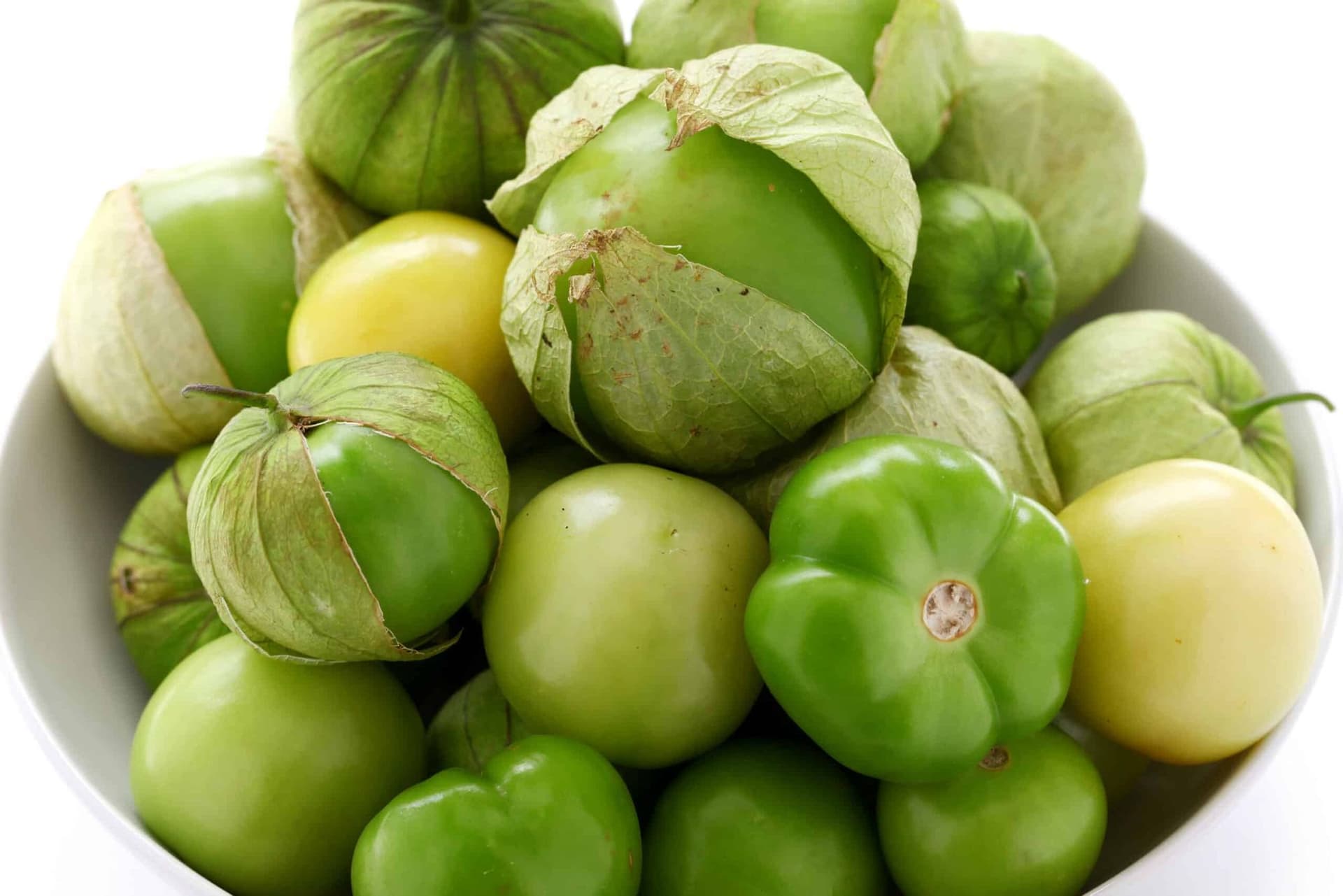
When to Harvest Tomatillos: How to Tell When They're Ripe
Tomatillos grow inside papery husks, making it hard to judge ripeness at a glance. This guide explains how to know when tomatillos are ripe and offers practical advice on harvesting and storage.
8 min read · 16 Oct 2026
20 Funny Plant Names That Make You Laugh
Some plants carry names that sound like jokes. This guide explains the origins of 20 funny plant names. You will also see which of these plants you can grow at home.

7 min read · 13 Oct 2026
12 Best Cold-Hardy Vegetables for Cold Weather
Cold-hardy vegetables can keep a garden productive through chilly fall, winter, and early spring weather. This guide covers 12 reliable crops, their frost tolerance, and practical growing tips for better cold-season harvests.
Explore Plants by Care Needs


Identify the plant and problem. Help your plant recover
Identify plant problems early, understand what's wrong, and get clear care guidance. Botan helps you turn guesswork into confident plant care