Pinch Early Leaders
Once plants reach 10–15 cm tall, pinch out the top pair of leaves above a node to encourage low, bushy branching and delay premature flowering when growing sweet basil.

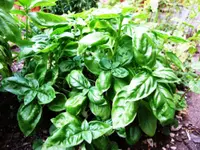
Sweet basil, Ocimum basilicum, is a fast-growing, aromatic herb commonly used in cooking. It is typically grown as an annual, even in warm climates where it can technically live longer.
The plant forms soft, leafy stems with bright green, oval leaves and a bushy, compact shape if regularly pinched. In warm conditions it produces small white flowers on upright spikes.
Ocimum basilicum originates from tropical regions of Africa and Asia, so it prefers warmth, ample light, and evenly moist, well-drained soil. Its quick growth and clear visual signals when stressed make it relatively straightforward to care for sweet basil, especially for beginners.

Care Difficulty
Moderate Care

Light Preference
Full Sun

Water Requirements
Regular Water

Temperature Preference
Tropical / Frost Sensitive

Hardiness Zone
10–11

Soil Texture
Sandy, Loamy, Organic-rich

Soil pH
Acidic (5.5–6.5), Slightly acidic (6.5–7.0)

Soil Drainage
Moist but well-drained

Fertilization
Moderate (every 2–4 weeks)
Scan your plant to receive care tips personalized for your specific plant
Available on iOS and Android
Ocimum basilicum needs abundant direct light to produce dense, flavorful foliage.
Ocimum basilicum prefers evenly moist, well-drained soil without staying soggy.
This herb grows best in consistently warm, frost-free conditions.
This species grows best in moderate humidity but adapts to many home conditions if watered correctly.
Ocimum basilicum prefers loose, aerated soil that drains quickly yet retains moderate moisture.
This species is well suited to container growing on patios, balconies, or near sunny doorways.
Ocimum basilicum is a fast-growing annual herb that benefits from light, consistent nutrition in containers and garden beds.
Thoughtful pruning keeps Ocimum basilicum compact, leafy, and productive for a longer harvest period.
Basil grown in containers or started indoors benefits from timely transplanting to avoid root stress and stunting.
Basil is commonly renewed by seed each year, but short cuttings also provide fast, uniform new plants.
Basil is a tender annual and does not tolerate frost, so plants usually decline completely in winter outdoors.

Plant Health Check
Not sure what's wrong with your plant? Check your plant's health inside the app.
Sweet basil leaves contain high levels of volatile oils such as linalool and eugenol, which give the plant its strong clove-like and floral aroma distinct from other basil species.
Although native to tropical regions of Africa and Asia, sweet basil was heavily selected and spread around the Mediterranean, where culinary traditions shaped many of the modern cultivars used in Italian and Greek cooking.
Modern sweet basil includes many cultivar groups with different leaf shapes, colors, and oil compositions, yet most remain closely related genetically, showing that culinary diversity arose from relatively recent selection within a single species.

In commercial food production, sweet basil is one of the most widely used fresh leafy herbs worldwide and is a primary source of the characteristic flavor of classic Italian pesto.
Yellowing leaves often result from overwatering, poor drainage, or nutrient imbalance, especially nitrogen deficiency. Cold drafts and natural aging of lower leaves also contribute. Check roots for rot and adjust watering, drainage, and fertilization accordingly.
Keep your plants happy and healthy with plant identification, disease detection, and easy care guidance.