Dedicated containment area
Always cultivate this fungus in a clearly marked, restricted plot or enclosed tray system away from paths, play areas, and edible beds to avoid accidental contact or harvesting.

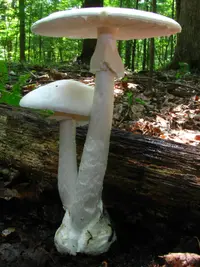
The Eastern North American destroying angel, Amanita bisporigera, is a highly toxic mushroom, not a true plant. It belongs to the group of gilled fungi that form symbiotic relationships with tree roots.
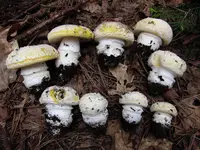
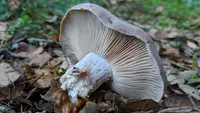
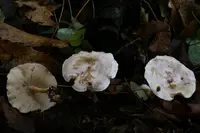
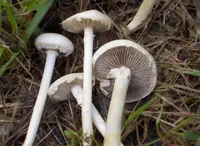
This species has a smooth white cap, white gills, a ring on the stem, and a cup-like base that often sits partly buried in soil or leaf litter. It typically occurs in hardwood and mixed forests across eastern North America, emerging from summer into fall.
Because it depends on living trees and complex soil fungi, it cannot be reliably cultivated at home, and attempts to care for Eastern North American Destroying Angel are not recommended. It generally appears in moist, well-drained forest soils with moderate shade.

Care Difficulty
Hard Care

Light Preference
Partial Shade

Water Requirements
Keep Soil Moist

Temperature Preference
Cool Climate

Hardiness Zone
Unknown

Soil Texture
Loamy, Organic-rich

Soil pH
Acidic (5.5–6.5)

Soil Drainage
Moist but well-drained

Fertilization
Minimal (feed rarely)
Scan your plant to receive care tips personalized for your specific plant
Available on iOS and Android
This toxic woodland fungus thrives in shaded forest conditions with filtered, indirect light.
This mycorrhizal fungus depends on consistently moist, well-drained forest soil rather than direct watering.
This species fruits best in mild to warm conditions typical of late summer and early autumn in temperate forests.
Humidity is not a practical care factor for this deadly wild fungus and it must not be cultivated intentionally, so no active humidity management is recommended.
Amanita bisporigera is an ectomycorrhizal forest fungus that cannot be reliably grown in pots or garden beds, so soil preparation in cultivation is not recommended.
This extremely poisonous, wild ectomycorrhizal fungus is not suitable for container growing and should never be intentionally potted or cultivated.
This deadly ectomycorrhizal fungus does not need fertilizer and should not be managed like a garden or houseplant.
Amanita bisporigera is not pruned, since its fruiting bodies are temporary and the organism lives mainly as an underground mycelial network.
This species forms specialized symbiosis with tree roots and is not suited to routine repotting or transplanting.
This highly toxic mushroom is not intentionally propagated in gardens or containers and is best left unmanaged in natural habitats.
The underground mycelium is naturally cold hardy in its native range and needs no intentional winter care.

Plant Health Check
Not sure what's wrong with your plant? Check your plant's health inside the app.
Unlike most mushrooms in its genus that have four spores per basidium, this species usually produces only two larger spores, which is the basis of its scientific name bisporigera and is a key identification feature under the microscope.
The fruiting body is entirely white from cap to gills and stem, closely resembling several edible white mushrooms, which makes field identification difficult and contributes to many accidental poisonings.
Its tissues contain amatoxins, especially alpha-amanitin, which remain toxic after cooking, drying, or freezing and primarily damage liver and kidney cells by blocking an essential step in DNA transcription.

This species is considered one of the most lethal mushrooms in eastern North America and is frequently implicated in severe human poisoning cases where just a small portion of a single fruiting body can be enough to cause fatal liver failure.
This fungus is extremely poisonous to both humans and animals. Ingestion of even a small portion can cause fatal liver and kidney damage. There is no safe way to prepare or consume it, and identification errors are common.
Keep your plants happy and healthy with plant identification, disease detection, and easy care guidance.