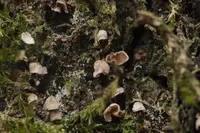
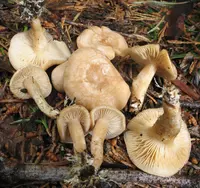
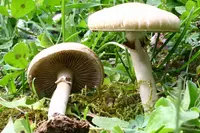
Sunshine Amanita Care (Amanita aprica)

Sunshine Amanita

About Sunshine Amanita

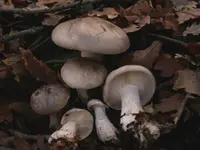
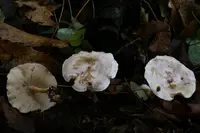
Sunshine Amanita, Amanita aprica, is a wild mushroom rather than a garden plant, recognized by its bright yellow to orange cap with patchy, pale warts. It forms mycorrhizal associations, meaning it lives in partnership with tree roots, and does not adapt well to pots or typical home garden conditions.

This species occurs mainly in western North America, often in coniferous or mixed forests, appearing on soil near trees. It is not suitable for cultivation, so information on how to care for Sunshine Amanita is limited and mostly theoretical.

In nature, it favors well-drained, humus-rich forest soils with consistent moisture and dappled light under tree canopies, where it relies on its tree partners to thrive.

Main Plant Requirements

Care Difficulty

Hard Care

Light Preference

Partial Shade

Water Requirements

Regular Water

Temperature Preference

Cool Climate

Hardiness Zone

Unknown

Soil Texture

Loamy, Silty, Organic-rich

Soil pH

Acidic (5.5–6.5)

Soil Drainage

Moist but well-drained

Fertilization

Minimal (feed rarely)

Get Personalized Care Plan

Scan your plant to receive care tips personalized for your specific plant

Available on iOS and Android

How to Care for the Sunshine Amanita

This mushroom species prefers bright but gentle woodland light patterns rather than intense, open sun.

  • Site Amanita aprica where it receives dappled or filtered light for about 2–4 hours of direct morning sun, avoiding strong midday and afternoon exposure.
  • Allow partial shade under shrubs or light tree canopy; too much open sun can dry the substrate quickly and scorch exposed fruiting bodies.
  • In summer, protect Sunshine Amanita from reflected heat and long sun periods, while in cooler seasons slightly brighter positions can support reliable fruiting.

This fungus depends on steady natural soil moisture rather than direct watering of the fruiting bodies.

  • Aim for evenly moist, well-drained soil; the top 2–5 cm should feel slightly damp but not waterlogged when checked by hand.
  • Avoid standing water or compacted clay, since persistent saturation leads to rotting mycelium, while cracked, powder-dry soil signals insufficient moisture.
  • During hot, dry spells, irrigate nearby vegetation so moisture penetrates deeply, but reduce added water in cool, wet seasons to prevent prolonged sogginess around Amanita aprica.

This species favors mild, temperate conditions and reacts poorly to both hard frost and extreme heat.

  • Optimal growth and fruiting occur around 50–68°F (10–20°C), typical of cool, moist spring or autumn weather in many temperate woodlands.
  • Short exposures down to about 28–32°F (-2–0°C) may be tolerated, but repeated or deep frosts often damage or prevent fruiting.
  • Sustained heat above 80°F (27°C) with dry air suppresses development, so stable, shaded, and moderately cool microclimates give the best seasonal performance.

Humidity is not a primary controllable factor for Amanita aprica, which naturally grows outdoors in variable forest air moisture.

Amanita aprica depends on natural, undisturbed forest soil and cannot be reliably cultivated by adjusting potting mixes.

  • This species forms a mycorrhizal partnership with live tree roots in well-aerated, loose, leaf-litter-rich forest soil.
  • Typical sites are sandy to loamy, with rapid drainage and no standing water after rainfall.
  • Soil is usually slightly acidic to neutral (roughly pH 5.5–7), often under conifers or mixed woodland.
  • Avoid compacted, heavily amended, or container-style mixes, which disrupt the fungus–tree root relationship and prevent normal development.

This species is not suitable for container growing because it requires living tree roots and natural forest soil structure.

This ectomycorrhizal mushroom relies on its tree partners for nutrients, so direct fertilization of Amanita aprica is neither necessary nor recommended.

  • Avoid applying synthetic balanced NPK or slow-release fertilizers near fruiting sites, as excess nutrients can disrupt the soil fungi community.
  • If surrounding trees need feeding, use light surface compost or leaf mold applications at least 30–50 cm away from visible mushrooms.
  • Maintain an undisturbed, organic-rich leaf litter layer instead of targeted feeding; this favors the natural life cycle of Sunshine Amanita.

Pruning is not applicable to Amanita aprica, because it is a wild mushroom rather than a woody or leafy ornamental.

Transplanting Amanita aprica is not practical, since it lives in symbiosis with host tree roots and specific soil fungi communities.

  • Avoid digging up or moving fruiting bodies or their surrounding soil, as this usually damages the underlying mycelium network.
  • If habitat alteration is unavoidable, disturb the soil as little as possible around host trees and retain the existing leaf litter layer.
  • Container culture is not advised; this species depends on natural forest soil conditions that are difficult to recreate in pots.
  • For conservation-minded management, focus on preserving native trees and undisturbed, well-drained, minimally compacted soil.

Propagation of Amanita aprica is complex and not realistically achievable for home growers.

  • The species reproduces via microscopic spores released from mature caps, which require very specific forest soil and host tree roots to establish.
  • Laboratory methods using sterile culture and controlled mycorrhizal inoculation are research-level techniques, not standard home propagation.
  • Garden-scale attempts to grow Amanita aprica, such as moving soil or caps, rarely succeed and may damage natural populations.
  • Supporting native host trees and avoiding soil disturbance offers the best indirect approach to long-term presence in suitable habitats.

No specific winter care is needed for Amanita aprica in its natural range, as the fungal mycelium is generally cold hardy in soil.

Care Tips

Mycorrhizal partner protection

Avoid disturbing or compacting soil around the host tree roots, since the fungus depends on fine root tips and mycorrhizal connections that are easily damaged by digging, tilling, or heavy foot traffic.

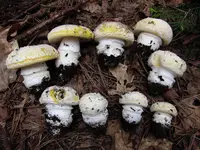
Host tree compatibility

Encourage compatible conifer hosts such as pine, fir, or Douglas-fir by keeping competing shrubs and turf grass away from the root zone, which allows the fungus and tree roots to form stronger symbiotic associations.

Minimal nutrient inputs

Do not add rich composts or high-nitrogen fertilizers near established fruiting areas, because excessive nutrients can reduce mycorrhizal activity and shift the soil community away from conditions that support this species.

Careful leaf litter management

Retain a thin, natural layer of needles or leaf litter but prevent thick, waterlogged mats, gently raking only when layers exceed about 3–5 cm so gas exchange and fungal growth are not smothered.

Moisture buffering techniques

Use a light, airy mulch such as partially decomposed conifer needles around the drip line of the host tree to buffer moisture without creating soggy conditions, which supports a more stable environment for growing Sunshine Amanita.

Common Pests and Diseases

fungal mycelial parasites

This disease develops when other soil fungi parasitize the fruiting body and mycelium, causing deformed caps, off-color patches, and rapid decay. Symptoms include soft, water-soaked tissue and fast collapse of the mushroom structure.

Solution

Remove and discard affected fruiting bodies promptly to reduce spore spread, avoid disturbing the surrounding soil excessively, and maintain good site hygiene by clearing heavy, wet debris that traps moisture. In natural or landscape settings there is no reliable chemical control; management focuses on reducing prolonged saturation and physical damage to the mycelium network.

slugs and snails

These pests feed on the caps and stems, leaving irregular holes, slime trails, and sometimes consuming entire young mushrooms overnight. This pest activity is most intense in cool, wet conditions under dense groundcover or mulch.

Solution

Hand-pick slugs and snails during the evening or early morning and reduce dense, moist hiding spots such as thick mulch or boards on the ground. Where control is necessary, use iron-phosphate slug baits labeled safe for wildlife and pets, placed away from areas used by children and animals.

maggot infestation

These insects, often fly larvae, tunnel inside the cap and stem, leading to spongy, discolored, and collapsing fruiting bodies. Symptoms include small entry holes and internal browning or liquefaction of tissues.

Solution

Harvest and remove affected fruiting bodies as soon as internal tunneling is noticed to break the breeding cycle of the flies. In outdoor or woodland settings, physical removal and regular monitoring are the primary practical controls; traps for adult flies can help locally but cannot eliminate infestation entirely.

bacterial soft rot

This disease appears in warm, wet conditions, causing slimy, foul-smelling decay of caps and stems that progress rapidly. Symptoms include watery lesions, surface slime, and collapse of the mushroom within a short time.

Solution

Promptly remove and discard rotting mushrooms to limit bacterial spread and odor, and avoid overhead watering or constant wetting of the fruiting area. Improve air movement at ground level by thinning dense groundcover so surfaces dry faster after rain or irrigation, which discourages bacterial buildup.

Interesting Facts

Recent formal description

This species was only formally described by mycologists in 2013, after decades of being confused with other yellow and orange amanitas found in western North America.

Spring-fruiting specialist

It typically fruits in spring rather than autumn, often appearing soon after snowmelt in montane conifer forests of the western United States and southwestern Canada.

Distinct cap coloration

Mature caps often show a patchy, sun-faded pattern of bright yellow to orange with paler areas, which helps distinguish it from more uniformly colored toxic relatives in the same region.

FAQs about Sunshine Amanita

This species is considered highly poisonous. It can cause severe gastrointestinal distress, neurological symptoms, and in some cases life‑threatening reactions. It should never be eaten, and children and pets must be kept away from it.

Grow Healthy Plants with Botan Care

Keep your plants happy and healthy with plant identification, disease detection, and easy care guidance.

Botan plant care app — identify plants on mobile

Explore More Plants