Substrate rotation
Rotate and lightly rake the duff or needle litter layer each season to reduce compaction and maintain the loose, aerated forest-floor conditions that this fungus needs to fruit reliably.

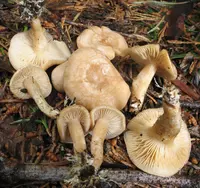
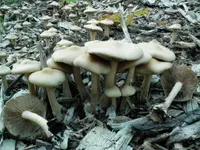
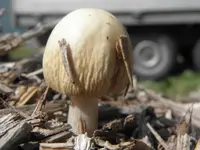
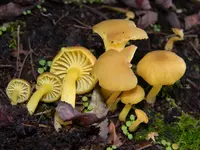
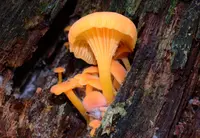
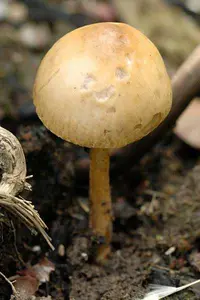
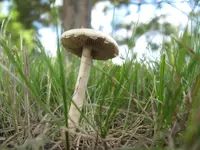
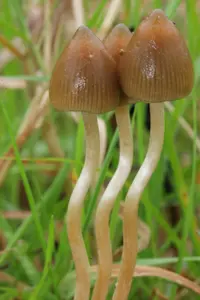
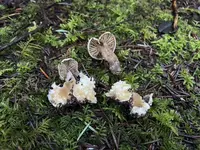
Clitocybe albirhiza is a small, ground-dwelling fungus rather than a leafy plant. It typically forms pale, funnel-shaped caps with crowded gills and a distinctive whitish, root-like base. This mushroom often appears in coniferous or mixed forests, especially in cold or snowy regions of western North America. It usually grows in clusters on soil rich in organic matter. Identification is challenging, even for experts, due to its similarity to other small, pale Clitocybe species. For this reason, how to care for Clitocybe albirhiza is rarely addressed in home cultivation and it is best appreciated as a wild species in its natural habitat.

Care Difficulty
Moderate Care

Light Preference
Partial Shade

Water Requirements
Moderate Water

Temperature Preference
Cool Climate

Hardiness Zone
Unknown

Soil Texture
Loamy, Sandy, Organic-rich

Soil pH
Acidic (5.5–6.5)

Soil Drainage
Moist but well-drained

Fertilization
Minimal (feed rarely)
Scan your plant to receive care tips personalized for your specific plant
Available on iOS and Android
This fungus prefers cool, subdued forest light rather than direct, open sun.
This fungus relies on consistently moist, cool soil rather than direct watering like a typical garden plant.
This species favors cool temperatures typical of melting snow and early-season forest conditions.
This fungus is not typically humidity-sensitive in natural conditions, so targeted humidity management is rarely necessary.
Clitocybe albirhiza grows best on loose, organic-rich substrates that mimic forest floor litter rather than conventional potting soil.
This species is not well suited to container growing, as it is adapted to natural forest-floor substrates and complex soil ecosystems.
This forest-dwelling fungus does not benefit from intentional fertilization in garden or container culture.
Clitocybe albirhiza requires no intentional pruning, since its fruiting bodies are temporary and naturally decompose.
Transplanting focuses on moving colonized substrate rather than individual fruiting bodies.
Propagation of this wild fungus is usually left to natural spore spread and is not a routine home practice.
This species is naturally cold hardy in its native range and needs no specific winter care when left in the ground.

Plant Health Check
Not sure what's wrong with your plant? Check your plant's health inside the app.
This fungus is typically found fruiting along the edges of melting snowbanks in high-elevation coniferous forests of western North America, often appearing just as the snow recedes in late spring to early summer.
Its fruiting bodies usually have a dense, white, felted to cottony mass of mycelium at the stipe base, forming radiating cords in the soil that help distinguish it from other small, pale funnel-shaped mushrooms.
It occurs most often under subalpine conifers such as spruce and fir, where it decomposes organic litter and contributes to nutrient cycling in cold, seasonally snow-covered ecosystems.
This fungus is not considered edible and should be treated as potentially poisonous. Identification in the genus Clitocybe is difficult, and some related species contain dangerous toxins. Avoid eating wild specimens and leave them for observation only.
Keep your plants happy and healthy with plant identification, disease detection, and easy care guidance.