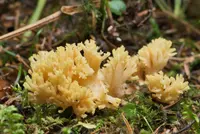
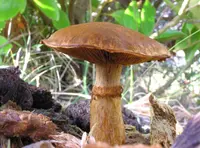
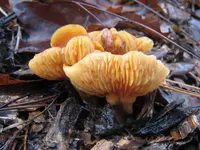
Cystostereum murrayi Care

Cystostereum murrayi

About Cystostereum murrayi

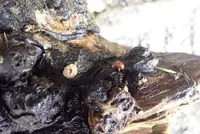
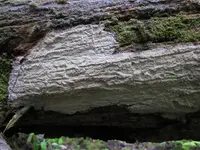
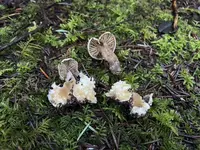
Cystostereum murrayi is not a leafy houseplant but a crust-like wood-decay fungus that forms thin, spreading patches on dead branches and logs. Its surface is usually smooth to slightly wrinkled, with pale to grayish tones that blend into the bark.

This species occurs mainly in forested regions of North America, where it helps decompose fallen wood and recycle nutrients. It is not typically cultivated, and attempts to care for Cystostereum murrayi at home are uncommon because it relies on specific host wood and natural moisture conditions.

For those studying fungi, it is most easily observed in humid, shaded woodland settings on well-decayed wood, rather than in garden or indoor environments.

Main Plant Requirements

Care Difficulty

Moderate Care

Light Preference

Partial Shade

Water Requirements

Moderate Water

Temperature Preference

Warm Climate

Hardiness Zone

Unknown

Soil Texture

Loamy

Soil pH

Slightly acidic (6.5–7.0)

Soil Drainage

Well-drained

Fertilization

Minimal (feed rarely)

Get Personalized Care Plan

Scan your plant to receive care tips personalized for your specific plant

Available on iOS and Android

How to Care for the Cystostereum murrayi

This wood-decaying fungus grows on shaded, decaying wood and is adapted to low natural light in forests.

  • Provide dappled or filtered light similar to a forest understory, avoiding direct midday sun, which can dry the substrate and fruiting bodies quickly.
  • Allow brief early-morning or late-afternoon sun only, aiming for 1–3 hours of weak light; sustained full sun reduces humidity and can halt fruiting.
  • In summer, protect logs or wood pieces from harsh afternoon exposure; in winter, ensure they still receive bright shade so Cystostereum murrayi can develop normally.

This fungus depends on consistently moist, but not waterlogged, wood rather than direct watering of the fruiting bodies.

  • Keep the host wood or log evenly moist; allow the outer 0.5–1 cm of bark to feel just slightly dry before rewetting with gentle soaking or misting.
  • During warm, dry periods, increase misting frequency to maintain surface dampness and local humidity, avoiding standing water around the wood that encourages anaerobic rot.
  • Reduce watering in cool seasons but prevent the substrate from fully drying; shriveled, brittle crusts suggest underwatering, while slimy, foul-smelling wood suggests excess saturation.

This species favors mild, temperate conditions typical of shaded forest habitats on decaying wood.

  • Aim for a growth range of 55–75°F (13–24°C), where fungal metabolism and fruiting tend to be most stable on decomposing hardwood.
  • Tolerate short drops to about 35–40°F (2–4°C), but protect substrate from hard freezes below 32°F (0°C), which can damage active mycelium and fruiting surfaces.
  • In hot spells above 80–85°F (27–29°C), move wood to deeper shade and increase humidity, since combined heat and dryness can halt growth or desiccate crusts.

This wood-decaying fungus has no meaningful humidity requirements for cultivation in typical outdoor conditions.

This species grows naturally on decaying wood rather than in mineral soil, so cultivation focuses on replicating its woody substrate.

  • Use sound but dead hardwood logs or thick branches, avoiding conifers and treated lumber that release harmful resins or chemicals.
  • Maintain a coarse, airy structure by stacking or spacing logs so air can move freely around them and surfaces do not stay slimy.
  • Keep the wood evenly moist but not waterlogged by providing shade and occasional watering during prolonged dry periods.
  • Avoid burying the substrate in soil, which restricts aeration, encourages competing fungi, and increases rot instead of controlled decay.

This species is not well suited to conventional container growing, since it colonizes dead wood rather than soil-filled pots.

This wood-decay fungus occurs naturally on host wood and usually does not need deliberate fertilization in cultivation.

As a bracket-forming wood fungus, Cystostereum murrayi is not managed through conventional pruning.

This species grows on dead or decaying wood, so care focuses on providing suitable substrate rather than classic repotting.

  • Transplant only when moving colonized wood to a fresh location or container, keeping the mycelium-covered surface intact.
  • Plan moves during mild, stable weather to avoid extreme temperature or moisture swings.
  • Handle logs or wood pieces gently to avoid breaking the fruiting crust and underlying mycelium.
  • Maintain similar moisture and shade conditions at the new site to reduce establishment stress.

Propagation of this wood-inhabiting fungus is specialized and typically handled by mycologists, not home growers.

In outdoor settings this fungus is generally cold hardy and needs no specific winter care.

Care Tips

Host wood selection

Use fresh, disease-free hardwood logs or blocks from known host genera such as Acer or Betula, since compatible, sound wood greatly improves colonization speed and fruiting reliability.

Shaded mounting method

If cultivating outdoors, mount inoculated wood on the shaded, north-facing side of stumps or logs to mimic its natural habit on the underside of fallen wood and reduce desiccation and UV damage to the mycelium.

Moisture retention setup

After inoculation, wrap logs or blocks in breathable materials such as burlap or perforated plastic and keep them off bare ground on bricks or pallets to maintain stable moisture while avoiding waterlogging and soilborne contaminants.

Sanitary inoculation practice

Disinfect drill bits, saws, and other tools with 70% isopropyl alcohol before and between batches when growing Cystostereum murrayi to lower the risk of competing fungi colonizing the same wood.

Seasonal hydration management

In dry or windy seasons, briefly soak small logs in clean water and then allow them to drain fully in the shade, repeating only when they feel notably lighter, to maintain internal wood moisture without encouraging anaerobic rot.

Common Pests and Diseases

Competing wood-decay fungi

This disease involves other wood-decay fungi colonizing the same log or stump and gradually displacing the Cystostereum murrayi mycelium. Symptoms include shrinking or disappearance of C. murrayi fruiting patches and replacement by brackets, shelves, or crusts of different color and texture.

Solution

To support stable Cystostereum murrayi colonies, remove heavily competing fruit bodies of other fungi from the same substrate and avoid moving in fresh logs that already carry aggressive decomposers such as Trametes or Stereum species. Maintain moderately shaded, evenly moist conditions for the existing colonized wood so its established mycelium stays competitive without frequent disturbance.

Bark beetle activity

This pest problem occurs when bark beetles tunnel through colonized wood, disrupting the mycelium and drying the substrate. Symptoms include fine boring dust, exit holes, and rapid desiccation or cracking of the log where C. murrayi had been fruiting.

Solution

To reduce beetle impact, keep colonized wood off bare soil and avoid stacking it with infested firewood or storm-damaged timber that already shows beetle galleries. If activity is localized, cut away and discard the most damaged sections of wood and move remaining colonized pieces to a cooler, shaded, higher-humidity spot to limit further drying and insect entry.

Wood-dwelling larvae

These insects live inside dead wood and feed on decaying tissue, indirectly disrupting fungal mycelium and fruiting surfaces. Symptoms include soft, tunneled interior wood and occasional collapse or distortion of thin crust-like fruit bodies.

Solution

To manage larval damage, store colonized wood in a stable, shaded, slightly elevated area where it is less attractive to egg-laying insects, and avoid leaving it in bright, hot, or very dry sites. If infestation is heavy, cut away the most affected wood sections and retain only sound, firmly textured pieces to continue growing Cystostereum murrayi.

Interesting Facts

White rot specialist

This crust fungus causes white rot in hardwoods by breaking down both lignin and cellulose, leaving behind a pale, fibrous wood structure that is structurally weakened but visually not heavily stained.

Distinctive purple tint

Fresh fruiting bodies often show a pale lilac to purplish tone near the margin, a helpful field feature that, along with its smooth to slightly tuberculate surface, distinguishes it from many similar resupinate fungi.

North American distribution

It is primarily recorded from eastern North America, where it grows as a thin, closely adherent crust on decaying branches and logs of broadleaf trees in humid forests.

FAQs about Cystostereum murrayi

This crust fungus gradually spreads across dead or weakened wood, forming thin, patchy fruiting layers. It is not usually considered aggressive in managed landscapes but can steadily contribute to wood decay on fallen logs or dead branches.

Grow Healthy Plants with Botan Care

Keep your plants happy and healthy with plant identification, disease detection, and easy care guidance.

Botan plant care app — identify plants on mobile

Explore More Plants