Clean-room workflow
Organize tools, alcohol spray, and sterile containers in a fixed order before inoculation so your hands move in one smooth sequence, reducing the time substrates and cultures are exposed to unfiltered air.

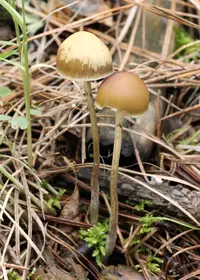
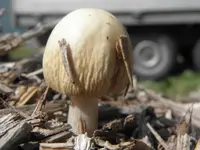
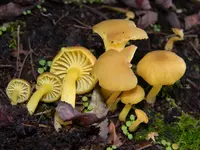
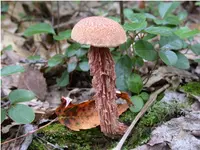
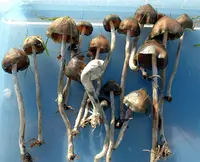
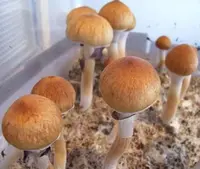
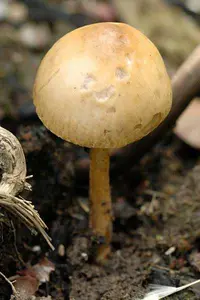
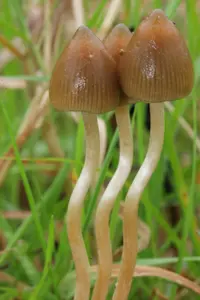
Psilocybe aztecorum is a small, saprophytic mushroom rather than a leafy houseplant. It produces slender, pale to brownish stems with conical caps that often show a slightly wavy margin when mature. The fruiting bodies are typically delicate and short-lived.
This species occurs naturally in high-elevation regions of central Mexico, often in mossy, humid habitats on volcanic soils. It is considered challenging to cultivate because it has specific environmental and substrate needs and is sensitive to contamination.
Due to these demands, how to care for Psilocybe aztecorum is usually of interest only to experienced growers. It generally prefers cool, stable conditions, high humidity, and consistently moist but well-aerated organic material.

Care Difficulty
Hard Care

Light Preference
Partial Shade

Water Requirements
Keep Soil Moist

Temperature Preference
Cool Climate

Hardiness Zone
Unknown

Soil Texture
Loamy, Organic-rich

Soil pH
Acidic (5.5–6.5)

Soil Drainage
Moist but well-drained

Fertilization
Minimal (feed rarely)
Scan your plant to receive care tips personalized for your specific plant
Available on iOS and Android
This fungus prefers cool, bright forest-like light rather than strong, direct sun exposure.
Moisture for this species must stay consistently damp but never waterlogged.
This species performs best in cool to mild conditions with stable temperatures.
This fungus requires consistently high humidity to produce healthy fruiting bodies.
Psilocybe aztecorum is not grown in conventional garden soil but in a carefully prepared substrate.
This species can be grown in containers such as tubs or trays designed for mushroom cultivation.
Nutrient needs for Psilocybe aztecorum are modest, especially when grown in a well-prepared, organic substrate.
Pruning is generally not applicable for Psilocybe aztecorum, as it is a fungus with no woody stems or foliage to shape.
Container changes for Psilocybe aztecorum focus on renewing the substrate rather than traditional repotting.
Propagation of Psilocybe aztecorum is specialized and typically handled by experienced growers under controlled conditions.
Outdoor cultivation of Psilocybe aztecorum in colder climates is limited, and indoor temperature control is usually more important than classic winter care.

Plant Health Check
Not sure what's wrong with your plant? Check your plant's health inside the app.
This species is naturally found in high-altitude regions of central Mexico, typically fruiting in cold, moist montane environments among mosses and decaying wood in conifer forests.
Mature mushrooms often show a hygrophanous cap, meaning it changes color as it loses moisture, shifting from darker brown when moist to much paler or yellowish as it dries.
It has a relatively restricted natural distribution, known chiefly from specific volcanic and montane areas in the Trans-Mexican Volcanic Belt, which contributes to its conservation concern among mycologists.

Ethnohistorical research links this species to pre-Hispanic ritual use by Aztec peoples, who are believed to have referred to it, along with a few related fungi, as teonanácatl, a Nahuatl term often translated as divine or sacred mushroom.
This species is a psychoactive mushroom containing psilocybin, a hallucinogenic compound. In many countries it is controlled or illegal. It should never be consumed without expert identification, medical consideration, and full understanding of local laws.
Keep your plants happy and healthy with plant identification, disease detection, and easy care guidance.