flowerpot parasol Care (Leucocoprinus birnbaumii)

Also known as: yellow flowerpot fungus, plantpot dapperling
flowerpot parasol

About flowerpot parasol

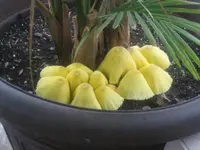
The flowerpot parasol, Leucocoprinus birnbaumii, is a small yellow mushroom that often appears in indoor pots and greenhouse containers. It is a fungus, not a leafy houseplant, and emerges suddenly from the soil as bright, parasol-shaped caps on slender stems.

This species is originally tropical and subtropical but now occurs worldwide in potting mixes, thriving in warm, humid, nutrient-rich conditions. It does not harm the plant roots directly but signals consistently moist, organic-rich soil.

Because it spreads by microscopic spores, it can move between pots and reappear even after removal. To understand how to care for flowerpot parasol, it is important to treat it as a temporary fungal guest rather than a plant to cultivate long term.

Main Plant Requirements

Care Difficulty

Easy Care

Light Preference

Bright Indirect Light

Water Requirements

Keep Soil Moist

Temperature Preference

Tropical / Frost Sensitive

Hardiness Zone

Unknown

Soil Texture

Loamy, Peaty, Organic-rich

Soil pH

Acidic (5.5–6.5), Slightly acidic (6.5–7.0)

Soil Drainage

Moist but well-drained

Fertilization

Minimal (feed rarely)

Get Personalized Care Plan

Scan your plant to receive care tips personalized for your specific plant

Available on iOS and Android

How to Care for the flowerpot parasol

Leucocoprinus birnbaumii thrives in bright, indirect light that mimics filtered tropical understory conditions.

  • Provide 6–10 hours of bright, filtered light each day, such as near an east- or north-facing window or beneath sheer curtains in brighter exposures.
  • Avoid strong midday or afternoon sun, which can bleach or dry the fruiting bodies; brief morning sun is usually tolerated if humidity and moisture are stable.
  • In low winter light, move the flowerpot parasol closer to bright windows or use diffuse artificial light to maintain steady, indirect illumination.

This fungus prefers consistently moist, well-drained substrate rather than strict wet–dry cycles.

  • Water when the top 2–3 cm of substrate feel just barely dry to the touch, aiming to keep the lower layer evenly moist but never saturated.
  • Use a loose, free-draining potting mix; empty saucers after 10–15 minutes to prevent standing water and sour, anaerobic conditions that harm roots of nearby plants.
  • Signs of overwatering include sour odor, algal film, or plant root decline, while prolonged shrinking or collapsing caps can indicate the substrate is drying too much.

This species favors warm, stable conditions similar to a tropical greenhouse environment.

  • Best growth occurs around 68–80°F (20–27°C), where fruiting bodies appear quickly and persist longer in evenly warm rooms.
  • Growth slows below 60°F (16°C) and typically stops near 50°F (10°C); the organism is not frost tolerant and can be killed by freezing temperatures.
  • Short exposures to 82–86°F (28–30°C) are usually tolerated if humidity and moisture remain stable, but prolonged heat and dry air can cause rapid shriveling.

This species tolerates a wide humidity range and rarely needs special adjustment indoors.

  • Performs reliably at 30–60% humidity typically found in heated or air-conditioned homes.
  • Caps may dry and crack slightly only in very prolonged, extremely dry air below about 25% humidity.
  • If mushrooms look shriveled, increase humidity briefly with a nearby open tray of water or by grouping plants, but avoid misting the substrate directly.

This saprophytic mushroom thrives in consistently moist, airy, organic-rich potting media.

  • Prefers loose, peat- or coir-based mixes with high organic matter, which provide a stable food source and hold moisture without compaction.
  • Requires excellent drainage; a mix containing at least 30–50% perlite, bark, or coarse material helps prevent waterlogging around plant roots.
  • Tolerates a broad pH range around 5.5–7.5, so standard peat-based houseplant or seed-starting mixes work well without special adjustment.
  • Avoid dense garden soil, heavy clay, or compacted media; if existing soil is heavy, blend in perlite or fine bark chips to improve aeration and limit anaerobic, foul-smelling conditions.

This species is very well suited to container growth because it naturally appears in potted plant substrates.

  • Use pots with large, unobstructed drainage holes so water exits quickly and the fungal mycelium remains in moist but not stagnant conditions.
  • Choose a container size that matches the host plant’s root ball; overly deep pots keep the lower substrate saturated and can reduce fruiting.
  • In moisture-retentive plastic pots, monitor substrate wetness more closely, as slower evaporation can favor prolonged saturation that stresses many companion houseplants even while mushrooms persist.

This saprophytic mushroom does not require fertilizer itself, but substrate nutrition influences how strongly flowerpot parasol appears.

  • Use a lightly fertilized, well-drained potting mix for the host plant, avoiding heavy, manure-rich composts that can boost mushroom growth.
  • If feeding the host plant, choose a balanced liquid fertilizer (such as 10-10-10) at 1/2 strength during the main growing season.
  • Apply fertilizer no more than every 4–6 weeks in spring–summer; overfeeding the potting mix tends to favor fungal flushes.
  • Reduce or stop fertilization in fall–winter when most indoor hosts grow more slowly and fungal activity naturally declines.

Leucocoprinus birnbaumii is not pruned like a typical plant, but mushroom bodies can be removed to manage appearance and spore spread.

  • Remove caps as soon as they appear or start to yellow, cutting them at the base with clean scissors or gently twisting by hand.
  • Focus on eliminating collapsed, moldy, or damaged mushrooms to keep the pot surface hygienic and reduce nuisance spores indoors.
  • Light surface disturbance of the top 1–2 cm of potting mix can reduce dense clusters, though it will not remove the underlying mycelium.
  • Dispose of removed material in the trash rather than compost to limit unintentional spread to other pots.

Managing Leucocoprinus birnbaumii focuses on adjusting the potting environment rather than repotting the fungus itself.

  • Consider repotting when a houseplant’s roots circle the container, growth slows, or mushrooms appear persistently despite careful watering.
  • Best timing is spring, using fresh, sterile, well-drained potting mix with lower organic content to make conditions less favorable for the fungus.
  • Shake or gently tease excess old soil from plant roots, avoiding aggressive washing that can cause root stress and setback.
  • After repotting, water lightly, keep the plant in stable, bright conditions, and monitor moisture to discourage heavy fungal regrowth.

This mushroom spreads through spores and mycelium in the potting mix, but intentional propagation of Leucocoprinus birnbaumii in homes is uncommon.

  • Spores form on mature caps and disperse into nearby moist, organic-rich substrates, where they can germinate naturally.
  • In controlled culture, growers use sterile grain or agar to start mycelium, then transfer it to a pasteurized substrate.
  • Warm, humid conditions and a consistently moist but not waterlogged medium favor colonization and fruiting.
  • For most houseplant owners, limiting spread means discarding or replacing infested potting mix rather than trying to grow Leucocoprinus birnbaumii.

Indoors, Leucocoprinus birnbaumii needs no special winter care, as it is not frost tolerant and survives only in protected, warm substrates.

  • In cold climates, keep host containers above 55–60°F; freezing temperatures will kill the mycelium in exposed soil.
  • Indoor heating that dries potting mix may temporarily reduce or stop mushroom production until moisture returns.
  • If containers are kept in cool sunrooms or garages, avoid allowing the potting mix to freeze-solid for extended periods.

Care Tips

Contain Spore Spread

When caps open, place a loose plastic bag or paper cone over the mushrooms before removing them to catch spores and reduce future flushes in nearby pots.

Targeted Substrate Removal

If mushrooms recur heavily in one area of the pot, scoop out and discard the top 3–5 cm of that specific substrate zone and replace it with fresh, low-organic potting mix to cut down the fungal food source.

Adjust Organic Inputs

Avoid adding bark-heavy topdressings, uncomposted wood chips, or thick layers of decorative mulch in pots where you see this species, since these materials strongly encourage new fruiting bodies.

Separate Sensitive Plants

Move pots with abundant mushrooms away from seedlings, recently rooted cuttings, or stressed plants so that high fungal activity and frequent substrate disturbance do not interfere with their establishment.

Use As Indicator

Treat this fungus as a soil indicator and, when caring for flowerpot parasol, use repeated flushes as a cue to review drainage, pot size, and organic matter levels rather than as a sign of disease in the host plant.

Common Pests and Diseases

Fungus gnats

These insects are small dark flies that breed in constantly moist potting mixes rich in organic matter, which are also ideal for this mushroom species. Symptoms include tiny flies around pots and slender larvae in the top 1–2 cm of soil.

Solution

Allow the substrate surface to dry slightly between waterings, use well‑draining mix, and remove algae or decaying debris from the pot surface. Sticky traps catch adults, while a biological control such as Bacillus thuringiensis israelensis (Bti) in the water targets larvae without harming the mushrooms or houseplants nearby.

Mold contamination

This disease appears as fuzzy white, gray, or green growth on the casing layer, potting mix, or on the mushrooms themselves when humidity is high and air movement is poor. Symptoms include patches that spread across the substrate and can outcompete the desired fungus.

Solution

Improve airflow, reduce constant surface wetness, and promptly remove heavily affected substrate or mushrooms with clean tools. Disinfect the container rim and any reusable hard surfaces with a mild bleach solution, and avoid overhead misting that leaves prolonged surface moisture.

Mite infestations

These insects are tiny, often pale or translucent, and may colonize very moist potting mixes where mushrooms appear, feeding on fungal mycelium, spores, or organic particles. Symptoms include reduced vigor of mushroom clusters and fine speckling or movement on the substrate under magnification or strong light.

Solution

Lower excessive humidity, avoid overwatering, and discard heavily infested potting mix if populations are high. For mild cases, surface drying combined with repotting into fresh sterile mix and cleaning the pot can break the life cycle, while predatory mites may be used as a targeted biological control in greenhouse or serious indoor setups.

Bacterial blotch

This disease causes water‑soaked, slimy, or discolored spots on caps and stems when free water remains on mushroom surfaces for extended periods. Symptoms include yellowish to brown lesions and rapid deterioration of affected fruiting bodies.

Solution

Remove and discard affected mushrooms promptly and avoid overhead watering or misting that wets caps directly. Increase air movement, keep humidity in a moderate range, and water at the substrate level so surfaces dry quickly after irrigation.

Interesting Facts

Greenhouse hitchhiker

This species is thought to originate from tropical regions but is now cosmopolitan in heated greenhouses and indoor pots, spreading mainly through commercial potting mixes and nursery stock rather than by wind-dispersed spores alone.

Bright sulfur pigment

The intense yellow color of the caps and gills comes from specific fungal pigments known as pulvinic acid derivatives, which are also responsible for the sulfur tones in several other bright yellow mushrooms.

Short-lived but recurrent

Individual fruiting bodies often appear, fully expand, and collapse within 1–3 days, yet the hidden mycelium in the potting mix can produce new flushes repeatedly whenever moisture and temperature conditions are favorable.

Botan icon

Did you know?

This mushroom was first described from cultivated plants in European greenhouses in the 19th century, and to this day it is far more commonly recorded in artificial indoor habitats than in truly wild outdoor environments, making it an unusual fungus whose global success is closely tied to horticulture and houseplants.

FAQs about flowerpot parasol

This species is considered poisonous if eaten. It can cause stomach upset, vomiting, or more serious symptoms in pets and children. Treat it as non-edible and remove mushrooms from pots if there is any risk of ingestion.

Grow Healthy Plants with Botan Care

Keep your plants happy and healthy with plant identification, disease detection, and easy care guidance.

Botan plant care app — identify plants on mobile

Explore More Plants