skirt webcap Care (Austrocortinarius australiensis)

skirt webcap

About skirt webcap

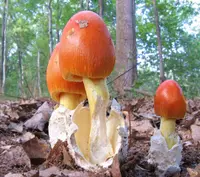
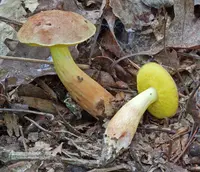
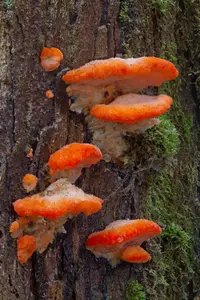
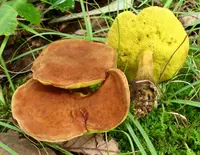
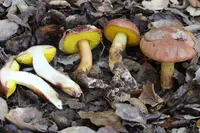
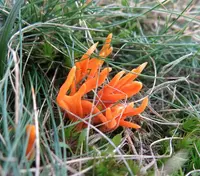
Austrocortinarius australiensis, commonly called the skirt webcap, is a ground-dwelling mushroom rather than a leafy plant. It forms medium-sized, robust caps with a skirt-like ring zone and rusty brown spores. Caps are usually warm brown and often sticky when fresh.

This species occurs naturally in Australia, growing on soil in eucalypt forests where it forms a mycorrhizal partnership with tree roots. It is not suited to casual cultivation because it depends on complex soil relationships and specific tree hosts. For anyone researching how to care for skirt webcap, it is mainly of ecological and identification interest rather than a realistic home-growing candidate.

Main Plant Requirements

Care Difficulty

Hard Care

Light Preference

Partial Shade

Water Requirements

Keep Soil Moist

Temperature Preference

Warm Climate

Hardiness Zone

Unknown

Soil Texture

Loamy, Organic-rich, Peaty

Soil pH

Acidic (5.5–6.5)

Soil Drainage

Moist but well-drained

Fertilization

Minimal (feed rarely)

Get Personalized Care Plan

Scan your plant to receive care tips personalized for your specific plant

Available on iOS and Android

How to Care for the skirt webcap

This ectomycorrhizal fungus prefers dappled woodland light rather than direct, open sun.

  • Provide 2–5 hours of soft, filtered light under trees or shrubs; full, exposed midday sun often dries the substrate too quickly.
  • Tolerates bright morning sun with light afternoon shade, mimicking forest-edge conditions where skirt webcap often appears.
  • Avoid deep, continuous shade where leaf litter stays cold and soggy, and avoid harsh, all-day sun that overheats and desiccates the soil surface.

This woodland fungus needs consistently moist, not waterlogged, soil around its tree partners.

  • Aim for soil that feels evenly moist 5–10 cm down; the surface may dry slightly between rains or irrigations but deeper layers should not turn dusty.
  • In dry periods, irrigate host trees deeply when the top 5–8 cm of soil are dry, allowing excess water to drain away to prevent sour, stagnant conditions harmful to Austrocortinarius australiensis.
  • Watch for overwatering signs such as standing water, algae, or sour smell, and underwatering signs like cracked soil and very brittle leaf litter.

This species is adapted to mild, temperate conditions with cool to warm seasons.

  • Optimal fruiting and mycelial activity usually occur around 55–72°F (13–22°C), typical of cool, moist autumn weather in many temperate regions.
  • Growth slows near extremes but mycelium often persists from about 40–82°F (4–28°C) if soil moisture remains stable and roots stay healthy.
  • Avoid hard frosts below about 28°F (-2°C) without insulating leaf litter, and protect sites from extreme heat above 90°F (32°C) that can over-dry the upper soil layer.

Humidity is not a meaningful cultivation factor for Austrocortinarius australiensis, which is not suited to typical home growing.

This ectomycorrhizal fungus relies on natural forest soil rather than prepared mixes and is not realistically managed in home culture.

  • In nature it associates with eucalypt roots in well-drained, often sandy or loamy forest soils with high organic litter on the surface.
  • Soil is usually slightly acidic to neutral, with decomposing leaf litter and wood supplying a continuous source of organic carbon and nutrients.
  • Disturbance, compaction, or replacement of this forest layer with bagged mixes, bark-only mulches, or heavily fertilized substrates prevents normal development.
  • For conservation or study, conditions should mimic intact eucalypt woodland soils rather than using constructed potting blends or amended garden beds.

This species is not suitable for container growing, as it depends on complex root and soil relationships in natural eucalypt habitats.

This native ectomycorrhizal fungus grows best with minimal fertilization, relying on its tree partners for nutrients.

  • Avoid direct synthetic fertilizers on the mycelium; excess nutrients can disrupt the tree–fungus balance.
  • If soil is very poor, top-dress around host trees with a light layer of well-rotted compost once a year.
  • Do not apply high-nitrogen products near fruiting sites, as they may suppress mushroom formation.
  • Skip additional feeding in winter when fungal activity and tree growth are naturally lower.

Pruning is not applicable to Austrocortinarius australiensis, as it is a wild ectomycorrhizal mushroom rather than a woody or leafy plant.

This species is typically not repotted; instead, it is managed by carefully transplanting associated host trees or soil containing the fungus.

  • Only consider transplanting during cool, moist seasons to reduce stress on the fungal mycelium and host roots.
  • Move a generous root ball with intact surrounding soil, disturbing the fine roots and fungal network as little as possible.
  • Limit the frequency of transplanting; once established with a host tree, the fungus is best left in place.
  • Water thoroughly after moving the host plant, then keep soil evenly moist to support recovery of the mycorrhizal partnership.

Propagation of Austrocortinarius australiensis under controlled conditions is challenging and rarely attempted by home growers.

In regions matching its native mild climate, this fungus typically needs little specific winter care beyond maintaining a stable habitat.

  • In cooler areas, maintain a leaf-litter mulch over the root zone of associated trees to buffer temperature swings.
  • Avoid deep soil disturbance or heavy raking around fruiting areas during winter dormancy.
  • Container-grown host trees with known skirt webcap associations should be overwintered in a frost-free but cool, bright location.

Care Tips

Substrate wood choice

Use fresh to moderately decomposed eucalyptus or related native hardwood chips rather than softwoods, which better match the fungus’s natural mycorrhizal partners and encourage stronger, more stable colonies.

Host tree pairing

Establish the fungus near young to mid-aged eucalypt trees with healthy root systems, avoiding compacted or heavily fertilized lawn areas, to improve the chance of successful mycorrhizal connection and long-term fruiting.

Minimal disturbance zone

Mark a dedicated no-dig, low-traffic area around the host tree dripline so the developing mycelium and fruiting bodies are not compacted or broken by repeated walking, raking, or pet activity.

Moisture shielding mulch

Apply a loose, 3–5 cm layer of leaf litter over the colonized chip bed to buffer moisture and temperature swings while still allowing air flow, instead of using dense bark mulches that can create anaerobic pockets.

Seasonal observation log

Keep simple notes on rainfall, irrigation, and timing of visible mycelium or mushrooms when growing skirt webcap, then adjust irrigation and mulching patterns in following seasons based on when fruiting was most reliable.

Common Pests and Diseases

Fungivorous springtails

These insects feed on fungal mycelium and developing fruiting bodies, sometimes scarring caps and stems in very damp culture setups. Symptoms include pitted surfaces, distorted young mushrooms, and visible tiny jumping insects in substrate or trays.

Solution

Reduce excess moisture by improving drainage and ventilation, and allow the surface layer of the substrate to dry slightly between misting while still maintaining overall humidity. Physically remove heavily infested substrate sections, use fine mesh barriers on vents and intake points, and, in intensive cultivation, apply targeted biological controls such as predatory mites that feed on springtails without harming the fungus.

Sciarid fungus gnats

These insects lay eggs in moist organic substrates, and their larvae tunnel through mycelium and pins, weakening developing fruiting bodies. This pest is favored by stagnant, humid air and over-rich, decomposing substrates used in culture experiments or controlled production trials.

Solution

Limit access by installing insect-proof mesh over vents and keeping doors and windows screened, and reduce overly wet, decomposing organic matter in and around the growing area. Sticky traps can reduce adult numbers, while letting the upper substrate layer dry slightly between waterings and using well-pasteurized or properly aged substrate lowers larval survival.

Mite contamination

These pests, including various saprophagous and mycophagous mites, graze on mycelium and young fruiting bodies and can lead to deformed caps, pale patches, or aborted pins in cultivation environments. This pest often appears when wild soil, unpasteurized litter, or infested tools are introduced into culture trays or beds.

Solution

Inspect substrate ingredients and tools carefully, avoiding raw garden soil and unsterilized litter in controlled culture. Remove and discard heavily infested blocks or trays, lower standing humidity on nonfruiting days, improve air exchange, and introduce or encourage predatory mites that feed on pest mites without significantly impacting the fungus.

Competitive mold colonization

This disease occurs when fast-growing molds such as Trichoderma or Penicillium colonize the substrate, outcompeting A. australiensis mycelium and causing poor or absent fruiting. Symptoms include green, blue, or gray patches on substrate, sour or musty odors, and stalled or patchy mushroom development.

Solution

Use clean, well-pasteurized or sterilized substrates and tools, and avoid overwatering, which favors mold sporulation. Remove and discard contaminated portions before sporulation spreads, improve airflow to reduce condensation, and in small experimental setups, start fresh with more stringent hygiene if contamination is extensive.

Interesting Facts

Australian myrtle associate

This species forms ectomycorrhizal partnerships with certain native Myrtaceae trees, such as Eucalyptus and related genera, exchanging mineral nutrients from the soil for sugars produced by the host through photosynthesis.

Distinctive skirt-like veil

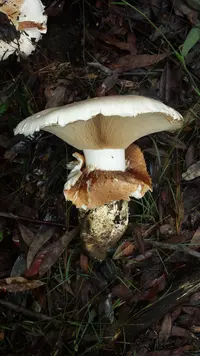
Young fruitbodies show a clear cortina, a delicate web-like veil that stretches from cap margin to stem and leaves a skirt-like zone and fibrillose remnants on the stem as the mushroom matures.

Rusty spore print

The spores of this fungus are ornamented and produce a characteristic rusty brown spore print, a key feature used by mycologists to distinguish it from similar webcap species in the field.

FAQs about skirt webcap

This species is not considered edible and should be treated as potentially poisonous. Identification within the Cortinarius group is difficult, and several related species contain dangerous toxins. Avoid harvesting or consuming it under any circumstances.

Grow Healthy Plants with Botan Care

Keep your plants happy and healthy with plant identification, disease detection, and easy care guidance.

Botan plant care app — identify plants on mobile

Explore More Plants