Hypholoma dispersum Care

Hypholoma dispersum

About Hypholoma dispersum

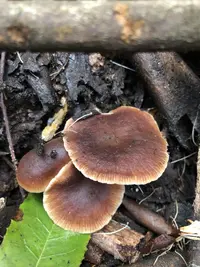
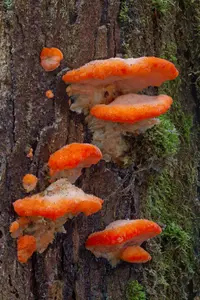
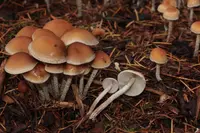
Hypholoma dispersum is a small saprobic mushroom that grows on decaying wood, especially conifer stumps and buried roots. It typically forms dense clusters of slender stems and small, pale to brownish caps.

This species is most often found in temperate forests of Europe and parts of North America, usually appearing in cool, moist seasons. It can be challenging to identify reliably, which makes it unsuitable for casual foraging or kitchen use.

For those studying fungi and forest health rather than eating it, learning how to care for Hypholoma dispersum mainly means understanding its need for consistently moist, shaded, woody substrates.

Main Plant Requirements

Care Difficulty

Moderate Care

Light Preference

Shade

Water Requirements

Keep Soil Moist

Temperature Preference

Cool Climate

Hardiness Zone

Unknown

Soil Texture

Loamy, Silty, Organic-rich

Soil pH

Acidic (5.5–6.5)

Soil Drainage

Moist but well-drained

Fertilization

Minimal (feed rarely)

Get Personalized Care Plan

Scan your plant to receive care tips personalized for your specific plant

Available on iOS and Android

How to Care for the Hypholoma dispersum

This wood-inhabiting mushroom prefers low to moderate light in cool, moist habitats.

  • Provide dappled shade or forest-edge light, with no more than 1–3 hours of gentle morning sun and full protection from strong afternoon sun.
  • Choose a site under deciduous trees or shrubs where leaf cover filters direct rays and mimics woodland conditions for Hypholoma dispersum.
  • Avoid deep, constant darkness and also exposed full sun, which can dry the substrate and suppress fruiting, especially during summer months.

This species needs consistently moist but not waterlogged substrate for reliable fruiting.

  • Keep the woody substrate or mulch evenly damp, allowing the surface 1–2 cm to start feeling slightly dry before re-wetting.
  • Use rain or gentle hose flow to moisten the area thoroughly, then let excess water drain away to prevent standing water and anaerobic conditions.
  • Increase monitoring during hot, windy weather when drying is faster, and reduce soaking during cool, wet seasons to limit sour smells, slimy texture, or mold growth.

This fungus favors cool to mild conditions and is sensitive to hard freezes and prolonged high heat.

  • Aim for an active growth range around 50–68°F (10–20°C), with fruiting often strongest in the cooler part of this range when moisture is adequate.
  • Expect reduced activity above about 75°F (24°C), as warm, dry conditions can halt fruiting and desiccate the substrate.
  • Protect colonized wood from repeated freeze-thaw cycles below about 23°F (-5°C) by using leaf litter or mulch cover, especially in exposed winter sites.

This wood-inhabiting fungus does not have strict humidity demands but benefits from moderately moist air around developing fruiting bodies.

  • Aim for 60–80% humidity around colonized substrate to keep developing clusters from drying and cracking.
  • Tolerates short dips to 40–50% but caps may become thin, curl at the edges, and split if air stays too dry.
  • Increase humidity by tenting the container with perforated plastic or using a humidity dome, avoiding direct misting on caps.

Hypholoma dispersum grows on decaying wood rather than soil, so preparation focuses on a suitable lignin-rich substrate.

  • Use a mix of hardwood sawdust and finely chipped wood, optionally supplemented with up to 20–30% wheat bran for nutrients.
  • Keep the substrate loose and fibrous so mycelium can move through air-filled spaces instead of compact, muddy conditions.
  • Maintain a slightly acidic to neutral environment (roughly pH 5.5–7) by avoiding lime-heavy additives and garden soil.
  • Prevent waterlogging by draining off excess water after soaking the substrate, leaving it damp like a wrung-out sponge.

This species can be grown in containers such as buckets or grow bags when moisture and gas exchange are carefully managed.

  • Drill small side holes above the substrate level to allow fruiting clusters to emerge while maintaining a stable internal microclimate.
  • Choose opaque containers to reduce light on the colonizing substrate, which encourages even mycelial spread before fruiting.
  • Avoid very tall, narrow containers that create stagnant, poorly ventilated lower zones where anaerobic conditions and contamination develop.

This wood-decaying fungus typically obtains nutrients from its substrate and does not need routine fertilization in cultivation.

Pruning is generally not applicable to Hypholoma dispersum, as it is a mushroom-forming fungus rather than a leafy ornamental plant.

When cultivated, this fungus is managed by renewing or moving its growing substrate rather than traditional repotting.

  • Transplant or refresh substrate when fruiting declines, contamination appears, or the substrate is fully colonized and exhausted.
  • Plan changes between flushes, avoiding disturbance when pins or young mushrooms are forming.
  • Move colonized substrate gently into a fresh, similar medium to reduce mycelium stress and drying.
  • Maintain stable moisture and temperature after disturbance so the colony can recover and resume growth.

Propagation of this fungus is specialized and not commonly attempted by casual growers, so detailed Hypholoma dispersum care instructions are usually limited to professional cultivation contexts.

Outdoor cultures of this fungus are generally left to follow natural seasonal cycles and often need no special winter care.

Care Tips

Use clean substrate

Prepare sterile or pasteurized hardwood sawdust or well-leached woodchip mix, since a clean, low-competing substrate greatly improves colonization and reduces contamination when growing Hypholoma dispersum.

Segmented bed layout

Establish several small, separated outdoor beds rather than one large patch so any section that becomes contaminated or heavily grazed by slugs can be removed or refreshed without losing the entire culture.

Inoculate fresh wood

Top up the bed every 1–2 years by lightly mixing in fresh, partially decomposed hardwood chips or small logs to provide new food for the mycelium and extend the productive life of the patch.

Manage slug pressure

Install low, rough barriers (such as wood ash bands or sharp grit) and hand-pick slugs during damp evenings to protect young fruiting bodies from heavy grazing before harvest.

Label and map sites

Clearly label each inoculated log or bed and keep a simple sketch map with inoculation dates and wood type so you can track performance, adjust methods, and refine caring for Hypholoma dispersum over several seasons.

Common Pests and Diseases

Mycophagous springtails

These insects feed on developing fruiting bodies and mycelial surfaces, sometimes scarring caps and slowing development in cultivation trays or bags.

Solution

Reduce excess surface moisture by slightly increasing airflow, remove heavily grazed pins or clusters, and use fine mesh or tight lids on containers to block entry; if needed, set out sticky traps around the growing area and clean up any decaying organic debris that attracts them.

Fungus gnat larvae

This pest lives in moist substrates and can tunnel through mycelium and primordia, causing deformed or aborted mushrooms and patchy colonization.

Solution

Allow the top layer of substrate or casing to dry slightly between mistings, use yellow sticky traps to reduce adult populations, and cover inoculated containers with breathable but insect-proof filters; in persistent cases, apply a biological control such as Bacillus thuringiensis israelensis (BTI) according to label directions for fungus gnat management.

Parasitic Trichoderma

This disease appears as dense, bright to dull green patches of mold that overgrow the substrate and can suppress or completely stop mushroom formation.

Solution

Isolate and discard heavily contaminated blocks or trays, clean tools and surfaces with 70% alcohol or a mild bleach solution, and improve sterile technique during spawning; for future cycles, use properly pasteurized or sterilized substrate and ensure good air exchange to favor strong Hypholoma dispersum mycelium.

Bacterial blotch

This disease causes slimy, greasy, yellowish or brown spots on caps when surfaces stay wet and air circulation is poor, reducing both appearance and shelf life of harvested clusters.

Solution

Improve ventilation around fruiting containers, avoid overhead misting directly on caps, and instead maintain humidity through indirect methods such as humidifiers or damp perlite; remove and discard blotched mushrooms promptly and disinfect growing spaces between production cycles to lower bacterial loads.

Interesting Facts

Wood-decaying habitat

This species typically fruits on decaying conifer wood, especially well-rotted stumps and buried woody debris, where it contributes to the breakdown of lignin and cellulose and helps recycle forest nutrients.

Distinctive spore print

It produces a purple-brown spore print, a key microscopic and field character that helps separate it from some other small, brownish Hypholoma species with different spore colors.

Small clustered fruiting

The mushrooms usually appear in small, dense clusters of relatively small caps, often only a few centimeters across, which can make them easy to overlook among forest floor litter.

FAQs about Hypholoma dispersum

This small woodland mushroom is not considered a good edible and should be treated as inedible. Identification within the genus is difficult, and some close relatives contain harmful toxins, so intentional consumption is not recommended.

Grow Healthy Plants with Botan Care

Keep your plants happy and healthy with plant identification, disease detection, and easy care guidance.

Botan plant care app — identify plants on mobile

Explore More Plants