


Stable host material
Install the fungus only on stable, well-seasoned wood (such as old hardwood logs or fixed dead branches) so the fruiting bodies can form reliably without the substrate shifting, rotting away too fast, or collapsing.

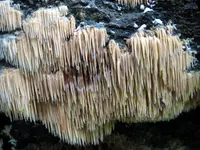
Asian Beauty is a wood-decay fungus, not a leafy houseplant. It forms soft, creamy to pinkish crust-like patches on dead wood, often with a fringed, fuzzy surface. These colonies spread flat over bark and branches rather than producing classic mushroom caps.
Radulomyces copelandii is native to East Asia but has spread to parts of North America, especially in humid, shaded forests and landscaped areas with ample woody debris. It is not a typical choice for indoor cultivation, so how to care for Asian Beauty is mainly about preserving the moist, shaded, woody habitats it naturally prefers.

Care Difficulty
Moderate Care

Light Preference
Partial Shade

Water Requirements
Regular Water

Temperature Preference
Warm Climate

Hardiness Zone
Unknown

Soil Texture
Loamy, Organic-rich

Soil pH
Acidic (5.5–6.5)

Soil Drainage
Moist but well-drained

Fertilization
Minimal (feed rarely)
Scan your plant to receive care tips personalized for your specific plant
Available on iOS and Android
This wood-inhabiting fungus prefers low to moderate, filtered light in forested conditions.
This species depends on consistently moist, but not waterlogged, wood or woody debris.
This fungus performs best in mild, consistently cool to warm conditions typical of shaded woodland.
This fungus prefers consistently moist, high-humidity conditions similar to a damp forest floor.
Radulomyces copelandii grows on decaying wood rather than in true soil, so the focus is on substrate structure and moisture behavior.
This species can be grown in containers when the pot is treated as a mini decaying-log environment rather than standard pot culture.
This fungus, often called Asian Beauty, gains most nutrients from decaying wood and usually does not need added fertilizer in typical cultivation.
Radulomyces copelandii needs no true pruning, but limited cleanup maintains appearance and reduces disease risk on host wood.
This species grows on wood rather than in pots, so care focuses on moving colonized wood instead of classic repotting.
Propagation of Radulomyces copelandii is specialized and usually left to experienced growers or researchers.
Outdoor colonies on natural wood are generally cold tolerant in temperate climates and usually need no special winter care.

Plant Health Check
Not sure what's wrong with your plant? Check your plant's health inside the app.
This fungus forms a thin, effused crust on wood with a minutely spiny or coral-like surface under magnification, a structure typical of some corticioid fungi that increases its spore-producing area.
Originally described from the Philippines and other parts of East Asia, this species is now known from various Asian localities and reflects a tropical to subtropical distribution pattern tied to humid forest habitats.
It grows on dead, often fallen hardwood branches and twigs, contributing to wood decomposition and nutrient cycling in forest ecosystems as a white-rot fungus that breaks down lignin and cellulose.
Growth is generally slow. New clusters form gradually from decaying wood rather than rapid stem or leaf extension. In stable, humid conditions, it may reappear annually on the same substrate but does not show dramatic size changes year to year.
Keep your plants happy and healthy with plant identification, disease detection, and easy care guidance.

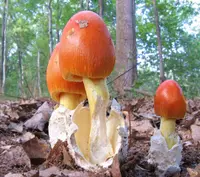
Jackson's slender Caesar
Amanita jacksonii
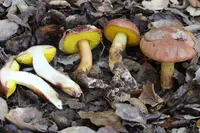
viscid bolete
Aureoboletus flaviporus
Brown cobblestone lichen
Acarospora fuscata
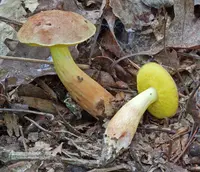
sour gold-pored bolete
Aureoboletus auriporus
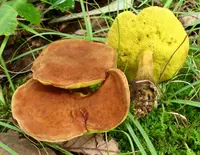
clustered brown bolete
Aureoboletus innixus
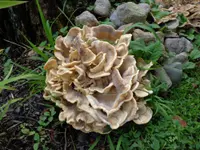
Black-staining Polypore
Meripilus sumstinei

Aborted entoloma
Entoloma abortivum
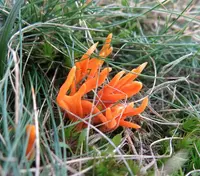
Apricot Club
Clavulinopsis luteoalba