Mimic Native Substrate
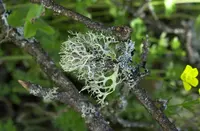
Attach thalli to rough, silica-rich rocks or unglazed masonry rather than smooth or sealed surfaces, since Acarospora fuscata anchors and spreads more reliably on porous, stable mineral substrates.

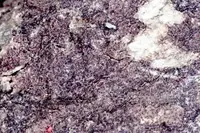
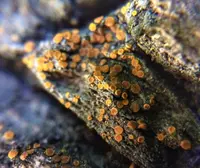
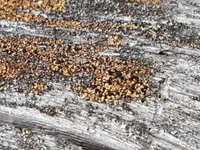
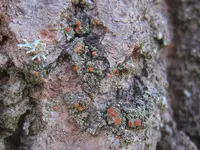
Brown cobblestone lichen, Acarospora fuscata, is a crustose lichen that forms tight, flat patches on rock surfaces. Its surface is divided into small, cobblestone-like blocks in various brown shades.
This lichen is common on exposed rocks in temperate regions, especially in mountainous and coastal areas with clean air. It grows very slowly and is well adapted to strong light, wind, and dry conditions.
Because it is highly specialized and slow-growing, it is not suited to typical houseplant-style culture, and attempts to care for Brown cobblestone lichen are often challenging. It favors stable rock substrates, good light, and regular natural moisture from rain or fog.

Care Difficulty
Moderate Care

Light Preference
Full Sun

Water Requirements
Low Water

Temperature Preference
Cold Hardy

Hardiness Zone
3–8

Soil Texture
Sandy, Rocky, Loamy

Soil pH
Slightly acidic (6.5–7.0), Neutral (7.0)

Soil Drainage
Well-drained

Fertilization
Minimal (feed rarely)
Scan your plant to receive care tips personalized for your specific plant
Available on iOS and Android
This crustose lichen thrives in strong light but tolerates a range of exposed conditions.
This lichen is highly drought-tolerant and should be treated more like a rock-dwelling organism than a typical garden plant.
This species tolerates a wide temperature range but performs best in cool to moderately warm conditions.
Humidity is not a major factor for this crustose lichen, which is adapted to exposed, drying conditions.
This lichen anchors to mineral surfaces rather than growing in typical potting soil, but a substrate can be prepared for cultivation trials.
This species is suitable only for specialized container culture that imitates rock surfaces rather than normal potted growth.
Acarospora fuscata is a crustose lichen that extracts nutrients from rain, dust, and its substrate, so it does not need intentional fertilizing in cultivation or monitoring projects.
Acarospora fuscata does not require intentional pruning; intervention is limited to careful removal only when management or research needs demand it.
When Brown cobblestone lichen is grown on stone or bark in controlled settings, disturbance should be minimal and any transplanting done very infrequently.
Reproducing Acarospora fuscata is technically complex and usually left to specialist research or conservation facilities rather than home growers.
This lichen is highly cold hardy and generally requires no special winter care in outdoor conditions across most temperate climates.

Plant Health Check
Not sure what's wrong with your plant? Check your plant's health inside the app.
This brown cobblestone lichen typically forms tightly attached crusts on siliceous rocks such as granite and schist, where its areolate, cobblestone-like thallus can withstand strong sun and wide temperature swings.
The species often develops dark brown to almost black pigmentation rich in protective compounds that shield its photosynthetic partner from intense ultraviolet radiation on exposed rock surfaces.
Brown cobblestone lichen is sensitive to sulfur dioxide and some other atmospheric pollutants, so its absence or decline from formerly occupied rock outcrops can indicate deteriorating air quality.

This lichen can colonize rock surfaces that appear almost bare to the eye, gradually contributing to the first stages of biological weathering that, over long timescales, helps create microhabitats for mosses and vascular plants.
Growth is very slow. Crusts usually expand only 1–2 mm per year, sometimes less, depending on moisture, light, and substrate stability. Expect many years before noticeable enlargement of individual patches or merging of neighboring colonies.
Keep your plants happy and healthy with plant identification, disease detection, and easy care guidance.