


Choose stable substrates
Establish colonies on hard, long-lasting materials such as inert stone, fired brick, or uncoated concrete so the lichen can anchor securely and develop slowly without the surface breaking down beneath it.

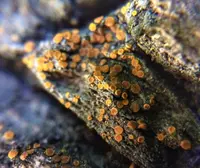
Firedot lichen (Athallia holocarpa) is a crustose lichen, meaning it forms a thin, tightly attached crust on hard surfaces rather than upright stems or leaves. It typically appears as orange to yellow patches dotted with tiny, brighter fruiting discs.
This species commonly colonizes sun-exposed rocks, old walls, and other stable stone or concrete surfaces, especially in dry, open sites. It is slow-growing but quite resilient once established, tolerating poor substrates and limited nutrients.
Because it depends on clean air and stable, undisturbed surfaces, moving or transplanting it is difficult. In most cases, it is easier to enjoy it in place than to actively care for Firedot Lichen.

Care Difficulty
Moderate Care

Light Preference
Full Sun

Water Requirements
Low Water

Temperature Preference
Cool Climate

Hardiness Zone
5–9

Soil Texture
Rocky, Sandy

Soil pH
Slightly alkaline (7.0–7.5), Alkaline (7.5–8.5)

Soil Drainage
Well-drained

Fertilization
Minimal (feed rarely)
Scan your plant to receive care tips personalized for your specific plant
Available on iOS and Android
Athallia holocarpa is a sun-loving crustose lichen that thrives on exposed rock or bark in open sites.
Athallia holocarpa absorbs moisture directly from rain, fog, and surface wetting rather than through roots.
This lichen tolerates a wide temperature range but maintains best growth in moderate conditions.
Humidity is not a critical factor for Athallia holocarpa, which is adapted to exposed, dry habitats.
Athallia holocarpa typically grows on rock, bark, or man‑made substrates rather than true soil, so focus on recreating a firm, mineral-rich, well-drained surface.
This species can be grown in containers only as a specialized lichen display on rocks or inert surfaces.
Athallia holocarpa, commonly called firedot lichen, gains nutrients mainly from rain, dust, and its substrate, so added fertilizer is usually unnecessary.
Pruning Athallia holocarpa is rarely required and is mainly done to manage appearance or remove damaged sections.
This crustose lichen is not a typical potted plant, so transplanting focuses on moving its host material rather than Athallia holocarpa itself.
Propagation of Athallia holocarpa is slow and specialized, so it is rarely attempted outside research or conservation work.
Athallia holocarpa is very cold hardy and generally needs no special winter care in outdoor conditions.

Plant Health Check
Not sure what's wrong with your plant? Check your plant's health inside the app.
This crustose lichen is especially common on calcareous stone, mortar, and concrete, where it forms bright yellow to orange patches tightly attached to the surface.
It produces numerous flat, orange apothecia (sexual fruiting bodies) that often cover most of the thallus, making the reproductive structures more obvious than the vegetative body.
Populations occur on buildings, walls, and other human-made substrates even in towns and cities, indicating relatively good tolerance to moderate air pollution compared with more sensitive lichen species.
Athallia holocarpa was historically placed in several different genera (including Caloplaca), and its current placement in Athallia reflects modern DNA-based research that reshaped the taxonomy of many bright orange crustose lichens.
This species is adapted to outdoor conditions on rocks, bark, or old concrete in full exposure. It generally declines indoors due to low airflow and light, so Firedot Lichen indoor care is rarely successful long term.
Keep your plants happy and healthy with plant identification, disease detection, and easy care guidance.

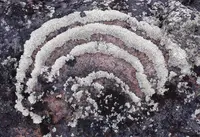
arctoparmelia lichen
Arctoparmelia centrifuga
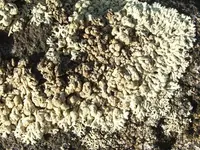
arctoparmelia lichen
Arctoparmelia incurva
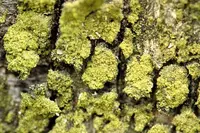
Candelariella reflexa
Candelariella reflexa
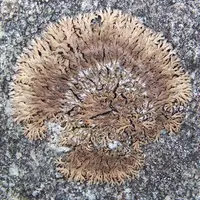
Anaptychia runcinata
Anaptychia runcinata
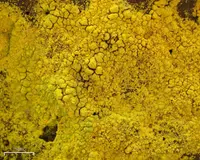
dust lichen
Chrysothrix candelaris
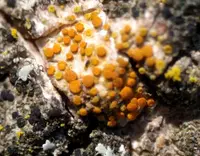
Athallia cerinella
Athallia cerinella
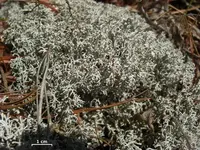
gray reindeer lichen
Cladonia rangiferina
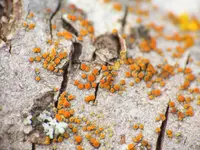
Flaming Firedot Lichen
Athallia pyracea