Substrate selection
Attach thalli only to stable, non-porous, low-nutrient substrates such as old concrete, stone, clay tiles, or unpainted terracotta, since nutrient-poor, slightly rough surfaces best support long-term establishment.

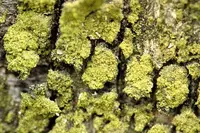
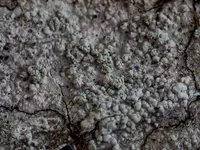
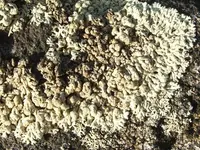
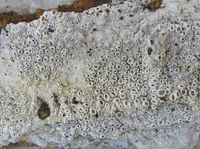
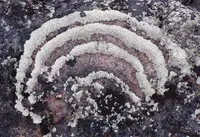
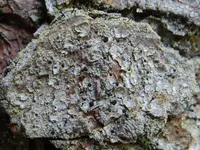
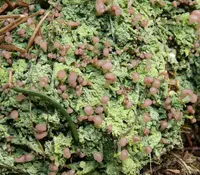
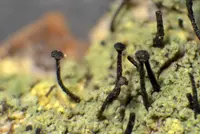
Candelariella reflexa is a crustose lichen, not a typical leafy plant, forming thin, tightly attached patches on bark, rocks, or old wood. Its surface is usually yellow to yellow-green and finely granular, creating a powdery or warty texture. It occurs in many temperate regions, often in open, well-lit sites with clean air, and can be an indicator of good air quality. This species is naturally slow-growing and quite resilient, but very difficult to cultivate intentionally, even for experienced growers. In practice, it is better to protect existing colonies than to attempt to care for Candelariella reflexa in containers or gardens.

Care Difficulty
Moderate Care

Light Preference
Partial Shade

Water Requirements
Low Water

Temperature Preference
Cool Climate

Hardiness Zone
Unknown

Soil Texture
Rocky, Sandy

Soil pH
Slightly acidic (6.5–7.0)

Soil Drainage
Well-drained

Fertilization
Minimal (feed rarely)
Scan your plant to receive care tips personalized for your specific plant
Available on iOS and Android
This crustose lichen prefers high light but is sensitive to prolonged, intense heat exposure on bare rock or bark.
This lichen absorbs moisture from rain, dew, and humid air rather than from soil in the way vascular plants do.
This species is naturally tolerant of wide outdoor temperature fluctuations when established on suitable surfaces.
This crustose lichen does not have specific humidity requirements and tolerates a wide range of ambient conditions.
Candelariella reflexa naturally grows on bark or rock rather than in soil, so it does not need a conventional potting substrate.
This species is not well suited to conventional container growing, but it can be kept on mounted slabs or rocks placed in shallow trays or dishes.
This crustose lichen grows on nutrient-poor bark or rock and normally needs no supplemental fertilizer in cultivation.
Candelariella reflexa requires virtually no pruning, as it is a slow-growing crustose lichen.
Transplanting this lichen is rarely recommended and often unsuccessful, as it is tightly bound to its original substrate and local microclimate.
Propagation of Candelariella reflexa is specialized and usually left to natural dispersal processes rather than deliberate home methods.
This lichen is naturally cold hardy and typically needs no special winter care in outdoor settings within its normal climate range.

Plant Health Check
Not sure what's wrong with your plant? Check your plant's health inside the app.
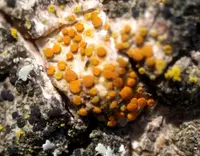
This lichen forms bright sulfur-yellow crusts with minute convex areoles whose edges often lift and reflex slightly, a feature that inspired the species name reflexa. The thallus frequently shows tiny, scattered orange to yellow apothecia, which are the spore-producing discs.
Candelariella reflexa is most often recorded on nutrient-enriched bark of roadside and urban trees, especially where dust or pollution adds extra mineral input. It tends to avoid very acidic bark, so its presence can hint at local bark chemistry and atmospheric conditions.
This species has a broad distribution across parts of Europe and Asia, occurring from lowlands to montane zones. It is more frequent in regions with relatively cool to temperate climates and sufficient air moisture, typically on well-lit tree trunks and branches.
This lichen establishes best outdoors on stable, exposed surfaces such as rocks, old wood, or bark. Indoor conditions rarely provide enough light, airflow, or suitable substrate, so true long‑term Candelariella reflexa indoor care is generally unreliable.
Keep your plants happy and healthy with plant identification, disease detection, and easy care guidance.