arctoparmelia lichen Care (Arctoparmelia centrifuga)

Also known as: Concentric Ring Lichen
arctoparmelia lichen

About arctoparmelia lichen

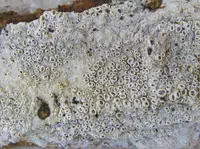
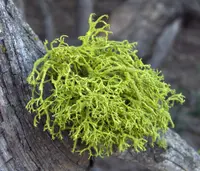
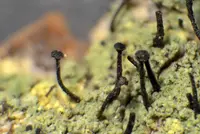
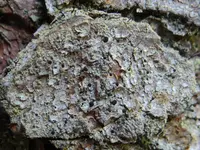
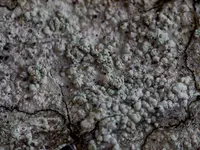
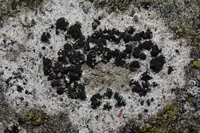
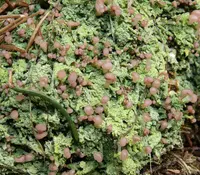
Arctoparmelia centrifuga is a crustose lichen, not a true plant, forming tight, circular mats on exposed rocks. Its thallus is usually yellow‑green to gray-green with a powdery, textured surface. Small dark fruiting bodies may appear toward the center of older colonies.

This species naturally occurs in cold, open, often high-altitude or northern environments, especially on granite and other siliceous rocks. It grows very slowly and is sensitive to air pollution, which makes it challenging to keep in typical home conditions. Those who want to learn how to care for arctoparmelia lichen should focus on replicating cool, clean, well-lit, and steadily moist, but not waterlogged, rock-like habitats.

Main Plant Requirements

Care Difficulty

Moderate Care

Light Preference

Full Sun

Water Requirements

Low Water

Temperature Preference

Cold Hardy

Hardiness Zone

2–7

Soil Texture

Rocky, Sandy

Soil pH

Strongly acidic (4.5–5.5), Acidic (5.5–6.5)

Soil Drainage

Well-drained

Fertilization

Minimal (feed rarely)

Get Personalized Care Plan

Scan your plant to receive care tips personalized for your specific plant

Available on iOS and Android

How to Care for the arctoparmelia lichen

This crustose lichen thrives in open, exposed sites with long hours of direct sun.

  • Provide 6–10 hours of direct sun daily; full sun on rock or mineral soil mimics its natural alpine and subarctic habitats.
  • The thallus tolerates brief partial shade, but persistent shade reduces growth, dulls color, and can allow competing mosses to overrun arctoparmelia lichen.
  • In hot lowland climates, avoid trapping heat against dark walls; strong morning to early afternoon sun with good air movement reduces thermal stress and desiccation damage.

Arctoparmelia centrifuga is adapted to dry, exposed conditions and is highly sensitive to excess moisture.

  • Allow the substrate to dry completely between natural wetting events; this lichen takes up water only from rain, mist, or brief soaking, not constant dampness.
  • Ensure rock or mineral soil drains instantly; standing water or persistently wet organic soil leads to rot, algal overgrowth, and loss of the pale yellow surface.
  • In milder, wetter seasons, favor sites with strong wind and rapid runoff; in hotter periods, short wet–dry cycles from light mist or rain are preferable to deep, prolonged saturation.

This species is cold-hardy and adapted to harsh, exposed climates but still responds to temperature extremes.

  • Optimal metabolic activity generally occurs around 40–65°F (4–18°C), especially when surfaces are moist and not frozen solid.
  • The lichen tolerates prolonged cold well below 0°F (-18°C) if dry, but repeated freeze–thaw on saturated rock can damage tissue over time.
  • Heat above 80–85°F (27–29°C), especially on sun-baked dark rock, risks overheating; strong air movement and some microtopographic shade help limit surface temperatures.

This lichen prefers cool, fairly dry, well-ventilated air rather than high humidity.

  • Target 30–50% humidity, similar to dry outdoor conditions, avoiding persistently damp or misty air.
  • Tolerates very dry air but declines in enclosed, stagnant, high-humidity spaces where surfaces stay moist.
  • Watch for softening, darkening, or algae growth on thalli as signs of excess moisture stress, and increase airflow instead of adding humidity.

This species naturally anchors to rock, so it does not need conventional soil but can be mounted in a mineral-based medium.

  • Use a very coarse, rocky substrate such as crushed granite, lava rock, or coarse sand with almost no organic matter.
  • Keep drainage extremely fast; the medium should dry quickly after wetting and never hold standing or sticky moisture.
  • Aim for neutral to slightly acidic conditions (pH 5.5–7.0), avoiding limy, strongly alkaline aggregates unless the original colony grew there.
  • Avoid peat-heavy, loamy, or water-retentive mixes and instead prioritize hard, inert particles that maximize aeration and surface exposure.

This lichen can be kept in shallow containers mainly as a display for attached rock pieces rather than as a rooted plant.

  • Choose a wide, shallow tray that stabilizes the rock and allows air movement around all sides of the lichen.
  • Leave gaps between rocks or mounting pieces so that water drains away instantly and no moisture pools under the thallus.
  • Use an unglazed clay or porous stone container if possible to speed evaporation and prevent lingering surface dampness when you water or mist.

This crust lichen occurs naturally on nutrient-poor rocks and does not need added fertilizer in cultivation.

Arctoparmelia centrifuga needs no true pruning, only occasional sanitary cleaning to maintain a healthy colony on its substrate.

When grown on stone in trays or shallow dishes, this species is disturbed as little as possible during any transplanting.

  • Shift colonies only if the rock is breaking down or the display container is damaged, since moving the lichen slows recovery.
  • Carry out any transplanting in cool, mild weather to reduce desiccation stress and keep air humidity higher for several weeks afterward.
  • Lift entire rock pieces with the lichen attached instead of peeling thalli off the surface, which damages the lower cortex and anchoring structures.
  • After repositioning, avoid handling, soaking, or brushing the thalli; allow them to reattach gradually through normal moist–dry cycles.

Arctoparmelia centrifuga is propagated mainly by fragmenting existing thalli, but this is slow and often unpredictable for beginners.

This cold-adapted lichen tolerates freezing conditions outdoors and usually needs no special winter care beyond stable placement on its rock surface.

Care Tips

Use mineral substrates

Mount thalli on stable, low-nutrient rocks such as granite or basalt rather than on organic materials, which decompose and destabilize the lichen over time.

Avoid nutrient contamination

Keep the lichen away from fertilizer drift, compost piles, and lawn runoff, because elevated nutrients encourage algae and moss that can overgrow and shade the thallus.

Mimic natural exposure

Place rocks with the lichen in an open, breezy position with good air circulation and minimal leaf litter, similar to exposed rocky outcrops where it naturally occurs.

Seasonal moisture management

In wet seasons, tilt or slightly elevate the host rock so excess water drains quickly, reducing prolonged saturation that can stress the lichen tissue.

Gentle handling protocol

Handle only the rock substrate and avoid touching the lichen directly; if repositioning is needed, move it during cool, moist conditions when the thallus is flexible to reduce cracking risk when caring for arctoparmelia lichen.

Common Pests and Diseases

Lichenicolous fungi

This disease is caused by specialized fungi that live on lichens and can discolor or distort the thallus. Symptoms include dark spots, raised pustules, or localized necrotic patches on the lichen surface.

Solution

Remove and discard heavily affected patches to limit spread, and avoid wetting the lichen repeatedly, especially in low airflow locations. Improve air circulation around rock or substrate surfaces and avoid nutrient enrichment such as fertilizer drift, which favors parasitic fungi over slow-growing lichen tissue.

Algal overgrowth

This disease occurs when free-living green algae overgrow the lichen surface, often as a response to excess moisture and nutrient deposition. Symptoms include a slimy or unusually bright green film that obscures the normal gray-yellow lichen color.

Solution

Rinse gently with clean, low-mineral water and allow the substrate to dry fully between mistings if kept in a display. Reduce moisture, avoid any fertilizer or runoff from nearby pots, and increase airflow and light to discourage persistent surface algae while maintaining conditions that do not overheat or desiccate the lichen.

Mite grazing

These insects are actually tiny arthropods that feed on lichen tissues, leaving fine pits, roughened patches, or granulated, eroded areas. Symptoms include small areas of thinning thallus and a dusty or chewed appearance, sometimes with visible specks moving under magnification.

Solution

Gently brush or blow off loose debris, then reduce excessive humidity and organic dust that shelter mites. For valuable displays, short-term placement in a cooler, drier, well-ventilated area can reduce mite activity; avoid chemical sprays, which often damage lichens more than the pests.

Lepidopteran larvae

These insects are caterpillars that occasionally graze lichens on rocks, leaving irregular bite marks, missing lobes, or frass pellets on and around the thallus. Symptoms include sudden loss of lichen fragments and ragged edges on what were formerly smooth, rounded lobes.

Solution

Hand-remove any visible larvae and frass from the substrate and surrounding area. If keeping lichen on display, use fine mesh barriers at night and limit nearby outdoor plant material that can harbor moths, as this is more reliable than applying insecticides, which lichens tolerate poorly.

Snail and slug feeding

These pests feed on moist lichen surfaces, especially in shaded, damp locations, producing broad scraped areas and missing patches of thallus. Symptoms include smooth, eroded zones, irregular bare spots, and sometimes silvery slime trails nearby.

Solution

Physically remove snails and slugs and reduce persistent dampness around the substrate by improving drainage and airflow. Use copper barriers or carefully placed, lichen-free slug traps away from the lichen rather than baits applied directly near the thallus, as part of responsible Arctoparmelia centrifuga care.

Interesting Facts

Distinct target-like pattern

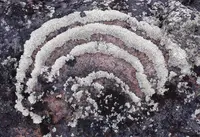
This lichen often forms almost perfectly circular rosettes with concentric color zones, creating a target-like pattern that makes it easy to recognize on open rock surfaces.

Orange reproductive discs

Its small, round fruiting bodies, called apothecia, are a distinctive orange to rusty brown and sit on the upper surface of the thallus, releasing spores for long-distance dispersal by wind.

High-latitude rock specialist

The species is strongly associated with cool, open, windswept habitats in arctic, subarctic, and alpine regions, where it colonizes exposed siliceous rocks that many other lichens cannot tolerate.

Botan icon

Did you know?

Arctoparmelia centrifuga produces secondary metabolites such as usnic acid and related compounds that act as natural sunscreens and chemical defenses, helping it withstand intense ultraviolet radiation on exposed high-latitude and high-altitude rock surfaces.

FAQs about arctoparmelia lichen

Growth is slow. Thalli usually expand only 1–5 mm per year, even in good conditions. Expect very gradual spread across rocks or soil surfaces, which makes this species stable but not useful for quick coverage or landscaping.

Grow Healthy Plants with Botan Care

Keep your plants happy and healthy with plant identification, disease detection, and easy care guidance.

Botan plant care app — identify plants on mobile

Explore More Plants