Arthonia calcarea Care

Arthonia calcarea

About Arthonia calcarea

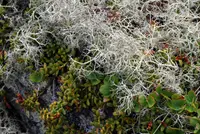
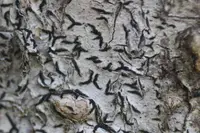
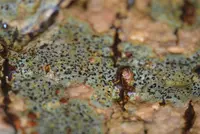
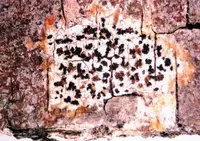
Arthonia calcarea is a crustose lichen, not a typical leafy plant, forming thin, flat patches tightly attached to calcareous rocks and old masonry. Its surface often looks pale gray to whitish, dotted with tiny darker fruiting bodies.

This species naturally occurs in temperate regions, especially where limestone or other calcium-rich substrates are exposed. It is slow-growing and relies on clean air and stable surfaces, which makes it sensitive to pollution and disturbance.

Because it depends on very specific rock chemistry and moisture from rainfall and humidity rather than soil, it is not easy to cultivate in gardens or indoors. Enthusiasts who want to care for Arthonia calcarea usually focus on protecting existing colonies instead of trying to grow new ones artificially.

Main Plant Requirements

Care Difficulty

Moderate Care

Light Preference

Partial Shade

Water Requirements

Moderate Water

Temperature Preference

Cool Climate

Hardiness Zone

Unknown

Soil Texture

Rocky, Loamy

Soil pH

Acidic (5.5–6.5)

Soil Drainage

Well-drained

Fertilization

Minimal (feed rarely)

Get Personalized Care Plan

Scan your plant to receive care tips personalized for your specific plant

Available on iOS and Android

How to Care for the Arthonia calcarea

This crustose lichen grows best on calcareous rocks with stable, indirect light exposure.

  • Provide bright, indirect light or open shade, roughly 2–4 hours of gentle morning sun with diffuse light for the rest of the day.
  • Avoid intense midday and afternoon sun; prolonged exposure over 4–5 hours can desiccate the thallus and bleach its surface.
  • In shaded sites, maintain at least dappled light year-round; deep, continuous shade slows growth and can lead to thinning or patchy lichen coverage.

Moisture for this saxicolous lichen comes mainly from rain, dew, and ambient humidity rather than direct watering.

  • Do not water Arthonia calcarea directly; instead, allow natural rainfall and occasional fine misting from a distance if conditions are very dry for several weeks.
  • Ensure the rock surface drains freely; avoid standing water or runoff that can keep the lichen wet for more than 24 hours, which encourages algae and biofilm.
  • Signs of excess moisture include slimy surfaces and green algal overgrowth, while prolonged dryness shows as brittle, easily flaking patches that recover slowly after rain.

This lichen tolerates a broad outdoor temperature range when attached to stable calcareous rock.

  • Optimal activity occurs roughly between 45–70°F (7–21°C), especially in cool, moist seasons with regular dew or light rain.
  • It withstands winter cold down to about 5°F (-15°C) on rock surfaces, provided freeze–thaw cycles are gradual and the substrate is not repeatedly ice-covered.
  • Heat tolerance is moderate; extended periods above 90°F (32°C) with full sun and low humidity can cause drying and reduced growth, so partial shade is beneficial in hot summers.

Humidity is not a primary factor for this crustose lichen, which relies more on surface moisture than on air humidity.

Arthonia calcarea naturally grows on calcareous rock rather than in soil, so conditions must mimic firm, lime-rich mineral substrates.

  • Use a shallow tray filled with crushed limestone or fine limestone gravel instead of organic potting mixes.
  • Keep the mineral substrate sharply draining, allowing water to run through quickly without forming standing puddles.
  • Maintain an alkaline environment, aiming for a pH above 7.5 by using only calcareous materials and avoiding acidic additives like peat.
  • Ensure the rock or gravel surface remains exposed, not buried in organic matter, to support lichen attachment and gas exchange.

This species is not suitable for conventional container growing, but small trays or stone slabs can be used for observation under controlled conditions.

  • Place limestone chips or a calcareous stone slab in a shallow, wide tray so the lichen can spread across a stable, firm surface.
  • Choose a rigid, UV-stable tray that resists warping, as even slight flexing can crack and detach the crustose thallus.
  • Position the container where rain or mist can wet the surface briefly, then drain away, preventing prolonged submersion or stagnant water around the substrate.

This crustose lichen normally grows on nutrient-poor rock and does not require additional fertilizer in cultivation.

Arthonia calcarea needs almost no pruning because the thallus grows slowly and stays flat against the substrate.

This species is usually grown on fixed rock and is not suited to routine repotting, only careful repositioning when necessary.

  • Transplant only if the host rock must be moved or replaced, since disturbance can damage the thin thallus.
  • Plan any move during mild, stable weather, avoiding temperature or humidity extremes that stress the lichen.
  • Handle the rock, not the lichen surface, keeping it oriented the same way to maintain light and moisture patterns.
  • After moving, keep conditions stable and avoid scraping, soaking, or brushing the surface so attachment can re-establish.

Purposeful propagation of this lichen is specialist work and not typically attempted by home growers.

Arthonia calcarea is naturally cold hardy and normally needs no special winter care in temperate climates.

Care Tips

Substrate selection

Attach thalli only to stable, non-porous calcareous rock with minimal surface dust, since this lichen is specialized for clean limestone and will not establish well on bark, soil, or loose gravel.

Rock preparation

Before placing new fragments, scrub the limestone gently with a stiff brush under plain water, then let it dry fully so the lichen can anchor to a clean, slightly roughened surface.

Moisture timing

If misting is used, do it in the early morning so the lichen thalli dry gradually through the day, which reduces the risk of algal overgrowth and surface mold.

Airflow management

Provide steady, gentle air movement around the rock, such as from a distant fan or open vent, to keep surfaces from staying wet for many hours and to support slow but healthy colonization when growing Arthonia calcarea.

Fragment placement

When transferring small thallus pieces, press them lightly onto the limestone with a damp, soft brush, spacing them a few cm apart so each patch has room to expand without competition.

Common Pests and Diseases

Air pollution damage

Symptoms include bleaching, reduced growth, or local death of lichen thalli on rock surfaces, often starting on exposed edges near roads or industrial areas. This damage is typically linked to sulfur dioxide, nitrogen oxides, or fine particulate pollution in the air.

Solution

Reduce exposure by avoiding collection or placement of host rocks in high-traffic or industrial areas and, if cultivating samples, keep them in sites with clean air and good airflow. Long-term recovery depends on sustained improvement of air quality; damaged thalli usually do not recover, so rely on colonization of new, healthy growth under better conditions.

Nutrient enrichment stress

Symptoms include overgrown, dark green or unusually fast but fragile lichen tissue around bird perches, agricultural runoff, or other nutrient sources. This condition often favors competing algae and nitrophilous lichens that can overtop and shade the original thalli.

Solution

Limit nutrient inputs by avoiding placement of rocks under frequent bird perches, fertilizer drift, or agricultural runoff and rinse surfaces gently with clean water if they become visibly soiled. Over time, maintaining low-nutrient, undisturbed rock surfaces helps the lichen stabilize and reduces competition from more aggressive nitrophilous species.

Desiccation and heat stress

Symptoms include brittle, pale, or cracked thalli on highly exposed rock faces that receive intense sun and prolonged drying, sometimes leading to partial dieback. This stress is more pronounced on south- or west-facing rock surfaces in hot, dry periods.

Solution

For conservation or ex situ study, position colonized rocks where they receive periodic shade and reduced reflective heat, and avoid handling thalli during very dry conditions to prevent breakage. If moving samples, select microhabitats that mimic their natural partial exposure, such as north- or east-facing rock surfaces with intermittent moisture.

Overgrowth by mosses and algae

Symptoms include gradual shading and physical overgrowing of the lichen by cushion mosses, green algae films, or other lichens on the same rock. This competition reduces light and gas exchange, eventually killing buried portions of the thallus.

Solution

In carefully managed or research settings, gently remove small patches of encroaching moss or thick algal films with soft tools, taking care not to scrape or detach the lichen itself. Long-term, maintain moderate light exposure and avoid chronic waterlogging of the rock surface, which favors moss dominance over lichen growth.

Rock surface instability

Symptoms include loss of entire patches where rock flakes, crumbles, or exfoliates, often due to freeze–thaw cycles, human traffic, or mechanical damage. This problem removes both the lichen and its substrate in small plates or chips.

Solution

Protect colonized rocks from trampling, climbing, or scraping and avoid moving or cleaning them with hard brushes or tools. For conservation or study purposes, select stable, unfractured rock surfaces and minimize rapid moisture and temperature swings that promote flaking, supporting long-term growing Arthonia calcarea on the same substrate.

Interesting Facts

Specialized limestone lichen

Arthonia calcarea is tightly specialized to calcareous rocks, especially limestone and mortar, and is rarely found on other substrates. This strong preference makes it a useful indicator of alkaline rock habitats in the field.

Microscopic black fruiting dots

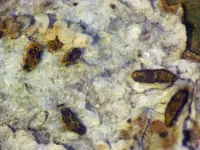
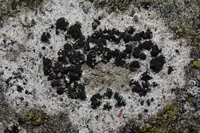
Its thallus is often barely visible, but the fungus forms tiny black apothecia (disc-like fruiting bodies) that sit directly on the rock surface. Under magnification, these structures reveal slit-like openings through which spores are released.

Highly inconspicuous thallus

Unlike many lichens, it lacks a leafy or crusty, strongly pigmented body and instead appears as a very thin, pale to almost invisible film on the stone. This cryptic growth form allows it to occupy fine microcracks and smooth areas that many other lichens cannot exploit.
Botan icon

Did you know?

Arthonia calcarea is considered a saxicolous lichen, meaning it lives directly on rock, and its presence in historic stonework and old walls has been used by lichenologists to study both long-term air quality and weathering patterns of cultural heritage structures.

FAQs about Arthonia calcarea

This crustose lichen grows extremely slowly, often only fractions of a millimeter per year. Growth depends on stable rock surfaces, clean air, consistent moisture, and light levels, so visible expansion may take many years.

Grow Healthy Plants with Botan Care

Keep your plants happy and healthy with plant identification, disease detection, and easy care guidance.

Botan plant care app — identify plants on mobile

Explore More Plants