Bark selection
Choose host branches with rough, stable bark from long-lived trees, since this lichen establishes slowly and relies on that surface for many years.

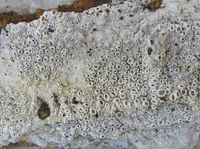
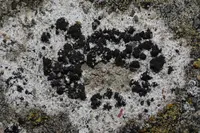
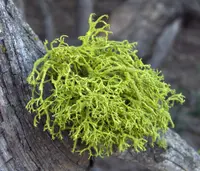
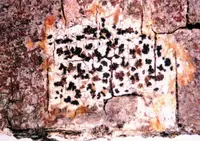
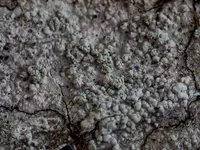
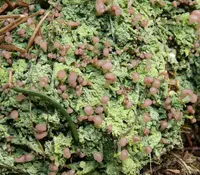
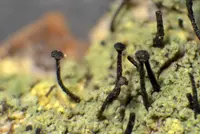
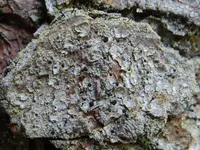
Bark barnacles (Thelotrema lepadinum) are a crustose lichen rather than a typical leafy plant. They form thin, pale to gray-green patches tightly attached to tree bark, often dotted with small, shell-like fruiting bodies. This species naturally occurs in cool, humid forests across parts of Europe and other temperate regions, where air quality is relatively clean. It is slow-growing and sensitive to pollution and drying out, which makes it challenging to cultivate. Gardeners who want to learn how to care for Bark barnacles should understand that it prefers stable moisture, indirect light, and bark or wood surfaces rather than soil.

Care Difficulty
Hard Care

Light Preference
Shade

Water Requirements
Keep Soil Moist

Temperature Preference
Cool Climate

Hardiness Zone
Unknown

Soil Texture
Organic-rich, Peaty

Soil pH
Strongly acidic (4.5–5.5)

Soil Drainage
Moist but well-drained

Fertilization
Minimal (feed rarely)
Scan your plant to receive care tips personalized for your specific plant
Available on iOS and Android
This bark-dwelling lichen prefers cool, moist, low-light woodland conditions rather than direct sun exposure.
This lichen absorbs moisture from rain, fog, and humid air rather than through roots in soil.
This species favors mild, oceanic-type climates with limited temperature extremes throughout the year.
This lichen prefers consistently moist, humid air to mimic its natural forest habitat.
This bark-dwelling lichen is not grown in conventional soil but can be mounted on suitably prepared substrates.
This species is not well suited to conventional container culture and is better grown mounted on bark or other supports.
Thelotrema lepadinum, often called Bark barnacles, usually gains enough nutrients from its host tree and surrounding environment.
Thelotrema lepadinum needs almost no pruning, since it is a crustose lichen firmly attached to bark.
This lichen is not a typical potted plant, so focus on transplanting small bark sections rather than classic repotting.
Propagation of Thelotrema lepadinum is specialized and mainly handled by natural dispersal of spores and fragments, not active home methods.
Thelotrema lepadinum is generally cold hardy in its native range and needs no special winter care when growing outdoors on trees.

Plant Health Check
Not sure what's wrong with your plant? Check your plant's health inside the app.
This lichen is mostly restricted to smooth bark of broadleaf trees in humid, shaded woodlands, where it often forms pale, rounded patches on trunks and branches.
Its fruiting bodies develop as small, thick-rimmed discs that emerge from round, whitish spots in the thallus, a structure lichenologists describe as lepadinoid and use as a key identification feature.
In Europe it shows a strong preference for mild, oceanic or suboceanic climates with consistently high humidity, so its presence can help ecologists assess local microclimate and forest continuity.
This lichen grows very slowly, often only a few millimeters per year. Growth rate depends on clean air, stable humidity, and consistent shade. Any disturbance to the bark or prolonged drought can further slow expansion.
Keep your plants happy and healthy with plant identification, disease detection, and easy care guidance.