Mounting substrate choice
Use inert, slightly rough materials like untreated cork, pumice, or lava rock as a base so the lichen can anchor securely without exposure to decomposing organic matter or fertilizer residues.

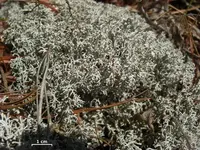
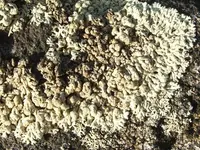
Gray reindeer lichen (Cladonia rangiferina) is a fruticose lichen, not a true plant, formed by a partnership between a fungus and algae. It has dense, branching, coral-like mats in pale gray to whitish tones.
In nature it carpets cold, open habitats such as boreal forests, Arctic tundra, and rocky outcrops, especially in nutrient-poor, well-drained sites. Growth is very slow, which makes it sensitive to disturbance and trampling.
It is adapted to strong light, clean air, and intermittent moisture, and it does not tolerate pollution or prolonged handling. These traits make long-term how to care for gray reindeer lichen at home challenging, especially in warm, humid indoor spaces.

Care Difficulty
Hard Care

Light Preference
Partial Sun

Water Requirements
Low Water

Temperature Preference
Cold Hardy

Hardiness Zone
2–7

Soil Texture
Sandy, Rocky, Peaty

Soil pH
Strongly acidic (4.5–5.5)

Soil Drainage
Well-drained

Fertilization
Minimal (feed rarely)
Scan your plant to receive care tips personalized for your specific plant
Available on iOS and Android
This lichen prefers bright, cool conditions with limited direct sun exposure similar to open northern habitats.
This species functions like a sponge, needing intermittent moisture and fast drying rather than constant wetness.
This lichen is highly cold-tolerant and prefers cool to moderate temperatures rather than sustained heat.
This lichen tolerates low humidity but stays most stable in cool, moderately moist air.
Cladonia rangiferina anchors on substrates rather than feeding from typical potting soil.
This species can be grown in shallow containers mainly for display rather than active growth.
This lichen is adapted to nutrient-poor environments and generally does not need fertilizer when grown correctly.
Cladonia rangiferina requires almost no pruning, since it does not grow like a typical vascular plant.
Transplanting gray reindeer lichen focuses on preserving its structure rather than managing roots, since it anchors lightly to substrates.
Propagation of Cladonia rangiferina is slow and mainly done by dividing existing clumps rather than from spores in home settings.
This lichen is naturally cold hardy and usually needs no special winter care in outdoor settings.

Plant Health Check
Not sure what's wrong with your plant? Check your plant's health inside the app.
Gray reindeer lichen is a primary winter food for reindeer and caribou in northern ecosystems, sometimes making up the majority of their cold-season diet because it remains accessible and energy-rich when other forage is scarce.
This lichen grows only a few millimeters per year, so thick mats that cover the ground can represent many decades of growth and recover very slowly after trampling, fire, or overgrazing.
Gray reindeer lichen is highly sensitive to sulfur dioxide and other air pollutants, so its absence or decline in an area is often used as a bioindicator of deteriorating air quality and industrial emissions in boreal and subarctic regions.

Gray reindeer lichen is not a single organism but a stable partnership between a fungus and photosynthetic partners (algae and sometimes cyanobacteria), allowing it to colonize nutrient-poor, exposed habitats such as dry, sandy soils and open rock in subarctic and boreal landscapes.
This species grows very slowly, often only 3–5 mm per year in nature. In garden or container culture, even under good conditions, noticeable thickening of the mat can take several years.
Keep your plants happy and healthy with plant identification, disease detection, and easy care guidance.