Ground Pineapple Care (Thonningia sanguinea)

Ground Pineapple

About Ground Pineapple

Ground pineapple, Thonningia sanguinea, is a unusual parasitic flowering plant native to humid tropical forests of West and Central Africa. It lives attached to the roots of nearby trees instead of forming typical green leaves and stems.

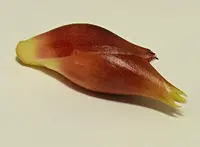
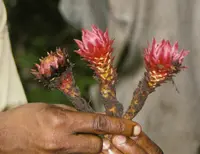
The plant produces striking, low, cone-like flower heads that emerge from the forest floor, often in bright red or orange tones. These structures attract pollinators and make the plant highly distinctive in habitat.

Because it depends on host trees, it is very challenging to cultivate and is rarely grown as a conventional houseplant or garden specimen. For those who want to learn how to care for Ground Pineapple, it is mostly of botanical and educational interest rather than practical home growing.

Main Plant Requirements

Care Difficulty

Hard Care

Light Preference

Partial Shade

Water Requirements

Keep Soil Moist

Temperature Preference

Tropical / Frost Sensitive

Hardiness Zone

Unknown

Soil Texture

Loamy, Silty, Organic-rich

Soil pH

Strongly acidic (4.5–5.5), Acidic (5.5–6.5)

Soil Drainage

Moist but well-drained

Fertilization

Minimal (feed rarely)

Get Personalized Care Plan

Scan your plant to receive care tips personalized for your specific plant

Available on iOS and Android

How to Care for the Ground Pineapple

This parasitic forest understory species needs filtered, indirect light that mimics dappled woodland shade.

  • Provide bright, dappled shade or filtered light, such as beneath shrubs or light tree canopy, with 2–4 hours of gentle morning sun only.
  • Avoid direct midday or afternoon sun, which can scorch the fleshy inflorescences and dry the surrounding soil too quickly.
  • In dense shade, flowering of Ground Pineapple may decline; increase light slightly by thinning overhead vegetation without exposing it to direct sun.

This root-parasitic species depends on consistently moist, but not waterlogged, surrounding soil.

  • Keep the host plant’s soil evenly moist; allow only the top 2–3 cm to approach dryness before the next thorough watering.
  • Use a loose, well-drained, humus-rich substrate; standing water or heavy clay strongly increases the risk of rot in Thonningia sanguinea structures.
  • In hotter months, monitor more often for drying cracks or wilted nearby vegetation; in cooler or rainy seasons, cut back to prevent soggy, anaerobic conditions.

This tropical African species prefers warm, frost-free conditions year-round for stable growth and flowering.

  • Aim for 70–85°F (21–29°C) as the main growth range, similar to warm lowland forest conditions.
  • Protect from cold; growth slows sharply below 60°F (16°C) and tissue damage is likely near 40°F (4°C) or any light frost.
  • Short hot spells up to about 90–95°F (32–35°C) are tolerated if soil stays evenly moist and the plant remains shaded from direct sun.

This root-parasitic species is not typically grown in cultivation, and detailed humidity needs are poorly documented, so specific home-care humidity guidance for Ground Pineapple is not currently practical or reliable.

Thonningia sanguinea is an obligate root parasite that does not grow in conventional potting soil, so standard home soil preparation guidance does not apply.

  • In nature it attaches to host tree roots in deep forest litter, exploiting decaying organic layers rather than rooting in a discrete soil profile.
  • Attempts at cultivation focus on replicating a host root system under intact forest-type leaf litter, not on preparing a standalone substrate.
  • Any experimental medium must stay evenly moist yet aerated around the host roots, avoiding compaction that would limit gas exchange.
  • Avoid fertilizers or high-salt mixes, which can damage both potential host roots and the specialized haustoria that connect parasite and host.

This species is not realistically suited to container growing, as it depends on living host tree roots under natural forest-floor conditions that are extremely difficult to reproduce in pots.

Thonningia sanguinea is a parasitic forest species that generally does not need additional fertilizer when established in suitable host-rooted soil.

Thonningia sanguinea requires almost no structural pruning, but spent inflorescences can be tidied for hygiene and appearance.

  • Cut with clean, sharp scissors or pruners once flower heads dry and start to decay.
  • Remove only dead, diseased, or rotting floral tissue to limit fungal problems.
  • Avoid cutting into surrounding host roots or underground structures to prevent stress.
  • Disinfect blades before and after use to reduce spread of pathogens.

As a root-parasitic species, Ground Pineapple is rarely grown in pots and is best left undisturbed once established in the ground.

  • Consider transplanting only if the host tree area will be disturbed or removed.
  • If grown in a container with a host, wait until roots circle the pot or growth weakens before shifting up 1 pot size.
  • Transplant during warm, active growth so roots recover faster and re-establish connections with host roots.
  • Keep the root zone shaded, evenly moist, and firmly backfilled to reduce transplant shock.

Propagation of Thonningia sanguinea is specialized and rarely attempted by home growers because it depends on compatible host roots.

This tropical forest parasite lacks frost tolerance and requires warm, frost-free conditions year-round.

  • Maintain temperatures above 55–60°F; avoid exposure to frost or freezing soil.
  • In marginal climates, grow with its host in large containers that can be moved indoors for winter.
  • Provide a thick organic mulch around the host root zone to buffer short cool spells and retain moisture.

Care Tips

Host root selection

Use mature, healthy roots of suitable host shrubs or small trees from the same native range, since the parasite establishes best on well-developed, actively growing root systems.

Controlled root exposure

When installing the rhizome near the host, gently expose only a small section of host root and cover the junction quickly again, which reduces desiccation and improves successful attachment.

Shaded surface mulch

Apply a thin, loose mulch layer of coarse organic material above the planting zone to keep the surface cool and stable while still allowing easy emergence of the inflorescences.

Seasonal moisture mapping

Keep simple notes or a sketch map of where flowering occurs in relation to host roots and seasonal rainfall, then repeat the same moisture pattern in later years to stabilize flowering performance when growing Ground Pineapple.

Flowering zone protection

Mark the area where inflorescences emerge and avoid digging, raking, or heavy foot traffic there, since physical disturbance of the shallow underground structures can reduce future blooming.

Common Pests and Diseases

Scale insects

This pest is sometimes recorded on wild inflorescences, feeding on plant sap and weakening floral structures. Symptoms include small, dome-shaped brown or whitish bumps on bracts and exposed tissue, often with sticky honeydew on nearby surfaces.

Solution

Remove and destroy heavily infested inflorescences if possible, then wipe remaining accessible tissue with a cloth or cotton swab dipped in diluted alcohol or insecticidal soap. In outdoor or ex-situ cultivation, reduce ant activity around the clump, as ants protect scale, and repeat spot treatments every 7–10 days until new growth emerges clean.

Mealybugs

These insects may colonize protected folds of bracts and floral bases, appearing as white, cottony clusters that excrete sticky honeydew. This pest can attract sooty molds and may interfere with pollination and seed formation in cultivated material.

Solution

Physically remove visible mealybugs with a cotton swab dipped in alcohol, then wash accessible tissue gently with a mild insecticidal soap solution. Isolate affected material from other potted hosts, monitor weekly, and repeat targeted cleaning at the first sign of reinfestation to protect overall Thonningia sanguinea plant care in mixed collections.

Termite feeding

These insects sometimes feed on surrounding host roots and organic matter, indirectly damaging the underground haustoria that connect this holoparasite to its host. Symptoms include collapsing or prematurely drying inflorescences where the host root zone shows galleries or frass typical of termite presence.

Solution

Focus on managing the termite colony in the surrounding substrate using bait systems or localized soil treatments that spare non-target organisms as much as possible. Improve site hygiene by removing heavily decomposed wood and debris, and if cultivated in containers, relocate the host plant–Thonningia complex to fresh, termite-free growing media.

Fungal bract blight

This disease can develop on moist, shaded inflorescences, producing dark, water-soaked lesions that turn brown or black and may cause bracts and floral tissue to decay. Symptoms include patchy discoloration, soft areas, and sometimes a fine fungal growth on damaged parts.

Solution

Promptly remove and discard affected inflorescences and any fallen infected tissue to reduce inoculum. Improve air movement around the fruiting bodies, avoid overhead watering that wets the bracts, and in cultivation use a targeted fungicide labeled for ornamental flowers if the problem recurs under humid conditions.

Interesting Facts

Parasitic flowering spikes

This species produces dense, cone-shaped inflorescences that emerge directly from the soil, while the rest of the plant remains hidden as a parasite attached to the roots of host trees.

No green leaves

It is holoparasitic, meaning it completely lacks chlorophyll and functional leaves, so it relies entirely on host plants for water and organic nutrients instead of performing photosynthesis.

Host range in forests

In West and Central African forests it commonly parasitizes the roots of various woody species, including some legumes, and can form clusters where suitable hosts are abundant.

Botan icon

Did you know?

The floral structure is specialized for beetle pollination, with fleshy, compact flower heads that emit a yeasty or fruity odor at ground level to attract beetles that crawl over and between the flowers, transferring pollen as they feed and shelter there.

FAQs about Ground Pineapple

This species spreads only where suitable host roots are present, since it is a parasitic plant. It can form small colonies around hosts but usually does not behave aggressively in typical home or botanical garden settings.

Grow Healthy Plants with Botan Care

Keep your plants happy and healthy with plant identification, disease detection, and easy care guidance.

Botan plant care app — identify plants on mobile

Explore More Plants