Rotate flowering pots
Turn containers 90° every 1–2 weeks during active growth so the plant develops an even, compact dome of foliage and flower stems instead of leaning toward the brightest side.

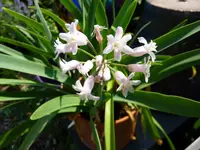
Sweet garlic (Tulbaghia simmleri) is a compact, clump-forming perennial grown for its slender, grass-like leaves and clusters of soft lilac to white star-shaped flowers. It belongs to the amaryllis family and has a mild garlic scent when the foliage is brushed or crushed.
This species is native to South Africa, where it grows in rocky grasslands with good drainage. In gardens and containers it tends to flower over a long season and stays relatively low, which suits small spaces.
Tulbaghia simmleri is generally considered easy to grow if given bright light, moderately fertile, well-drained soil, and protection from severe frost. Its drought tolerance and modest feeding needs make it straightforward to care for Sweet garlic for most home gardeners.

Care Difficulty
Easy Care

Light Preference
Partial Sun

Water Requirements
Moderate Water

Temperature Preference
Warm Climate

Hardiness Zone
8–10

Soil Texture
Sandy, Loamy, Organic-rich

Soil pH
Slightly acidic (6.5–7.0), Neutral (7.0)

Soil Drainage
Well-drained

Fertilization
Light (every 4–6 weeks)
Scan your plant to receive care tips personalized for your specific plant
Available on iOS and Android
This bulb prefers bright conditions with some protection from harsh midday sun.
This plant likes moderate, consistent moisture without prolonged saturation.
This species grows best in mild, temperate conditions without hard freezes.
This species tolerates a wide humidity range and rarely needs special adjustment indoors.
Tulbaghia simmleri prefers loose, well-drained, moderately fertile soil that avoids prolonged saturation.
This species grows well in containers when drainage and root space are managed carefully.
Tulbaghia simmleri responds well to modest, consistent feeding during its active growing season.
Pruning maintains compact growth and sustained flowering in Tulbaghia simmleri.
Clumps benefit from occasional division and repotting or transplanting when growth slows or becomes crowded.
New plants are most reliably produced by division, with seeds used where more genetic variation is desired.
This species is moderately frost tolerant but benefits from simple winter care, especially in colder regions.

Plant Health Check
Not sure what's wrong with your plant? Check your plant's health inside the app.
This species is native to cool, misty mountain slopes and cliff faces in South Africa, where it often grows in shallow, gritty soils with excellent drainage and regular fog or drizzle rather than heavy rain.
Unlike many ornamental alliums, this plant produces strongly fragrant, tubular flowers that often release a more pronounced sweet-garlic scent in the evening and at night, attracting nocturnal pollinating insects.
In its native montane climate it tends to be semi-evergreen, holding foliage through mild periods but shedding leaves and resting when conditions become too cold or too dry, then resprouting from its underground rhizomes.

In its native range, this species has been recorded flowering through the cooler months as well as in warmer periods when conditions are favorable, so a single clump can produce multiple flushes of pale, starry blooms across much of the year rather than a single short flowering season.
Lack of blooms usually comes from insufficient light, overcrowded clumps, or depleted nutrients. Divide congested plants every few years, use a balanced slow‑release fertilizer in spring, and ensure at least moderate direct light exposure.
Keep your plants happy and healthy with plant identification, disease detection, and easy care guidance.