


Mark Dormant Sites
Flag the planting spots with small, unobtrusive labels after flowering so you do not disturb the resting bulbs during summer cultivation or replanting nearby perennials.

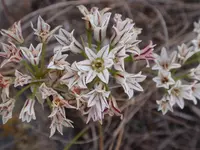
Pitted onion, Allium lacunosum, is a small perennial wild onion native to western North America, often found on rocky slopes, open grasslands, and coastal hills. It forms narrow, grasslike leaves and slender stems topped with rounded clusters of starry, pink to white flowers.
This species stays compact and tends to grow in clumps, making it suitable for rock gardens, naturalistic plantings, or dry borders. It is generally hardy and drought tolerant once established, which simplifies how to care for pitted onion in suitable climates.
It usually prefers full sun, well-drained, often sandy or rocky soil, and low to moderate moisture, especially avoiding prolonged wet conditions around the bulb.

Care Difficulty
Moderate Care

Light Preference
Full Sun

Water Requirements
Low Water

Temperature Preference
Cool Climate

Hardiness Zone
6–9

Soil Texture
Sandy, Loamy, Rocky

Soil pH
Slightly acidic (6.5–7.0), Neutral (7.0)

Soil Drainage
Well-drained

Fertilization
Minimal (feed rarely)
Scan your plant to receive care tips personalized for your specific plant
Available on iOS and Android
Allium lacunosum prefers bright, open conditions that mimic its native rocky habitats.
Allium lacunosum needs infrequent, well-judged watering that keeps its bulb from staying wet for long periods.
This species is adapted to mild, dry-summer climates with cool, wet winters and warm, dry springs.
Allium lacunosum handles a wide humidity range and usually does not need special humidity management outdoors.
Allium lacunosum prefers lean, fast-draining soil that mimics rocky or sandy native habitats.
This species can grow in containers if the potting setup prevents waterlogging around the bulbs.
Allium lacunosum is a low-nutrient, bulb-forming native that needs only light feeding in typical garden soils.
Pruning needs for Allium lacunosum are minimal and mainly focus on tidiness and bulb health.
This bulbous native is most often grown in the ground, so transplanting clumps is more common than container repotting.
Allium lacunosum is commonly propagated by division of mature bulb clumps or by seed in suitable conditions.
This species is generally cold hardy in much of its native range and usually needs little active winter care.

Plant Health Check
Not sure what's wrong with your plant? Check your plant's health inside the app.
This species is native to coastal and near-coastal regions of California, where it typically grows on open slopes, grasslands, and rocky places influenced by a Mediterranean-type climate with wet winters and dry summers.
The common name pitted onion refers to the small depressions or pits in parts of the flower structure, a morphological detail botanists use to distinguish it from other Allium species in the same areas.
As a geophyte, it spends the dry season as an underground bulb and sends up leaves and flowers mainly in spring, timing its active growth to cooler, moister conditions before intense summer drought.
Yellowing leaves often indicate natural dormancy after flowering, nutrient-poor or compacted soil, or past overwatering that damaged roots. Check drainage, avoid waterlogged conditions, and apply a light, balanced fertilizer during active growth if soil is depleted.
Keep your plants happy and healthy with plant identification, disease detection, and easy care guidance.

Pancratium foetidum
Pancratium foetidum
Chrysothemis friedrichsthaliana
Chrysothemis friedrichsthaliana
Bulley's Primrose
Primula bulleyana
Lily of the Nile
Agapanthus africanus
crinkled onion
Allium crispum
gland onion
Allium glandulosum
Dichaea neglecta
Dichaea neglecta
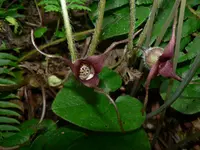
British Columbia wildginger
Asarum caudatum