Rotate Containers
Turn container-grown plants 90° every 2–3 weeks during active growth so flower stalks develop evenly and the clump does not lean toward the strongest light source.

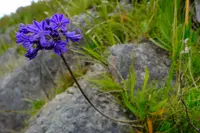
Lily of the Nile, Agapanthus africanus, is a clump-forming perennial known for its tall stalks topped with rounded clusters of blue or white funnel-shaped flowers. It has strappy, evergreen leaves and a tidy, fountain-like growth habit that suits borders, containers, and coastal gardens.
This species is native to South Africa, where it grows in sunny, open habitats with well-drained soils. It is generally considered easy to grow, as it tolerates poor soil and short dry periods once established, though it flowers best with regular moisture and full sun. Gardeners often find that learning how to care for Lily of the Nile is straightforward compared with many other flowering ornamentals.

Care Difficulty
Easy Care

Light Preference
Full Sun

Water Requirements
Moderate Water

Temperature Preference
Warm Climate

Hardiness Zone
8–11

Soil Texture
Sandy, Loamy, Organic-rich

Soil pH
Slightly acidic (6.5–7.0), Neutral (7.0)

Soil Drainage
Moist but well-drained

Fertilization
Light (every 4–6 weeks)
Scan your plant to receive care tips personalized for your specific plant
Available on iOS and Android
Agapanthus africanus needs abundant light to flower well and form sturdy foliage.
Watering should support steady growth while preventing waterlogged soil around the rhizomes.
Stable mild temperatures support strong growth and reliable flowering.
Agapanthus africanus handles a wide humidity range and rarely needs special humidity management.
This species prefers free-draining, moderately fertile soil that does not stay waterlogged.
This species is well suited to container growing in many climates.
Agapanthus africanus responds well to moderate feeding during active growth for strong foliage and flowering.
Pruning Agapanthus africanus focuses on tidiness and directing energy into new growth and flowers.
Agapanthus africanus prefers slightly snug conditions but benefits from occasional repotting or division when crowded.
Agapanthus africanus is most commonly propagated by division, with seeds used mainly for breeding or patient growers.
Winter care for Agapanthus africanus depends on climate and whether plants are in the ground or containers.

Plant Health Check
Not sure what's wrong with your plant? Check your plant's health inside the app.
This species occurs naturally only in a small area of the Cape Peninsula in South Africa, growing on rocky sandstone slopes and cliffs exposed to coastal winds.
Its tubular blue flowers are primarily adapted for pollination by long-tongued bees, which brush against the anthers and stigma as they reach deep into the flower for nectar.
The plant stores resources in a fleshy rhizome, allowing it to resprout after dry periods and mild fires in its fynbos habitat.

In its native habitat on Table Mountain and nearby ranges, this species often grows in nearly vertical rock crevices, anchoring itself with thick roots that exploit tiny pockets of soil and moisture in the sandstone.
Lack of flowers often comes from insufficient light, overcrowded clumps, or low nutrients. Divide congested plants every 3–5 years, use a balanced slow-release fertilizer, and ensure at least one full growing season after division before expecting strong flowering.
Keep your plants happy and healthy with plant identification, disease detection, and easy care guidance.