BotaN logo

Horseshoe geranium Care (Pelargonium zonale)

Also known as: Horse-shoe Pelargonium, Horseshoe Storksbill
Horseshoe geranium

About Horseshoe geranium

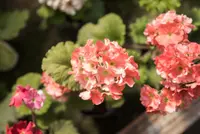
Horseshoe geranium, Pelargonium zonale, is a compact, sun-loving perennial often grown as a flowering annual in containers, borders, and window boxes. It forms rounded mounds of fleshy, lobed leaves, usually marked with a darker horseshoe-shaped zone.

Flower clusters rise above the foliage and come in shades of red, pink, white, or salmon, providing long seasonal color. The plant originates from South Africa but is now widely cultivated in temperate gardens and indoor collections.

Pelargonium zonale is valued for its tolerance of heat, moderate drought, and pruning, which makes it relatively easy to grow. Understanding how to care for Horseshoe geranium focuses mainly on providing strong light, free-draining soil, and avoiding persistent wet roots.

Main Plant Requirements

Care Difficulty

Easy Care

Light Preference

Full Sun

Water Requirements

Moderate Water

Temperature Preference

Tropical / Frost Sensitive

Hardiness Zone

10–11

Soil Texture

Sandy, Loamy, Organic-rich

Soil pH

Slightly acidic (6.5–7.0), Neutral (7.0)

Soil Drainage

Well-drained

Fertilization

Moderate (every 2–4 weeks)

Get Personalized Care Plan

Scan your plant to receive care tips personalized for your specific plant

Available on iOS and Android

How to Care for the Horseshoe geranium

Pelargonium zonale prefers bright, direct light for strong, compact growth.

  • Provide 6–8 hours of direct sun daily; morning sun is ideal, with light afternoon shade in very hot climates.
  • Tolerates light partial shade, but Horseshoe geranium will flower less and stretch if it receives under 4–5 hours of direct sun.
  • In summer, protect from intense late-afternoon sun to prevent leaf scorch; in winter, move plants to the brightest available south- or west-facing exposure.

This species prefers thorough watering followed by a dry-down period rather than constantly moist soil.

  • Water when the top 2–3 cm of soil feels dry, letting water drain fully from the pot or bed before discarding any excess.
  • In spring and summer, expect more frequent watering as growth and evaporation increase; in cooler seasons, extend intervals and check soil first.
  • Watch for yellowing, mushy stems and a sour smell as signs of overwatering, and for limp, thin leaves and very light pots as signs of underwatering.

This plant grows best in warm, frost-free conditions with moderate temperature swings.

  • Aim for 65–75°F (18–24°C) for active growth, which supports steady flowering and compact foliage.
  • Protect from temperatures below 40°F (4°C); light frost can damage leaves, and hard frost may kill the plant to the roots.
  • Tolerates short periods up to 90°F (32°C) if soil is not waterlogged; in hot spells, provide afternoon shade and maintain airflow to limit heat stress.

This species prefers relatively dry air and usually stays healthy at typical indoor humidity.

  • Aim for 30–50% humidity, as Horseshoe geranium is adapted to drier conditions and does not need extra moisture in the air.
  • Dry leaf tips with soft, pale growth can indicate excess humidity, especially in cool, still air.
  • Increase air movement with a small fan rather than misting, which can promote leaf spots and fungal issues.

Pelargonium zonale grows best in a light, well-aerated mix that drains quickly yet holds moderate moisture.

  • Use a loose, sandy or loamy mix such as 50–60% peat- or coco-based potting mix with 20–30% perlite and 10–20% coarse sand.
  • Ensure rapid drainage so water runs freely from the pot within seconds, preventing waterlogging and root rot.
  • Keep pH slightly acidic to neutral, around 6.0–7.0, avoiding strongly acidic or alkaline substrates that limit nutrient uptake.
  • Improve aeration by adding extra perlite or fine bark chips if the mix feels heavy, compacted, or slow to dry between waterings.

This species is very suitable for container growing on patios, balconies, and sunny entrances.

  • Choose a stable, heavier container material like ceramic or clay to reduce tipping from bushy top growth and wind exposure.
  • Select a pot wider than it is deep to accommodate the plant’s fibrous, spreading root system without wasting depth.
  • Leave a 2–3 cm gap between soil surface and pot rim so overhead watering does not overflow and disturb the root zone.

Pelargonium zonale responds well to modest, consistent feeding during the active growing season.

  • Use a balanced liquid fertilizer (for example 10-10-10 or 20-20-20) diluted to 1/2 strength for caring for Horseshoe geranium.
  • Feed every 2–3 weeks from spring through early fall when growth and flowering are strongest.
  • Reduce or stop feeding in winter when growth slows, especially indoors or in cool conditions.
  • Occasionally supplement with a light top-dressing of compost or use a slow-release fertilizer at spring potting.

Pelargonium zonale benefits from controlled pruning to keep plants compact and flowering well.

  • Carry out main pruning in late winter or very early spring before vigorous new growth starts.
  • Remove dead, diseased, leggy, or crossing stems, and spent flower stalks to improve air flow and light penetration.
  • Shorten long shoots by 1/3 to shape a bushier plant and encourage more flowering stems.
  • Use clean, sharp scissors or pruners, disinfecting blades when moving between plants to limit disease spread.

Container-grown Pelargonium zonale needs occasional repotting to maintain healthy roots and steady flowering.

  • Check for roots circling the pot, growing through drainage holes, or unexplained slow growth as signs it needs more space.
  • Plan to repot every 1–2 years in early spring, just before strong new growth begins.
  • Choose a slightly larger pot with fresh, free-draining mix and gently tease out circling roots without tearing them heavily.
  • Water after repotting, then keep in bright, indirect light for a few days to limit transplant shock before returning to full sun.

Pelargonium zonale is commonly propagated from stem cuttings for reliable, uniform plants.

  • Take 7–10 cm non-flowering tip cuttings in late spring or summer from healthy, vigorous shoots.
  • Remove lower leaves, let the cut end dry for 1–2 hours, then insert into a well-drained mix such as perlite and peat or similar.
  • Provide bright, indirect light, warm temperatures around 70–75°F, and lightly moist but not waterlogged substrate for rooting.
  • Seed propagation is possible indoors in late winter, using fresh seed, warmth, and consistent moisture for even germination.

Pelargonium zonale is frost-sensitive and needs protection in regions with freezing winters.

  • Move container plants indoors before night temperatures drop below 40°F, placing them in bright light and cool, frost-free conditions.
  • In mild climates, grow in well-drained soil and apply a light mulch around the root zone, keeping mulch off the stems.
  • Reduce watering in winter so the soil dries slightly between waterings, preventing root rot in cooler conditions.
  • Cut back leggy growth lightly before or after overwintering to maintain shape and encourage strong spring regrowth.

Care Tips

Rotate For Symmetry

Turn containers 90° every 1–2 weeks during active growth so the plant receives even light on all sides and develops a balanced, dome-shaped canopy instead of leaning toward the brightest window or balcony edge.

Pinch To Shape

Regularly pinch out just the soft shoot tips with clean fingers before they harden, which encourages branching low on the stems and produces a fuller plant with more flowering sites over the season.

Deadhead With Precision

Remove entire spent flower stalks by cutting back to the first strong leaf joint rather than just pulling off dried petals, which reduces disease risk and redirects energy into new buds instead of seed production.

Manage Woody Stems

If older plants become leggy and woody, stagger rejuvenation by cutting back only 1/3–1/2 of the longest stems each spring to a strong node, allowing the plant to regrow without losing all flowers at once.

Prevent Edema Damage

After cloudy or cool, wet spells, increase air movement and avoid sudden heavy watering while the soil is still cool to reduce edema, a stress condition where leaves develop corky blisters from excess water uptake.

Common Pests and Diseases

Rust

This disease causes small yellow spots on upper leaf surfaces and orange-brown pustules on the undersides, leading to premature leaf drop. Symptoms include a dusty spore layer that rubs off onto fingers or nearby surfaces.

Solution

Remove and discard all heavily affected leaves and avoid wetting foliage when watering. Improve air circulation around plants, space them well, and apply a sulfur or chlorothalonil-based fungicide labeled for geranium rust if conditions stay humid or the problem persists.

Botrytis blight

This disease produces soft, brown, water-soaked spots on leaves, flowers, and stems, often covered by gray, fuzzy mold. Symptoms include rapid collapse of flower heads and rotting of crowded, poorly ventilated growth.

Solution

Cut off and discard all affected tissue, including faded flowers and mushy stems, and keep the plant in a drier, well-ventilated position. Reduce overhead watering, remove plant debris from the soil surface, and use a labeled fungicide for botrytis only if cultural corrections do not halt spread.

Bacterial blight

This disease causes angular, water-soaked leaf spots that turn brown or black and may follow the veins, sometimes leading to stem streaking and sudden wilt. Symptoms include yellowing of affected leaves and rapid decline under warm, humid conditions.

Solution

Immediately remove and discard symptomatic leaves and severely affected plants to limit spread, and avoid splashing water between plants. Use only clean tools and propagation material, allow the soil surface to dry between waterings, and if the problem is severe, discard the entire plant and avoid reusing the same potting mix.

Aphids

These insects cluster on soft shoot tips and flower stems, sucking sap and causing curled, sticky leaves due to honeydew deposits. This pest can promote sooty mold growth and distort developing buds.

Solution

Wash colonies off with a firm stream of water or wipe shoots with a cloth dampened in mild soapy water, rinsing foliage afterward. For persistent infestations, apply insecticidal soap or a neem oil product labeled for ornamentals, repeating as directed until populations are controlled.

Geranium budworm

This pest, the caterpillar of the geranium plume moth, bores into buds and flowers, causing holes, deformed blooms, and brown frass inside flower heads. Symptoms include buds that fail to open or show chewed petals and webbing.

Solution

Inspect plants regularly and hand-pick caterpillars and damaged buds, discarding them in the trash. In outdoor plantings where this problem is frequent, use a Bacillus thuringiensis (Bt) product labeled for caterpillars, targeting young larvae on buds and flowers according to label directions to support successful growing Horseshoe geranium.

Interesting Facts

Wild origin habitat

This species is native to rocky, dry slopes of the Western Cape in South Africa, where it grows as a small subshrub in full sun and well-drained, often sandy or stony soils.

Parent of zonal geraniums

Most modern bedding and balcony geraniums, commonly called zonal geraniums, were bred from Pelargonium zonale, which provided the characteristic darker zone on the leaves and the upright, compact habit valued in ornamentals.

Leaf zoning function

The darker circular band, or zone, on the leaves is associated with differences in pigment and hair density across the blade, which can influence how the leaf handles light and water loss in its bright, dry native environment.

Botan icon

Did you know?

Pelargonium zonale was introduced into European horticulture in the 17th century and became so influential in breeding that many popular garden geraniums worldwide still carry its genetic signature, even when sold under different common names.

FAQs about Horseshoe geranium

Yellowing leaves usually come from overwatering, poor drainage, or natural aging of the lowest foliage. Check that the pot drains well, let the top layer of soil dry slightly between waterings, and remove old, spent leaves.

Grow Healthy Plants with Botan Care

Keep your plants happy and healthy with plant identification, disease detection, and easy care guidance.

Botan plant care app — identify plants on mobile

Explore More Plants