spring spiderlily Care (Hymenocallis liriosme)

spring spiderlily

About spring spiderlily

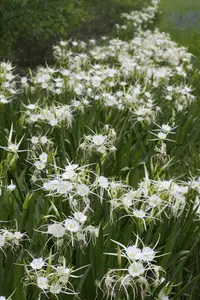
Spring spiderlily, Hymenocallis liriosme, is a bulbous perennial known for its white, spider-like flowers with long, narrow petals and a central cup. It typically forms clumps of strap-shaped green leaves that emerge from fleshy bulbs just below the soil surface.

This species is native to the southeastern United States, where it grows in moist meadows, ditches, and along wetlands. It is generally considered easy to grow if its need for consistent moisture, bright light, and well-drained yet humus-rich soil is met.

Gardeners who learn how to care for spring spiderlily usually find it reliable, provided the bulb is protected from deep freezing and the soil does not dry out for long periods.

Main Plant Requirements

Care Difficulty

Moderate Care

Light Preference

Full Sun

Water Requirements

Keep Soil Moist

Temperature Preference

Warm Climate

Hardiness Zone

7–10

Soil Texture

Sandy, Loamy, Organic-rich

Soil pH

Acidic (5.5–6.5), Slightly acidic (6.5–7.0)

Soil Drainage

Moist but well-drained

Fertilization

Light (every 4–6 weeks)

Get Personalized Care Plan

Scan your plant to receive care tips personalized for your specific plant

Available on iOS and Android

How to Care for the spring spiderlily

This species prefers bright exposure with some protection from intense midday sun.

  • Provide 4–6 hours of direct morning sun with light afternoon shade; in hotter regions, filtered light under high trees reduces leaf scorch.
  • Tolerates partial shade (3–4 hours sun) but flowering in spring spiderlily decreases if light drops much below this level.
  • In summer, watch for bleached or crispy leaf tips as a sign of too much sun; in cooler seasons, use a more open site to maximize sun and bloom.

This bulb prefers consistently moist but not waterlogged soil during active growth.

  • Irrigate when the top 2–3 cm of soil feels just barely dry, aiming for evenly damp soil around the root zone, especially in spring and early summer.
  • Use rich, well-drained soil or a planting spot that does not stay soggy; yellowing, limp leaves and a rotting bulb indicate chronic overwatering.
  • In hot, dry weather, increase frequency, while in late fall and winter gradually reduce watering as Hymenocallis liriosme enters a rest period and growth slows.

This plant grows best in warm, mild climates with protection from frost.

  • Ideal growing temperatures are 65–80°F (18–27°C), with stable warmth during the main growing season for strong foliage and flowering.
  • Hymenocallis liriosme tolerates brief dips to about 25°F (−4°C), but repeated or lower freezes can damage bulbs and reduce next year’s blooms.
  • In very hot spells above 90°F (32°C), provide soil moisture and light shade to prevent stress, and mulch in winter where frosts are common to buffer temperature swings.

This species prefers moderately humid air but copes with many household conditions if not kept too dry.

  • Aim for 40–60% humidity, using a hygrometer to check levels in heated or air-conditioned rooms.
  • Tolerates brief dry air, but leaf tips browning or flower buds shriveling signal humidity stress.
  • Increase humidity with a nearby pebble tray or grouping plants, rather than misting, to avoid fungal issues on spring spiderlily foliage.

This bulb prefers loose, moist, sharply drained soil that still holds organic matter.

  • Use a loamy, sandy mix such as 2 parts compost, 1 part coarse sand, and 1 part fine bark or perlite for structure.
  • Ensure rapid drainage so water flows through within seconds; standing water around bulbs increases rot risk.
  • Target slightly acidic to neutral pH, around 6.0–7.0, which supports nutrient availability for Hymenocallis liriosme.
  • Improve aeration by avoiding heavy clay; if native soil is dense, grow in raised beds or large containers with added grit.

This species grows well in containers when bulbs have depth and excess water can drain freely.

  • Choose a pot deep enough for roots to extend below the bulb, usually 25–30 cm, to support tall flowering stems.
  • Select a heavier material like ceramic or clay to stabilize the container against wind and top-heavy growth.
  • Elevate the pot slightly on feet or spacers so drainage holes stay clear and excess water exits quickly after rain or watering.

Hymenocallis liriosme benefits from modest feeding during active growth but does not require heavy fertilization.

  • Use a balanced liquid NPK fertilizer at half strength every 4–6 weeks from early spring to late summer.
  • Alternatively, apply a light top-dressing of compost or a low-dose slow-release bulb fertilizer at the start of the growing season.
  • Avoid fertilizing during fall and winter dormancy to prevent weak, elongated growth and bulb stress.
  • Water before applying fertilizer so bulbs and roots do not contact concentrated salts.

Pruning for Hymenocallis liriosme focuses on cleanliness and bulb health rather than shaping.

  • Cut spent flower stalks at the base after blooming so the plant directs energy back to the bulbs instead of seed.
  • Remove yellowing or dead leaves at their base during the growing season to reduce disease risk.
  • Use clean, sharp hand pruners or scissors, disinfected with alcohol, to make smooth cuts.
  • Avoid cutting green, healthy foliage, as it is needed to recharge bulbs for the next flowering cycle.

Transplanting or repotting spring spiderlily is infrequent and mainly done when clumps become crowded or growth slows noticeably.

  • Check for signs such as roots circling the pot, bulbs pressing against the container, or declining vigor despite good care.
  • Plan to lift and divide outdoor clumps or repot containers every 3–5 years in late fall or very early spring, during dormancy.
  • Gently loosen soil around bulbs, handle them by the base rather than the soft neck, and keep roots slightly moist while exposed.
  • Replant bulbs at the same depth in well-drained soil, water lightly, and keep newly moved plants shaded for a few days to reduce transplant shock.

Propagation of Hymenocallis liriosme is most reliable by bulb division, with seeds used mainly for long-term breeding or collection.

  • Divide mature clumps in late fall or early spring when foliage is dormant or minimal.
  • Lift the clump, separate offsets with firm bulbs and healthy roots, and discard any soft or rotted tissue.
  • Replant offsets at the same depth in loose, well-drained soil and water to settle them in without waterlogging.
  • For seeds, sow fresh in a warm, bright location, keeping the medium evenly moist; germination may be slow and flowering delayed for several years.

Winter care for Hymenocallis liriosme depends on climate, with established plants tolerating light frost but disliking prolonged hard freezes.

  • In mild regions, leave bulbs in the ground and apply a 5–8 cm layer of mulch over the root zone after foliage dies back.
  • In colder areas below about 10°F, dig bulbs after frost blackens foliage, dry them briefly, and store in a cool, frost-free place.
  • For container plants, move pots indoors to a cool, bright, frost-free spot and water sparingly to keep bulbs barely moist during dormancy.

Care Tips

Bulb clump division

Every 3–4 years, lift and divide congested clumps in late fall or very early spring to prevent overcrowding, selecting only firm, healthy bulbs and replanting them at the same depth to maintain flower size and vigor.

Targeted snail control

In damp sites, place low dishes of beer or iron phosphate pellets just outside the planting area at dusk to intercept slugs and snails before they chew emerging foliage and flower stems.

Mulch for crown protection

Apply a 5–7 cm layer of loose organic mulch around but not over the bulb necks to stabilize soil moisture, limit weed competition, and buffer the bulbs from temperature swings in USDA zones 7–8.

Staking tall scapes

In windy or exposed beds, insert slim, unobtrusive stakes behind flower stalks and secure them with soft ties to prevent scapes from bending or snapping when blooms are fully open.

Post-bloom leaf care

After flowering, leave foliage in place until it yellows naturally, then remove it cleanly so the plant can refill bulb energy reserves, which is essential for reliable flowering when growing spring spiderlily in the same spot for many years.

Common Pests and Diseases

Bulb mite

This pest attacks underground bulbs, feeding on the basal plate and scales and causing weak, yellowed foliage and poor flowering. Symptoms include stunted growth and bulbs that feel soft, dusty, or decayed when inspected.

Solution

Discard severely infested bulbs, then clean and dry any salvageable bulbs and replant only into fresh, well-drained soil. For valuable clumps, lift bulbs during dormancy, remove loose scales and debris, soak bulbs in a labeled miticide or hot-water treatment (about 111–115°F for 2–3 hours, staying below 120°F), then improve drainage and avoid overwatering to prevent reinfestation.

Narcissus bulb fly

This insect lays eggs at the base of the foliage, and the larvae tunnel into bulbs, hollowing them out and leading to collapsed, yellowing leaves and failure to emerge the following season. Affected bulbs often rot from the center out and may show a single large larva inside.

Solution

Remove and destroy any soft, hollow bulbs and do not compost them. To prevent damage, lift and store bulbs in a cool, dry place after foliage dies back in fly-prone areas, keep bulbs covered with at least 7–10 cm of soil, and consider using fine mesh or row cover over plantings during the adult fly period in late spring to early summer.

Spider mite

These insects feed on the undersides of leaves, causing pale stippling, a dull or bronzed appearance, and fine webbing in dry, hot conditions. Severe infestations can lead to premature leaf drop and reduced vigor.

Solution

Rinse foliage thoroughly with a strong but controlled stream of water, focusing on the undersides of leaves, and repeat every few days until numbers are reduced. In persistent cases, apply insecticidal soap or horticultural oil labeled for mites, ensuring complete leaf coverage, and increase humidity and air movement to make conditions less favorable for outbreaks.

Leaf spot

This disease causes brown or tan spots on leaves, sometimes with purple or darker margins and a yellow halo, which can merge into larger dead patches. Symptoms include premature leaf yellowing and reduced photosynthesis, which weakens bulbs over time.

Solution

Remove and discard affected leaves at the first sign of spotting and avoid overhead watering to keep foliage as dry as possible. Improve spacing for better airflow, water early in the day, and in recurring cases consider a preventive fungicide labeled for ornamental bulb leaf spots, applied according to directions at the start of the growing season.

Basal plate rot

This disease starts at the base of the bulb where roots attach, leading to brown, firm to dry decay and poor root growth, which shows above ground as stunted, yellowed leaves and reduced flowering. In advanced stages, bulbs may separate into loose scales and fail to sprout.

Solution

Discard all affected bulbs and any surrounding soil that shows obvious contamination, then replant only clean, firm bulbs in a new, well-drained location. To reduce risk, avoid planting in heavy, waterlogged soils, rotate planting sites, handle bulbs gently to prevent wounds, and consider a pre-plant fungicidal bulb dip when reusing beds with a known history of basal rot.

Interesting Facts

Coastal wetland native

This species is naturally found in wet prairies, marsh edges, and seasonally flooded coastal flatwoods from eastern Texas to western Florida, often in slightly brackish or periodically inundated soils.

Evening scent release

The long-tubed white flowers open in late afternoon to evening and release a stronger fragrance at night, an adaptation that aligns with the activity patterns of nocturnal moth pollinators.

Adapted to flooding

Its bulb and narrow, straplike leaves tolerate seasonal flooding followed by summer drying, which reflects the alternating wet and dry cycles of its Gulf Coast habitats.

Botan icon

Did you know?

This species is one of relatively few North American bulbs that naturally form large, long-lived clonal colonies in wetlands, with genetically identical plants slowly expanding from the original bulb over many years to create dense, showy drifts of white flowers in the landscape.

FAQs about spring spiderlily

Lack of flowers often comes from insufficient light, overcrowded bulbs, or fertilizer high in nitrogen. Ensure strong sun, divide congested clumps every few years, and use a balanced or slightly higher-phosphorus fertilizer after flowering.

Grow Healthy Plants with Botan Care

Keep your plants happy and healthy with plant identification, disease detection, and easy care guidance.

Botan plant care app — identify plants on mobile

Explore More Plants